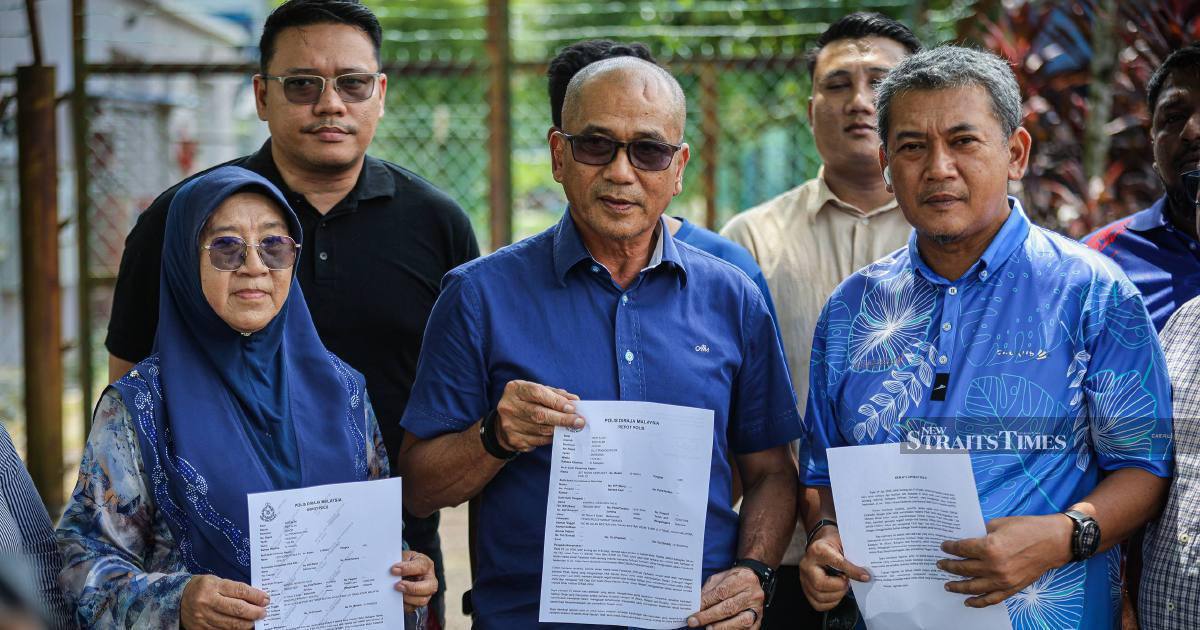
Several Johor Barisan Nasional members have initiated police action against former Umno supreme council member Datuk Dr Mohd Puad Zarkashi, stemming from his recent public assertions implicating the Johor palace and state Umno in political matters. The reports filed in Johor Baru mark an escalation in tensions within the ruling coalition's base in the southern state, reflecting deeper rifts over governance and institutional influence that have periodically surfaced in Malaysian politics.
Puad's allegations have touched upon a particularly sensitive area in Johor's political landscape — the perceived role of royal authority in directing party affairs and administrative decisions. Such claims are inherently contentious in the Malaysian context, where the monarchy occupies a constitutionally protected position and public criticism of royal institutions carries significant legal and social implications. The decision by BN members to lodge formal complaints suggests they viewed Puad's statements as crossing important lines regarding decorum and respect for established institutions.
The former Umno official has been a visible figure in party circles and has previously engaged in public commentary on internal party matters. His intervention in the current discourse appears to have touched upon perceptions of palace involvement in state-level politics, an area that remains delicate regardless of which coalition holds power. The specificity of complaints lodged against him indicates that the nature and extent of his allegations have been deemed sufficiently problematic to warrant official scrutiny.
Within Johor's political ecosystem, the relationship between the state administration, the ruling party, and the palace has historically demonstrated nuances distinct from other Malaysian states. The sultanate's institutional prominence in Johor's governance structure means that questions regarding its political influence inevitably generate strong reactions from those who view such discussions as inappropriate or destabilising. The current situation reflects how such sensitivities continue to shape political discourse in the state.
The police action also underscores broader concerns within BN leadership regarding message discipline and public statements that could undermine party cohesion or institutional relationships. During periods when coalitions face electoral or internal challenges, individual members making controversial public claims can complicate efforts to present a unified front or maintain critical political relationships. The timing and nature of responses to Puad's statements indicate that coalition leaders view the matter as warranting formal intervention.
Context matters significantly here. Johor has witnessed considerable political volatility in recent years, with shifts in coalition alignments and multiple leadership transitions. These changes have occasionally surfaced questions about how power is distributed between elected representatives, party structures, and traditional institutions. Puad's allegations may have resonated with existing debates within certain political circles, even as BN members moved to contain their impact through formal complaints.
The response also demonstrates the continuing relevance of palace-related issues in Malaysian political discourse. While the constitutional framework defines the monarchy's role in national governance, questions about informal influence and political involvement remain perennially contentious. Public allegations regarding such matters inevitably provoke defensive responses from those protective of institutional dignity or protective of existing power arrangements that may benefit from maintained ambiguity.
For Malaysian observers and Southeast Asian political analysts, the incident illuminates how institutional relationships and questions of political authority remain complex in federal systems where traditional institutions intersect with modern democratic structures. The willingness of BN members to pursue police action against a former party colleague over allegations suggests that matters involving the palace are treated with particular gravity, and that boundaries around acceptable political discourse regarding such institutions are relatively narrow.
The longer-term implications remain to be seen. If police investigations proceed, they could establish precedent regarding what constitutes permissible political speech when royal institutions are mentioned. Conversely, the episode may prompt broader discussions within Umno and BN about how members should address concerns regarding institutional relationships and political decision-making. The incident also raises questions about whether similar allegations might resurface in different contexts, and how party leadership will continue managing such sensitive intersections between democratic debate and institutional respect.
For Johor specifically, the situation reflects ongoing tensions about governance legitimacy and the sources of political authority within the state. How these matters are ultimately resolved through police proceedings and party disciplinary processes could influence both internal BN dynamics and broader state politics. The case thus deserves monitoring not merely as a legal matter but as a window into how Malaysia's political system continues to navigate the delicate balance between institutional reverence and democratic accountability.

