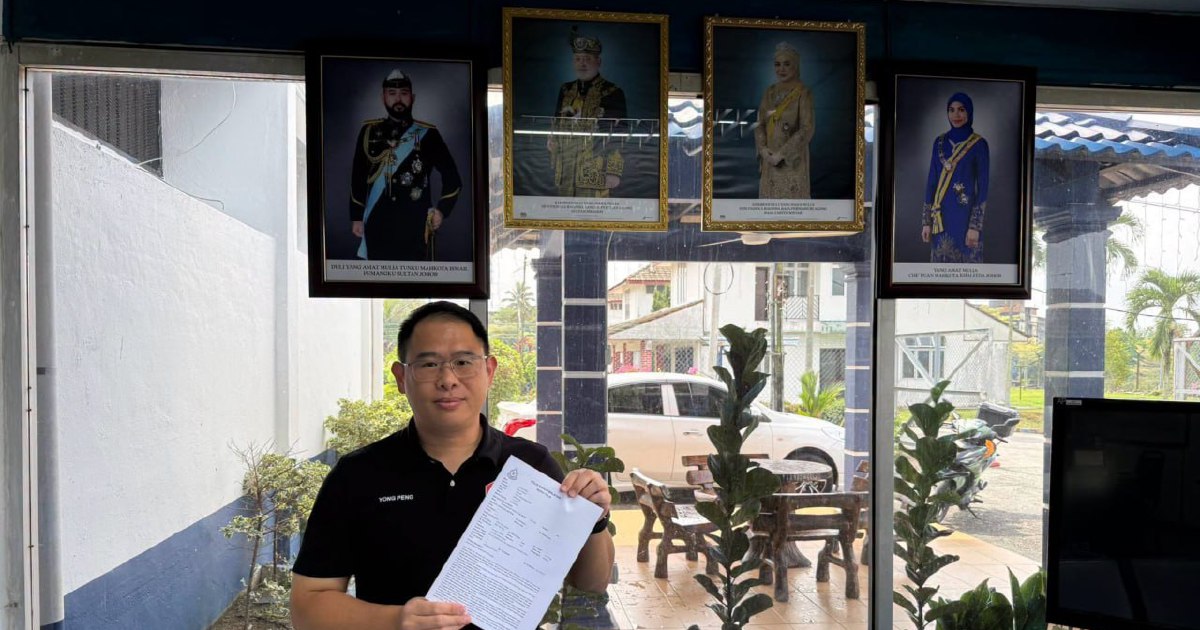
A police report has been lodged in response to controversial claims suggesting involvement by Johor's royal palace in the decision to dissolve the state assembly, an incident that underscores ongoing tensions within Malaysia's constitutional governance and the delicate balance between monarchy and executive authority.
The allegations, attributed to Puad, have triggered formal law enforcement intervention, signalling the seriousness with which authorities are treating statements that appear to implicate the palace in what is ostensibly an executive governmental decision. Such claims carry particular weight in Malaysia's system, where the sultans occupy constitutionally protected positions and any suggestion of improper political interference or public accusations can constitute defamation or sedition depending on their nature and context.
Johor's political landscape has been marked by considerable turbulence in recent years, with shifts in coalition alignments and leadership changes creating uncertainty about the state's direction. The dissolution of a state assembly typically represents a significant political event, usually triggered by a chief minister seeking a fresh mandate or responding to shifting parliamentary dynamics. The assertion that palace involvement featured in this decision raises questions about whether proper constitutional procedures were followed or whether established protocols governing the separation of ceremonial and executive functions may have been breached.
The filing of a police report suggests that whoever made or reported the allegations believes they contain material that warrants investigation under Malaysian law. This could relate to provisions addressing defamation, sedition, or statements deemed prejudicial to public order. Given Malaysia's history of sensitivity around royal institutions, such matters typically receive prompt attention from law enforcement authorities, reflecting the constitutional reverence accorded to the monarchy across all Malaysian states.
For Malaysian political observers, the incident highlights a recurring challenge within the country's constitutional framework: maintaining clear boundaries between the ceremonial and symbolic role of state rulers and the operational authority of elected executive officials. While sultans possess important constitutional functions, including the critical power to grant dissolution of state assemblies, questions about how these powers are exercised and the extent of informal consultation that occurs remain contentious. The distinction between legitimate consultation and improper interference often proves difficult to establish.
Johor, as Malaysia's second-largest state by population and a significant economic centre, holds particular importance in national politics. Political developments there frequently reverberate across the broader Malaysian political landscape, attracting scrutiny from federal observers and analysts. The emergence of allegations linking palace actions to assembly dissolution thus carries implications extending beyond state-level governance, particularly given Johor's historical role as a bellwether for national political trends.
The invocation of police procedures in response to these claims reflects the formal mechanisms available for addressing challenges to institutional integrity and protecting constitutional positions. Malaysia's legal framework provides several avenues through which such matters can be processed, though the application of these provisions sometimes generates debate regarding whether they adequately protect legitimate political discourse and criticism while safeguarding institutional dignity.
Public statements connecting royal institutions to specific governmental decisions require careful handling in Malaysia's legal and political environment. The threshold between permissible political commentary and potentially unlawful speech remains contested terrain, with different stakeholders holding varying interpretations of where appropriate boundaries lie. Police investigations into such allegations must navigate these complexities while determining whether statements crossed from criticism into prohibited categories.
The timing and context of Puad's claims merit examination, as do the subsequent responses from other political actors and government institutions. Understanding whether the allegations emerged from a specific political dispute, represented broader concerns about governance practices, or reflected misunderstandings about constitutional procedures would provide essential context for assessing their significance and the appropriateness of various institutional responses.
For Southeast Asian observers, Malaysia's handling of allegations implicating royal institutions in political decisions offers insights into how constitutional monarchies within the region manage tensions between modernising governance expectations and traditional deference to royal prerogatives. The incident demonstrates both the formal procedures available for addressing such concerns and the political sensitivities that inevitably accompany any public discussion of palace involvement in state-level executive decisions.
Moving forward, the police investigation will likely determine whether Puad's claims constitute protected political speech, represent statements that exceed legitimate criticism, or warrant further legal action. The outcome may provide clarification regarding acceptable boundaries for discussing royal involvement in political decisions, potentially influencing how future allegations of this nature are handled across Malaysian states. Regardless of the investigation's conclusion, the episode underscores the importance of clear communication regarding constitutional roles and responsibilities, particularly when state-level political transitions occur.

