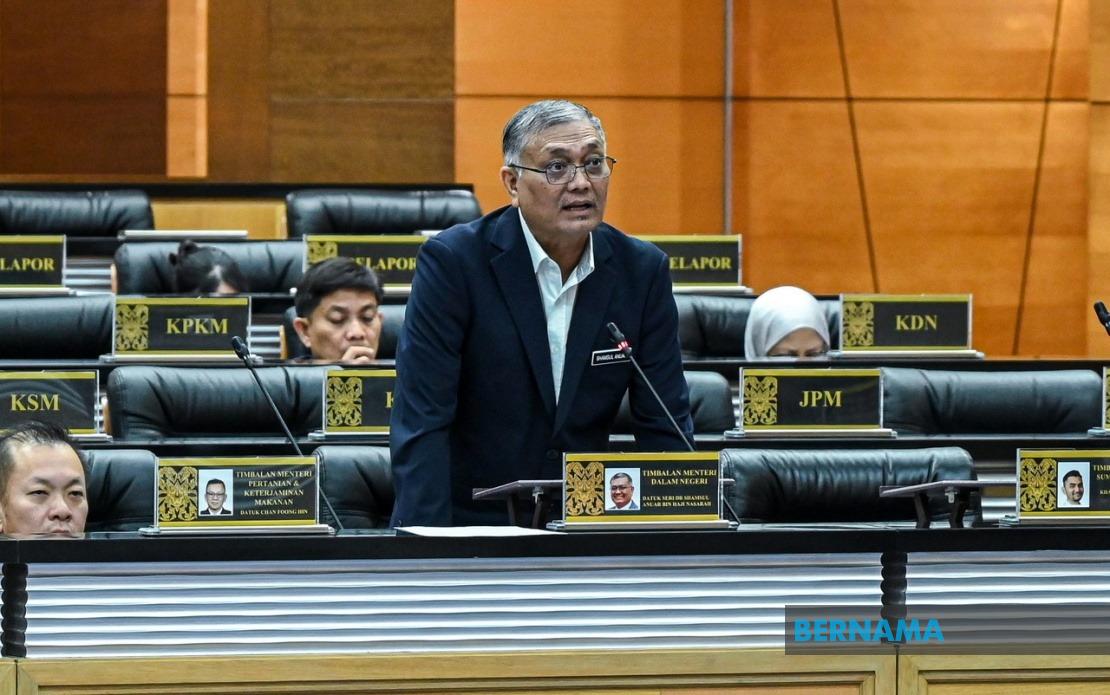
Deputy Home Minister Datuk Seri Dr Shamsul Anuar Nasarah has sought to reassure lawmakers that Malaysia's police force maintains professional standards when investigating high-profile cases, emphasising that no individual is afforded special protection or consideration based on their political standing or past governmental roles. Speaking in Parliament during a special chamber session, Shamsul Anuar responded to parliamentary queries about the status of several prominent investigations by underlining the force's commitment to conducting inquiries with transparency and fairness.
Among the most closely watched cases remains the investigation into an intimate video recording that circulated online in 2019 and was subsequently linked to a former Cabinet member. Police continue to work towards identifying the original source of the material whilst also attempting to locate all devices and equipment involved in its creation and distribution. The case represents a significant test of the force's institutional impartiality given the prominent political profile of individuals connected to it.
The investigation operates under multiple legal frameworks, reflecting the complexity of such cases in the digital age. Authorities are proceeding under Section 292, Section 377B and Section 504 of the Penal Code, statutes that address obscene materials and other related offences. Additionally, Section 233 of the Communications and Multimedia Act 1998 provides additional regulatory tools, highlighting how modern cases often traverse traditional and cybercrime legislation simultaneously. This multi-layered approach suggests investigators are pursuing all possible angles to establish accountability.
Shamsul Anuar's comments gain particular weight given ongoing questions about whether Malaysia's law enforcement institutions can maintain independence from political pressures. The assurance that position and political affiliation do not influence investigative outcomes addresses longstanding concerns among civil society observers who have questioned whether powerful individuals retain undue influence over official proceedings. By explicitly stating that PDRM conducts work professionally and fairly irrespective of such factors, the deputy minister appears to be signalling a commitment to institutional independence.
In a related matter, investigations into former Prime Minister Tan Sri Muhyiddin Yassin's son-in-law have reached an advanced stage. The Malaysian Anti-Corruption Commission has already secured and issued an arrest warrant against the individual, indicating that investigators have accumulated sufficient evidence to justify such formal action. However, Shamsul Anuar declined to provide further commentary, citing the matter's sensitivity and the MACC's lead role in the investigation. This restraint itself may be interpreted as respecting investigative protocols and refusing to prejudge proceedings.
The involvement of multiple agencies in high-profile investigations reflects institutional checks and balances within Malaysia's law enforcement framework. When cases touch upon corruption or financial wrongdoing, the MACC assumes primary responsibility, whilst the police handle matters involving public morality or cybercrime. This separation of responsibilities theoretically reduces opportunities for political manipulation whilst ensuring that specialised agencies utilise their particular expertise. Yet it also requires seamless coordination to prevent gaps or contradictions in pursuing justice.
Malaysia's extradition framework emerged as another topic of parliamentary interest, particularly given the mobile nature of modern criminal activity and the potential for suspects to flee overseas. The country currently maintains extradition treaties with eleven nations and has also committed to the ASEAN Extradition Treaty, positioning itself as a willing partner in regional law enforcement cooperation. However, the bilateral nature of most extradition arrangements means that Malaysia depends on reciprocal agreements with partner countries, a reality that sometimes creates practical complications when pursuing suspects who have relocated abroad.
The government has signalled its readiness to negotiate additional extradition agreements with foreign counterparts, suggesting an intention to expand Malaysia's capacity to pursue justice across borders. Such arrangements carry particular importance in the context of transnational crime and the ease with which individuals can now relocate internationally. By actively seeking to strengthen these mechanisms, authorities indicate recognition that modern criminal activity often exceeds the jurisdictional boundaries of any single nation and requires coordinated international responses.
The parliamentary exchange also underscores broader questions about institutional credibility and public confidence in Malaysia's investigative organs. Transparency in high-profile cases serves multiple purposes: it demonstrates respect for democratic accountability, reassures citizens that the law applies equally regardless of social status, and protects investigators themselves from accusations of bias or impropriety. When officials publicly commit to impartial investigations, they simultaneously create benchmarks against which their subsequent actions will inevitably be measured.
For Southeast Asian observers, Malaysia's handling of these cases carries implications extending beyond the nation's borders. Regional perception of whether Malaysia's institutions function independently or remain subject to political pressure influences investor confidence, diplomatic relationships, and the credibility of the nation's commitments to international cooperation. Countries assessing whether to extradite suspects to Malaysia or cooperate on joint investigations naturally factor in assessments of institutional integrity and the likelihood that legal processes will proceed fairly and transparently.
The interplay between political accountability and institutional independence remains a defining challenge for developing democracies across Southeast Asia. Malaysia's experience demonstrates both the importance and difficulty of maintaining public confidence in official institutions when prominent political figures face investigation. Shamsul Anuar's parliamentary statements represent an attempt to address these concerns through explicit reassurance, though ultimately such pledges gain credibility only through consistent demonstration over time and across multiple cases.

