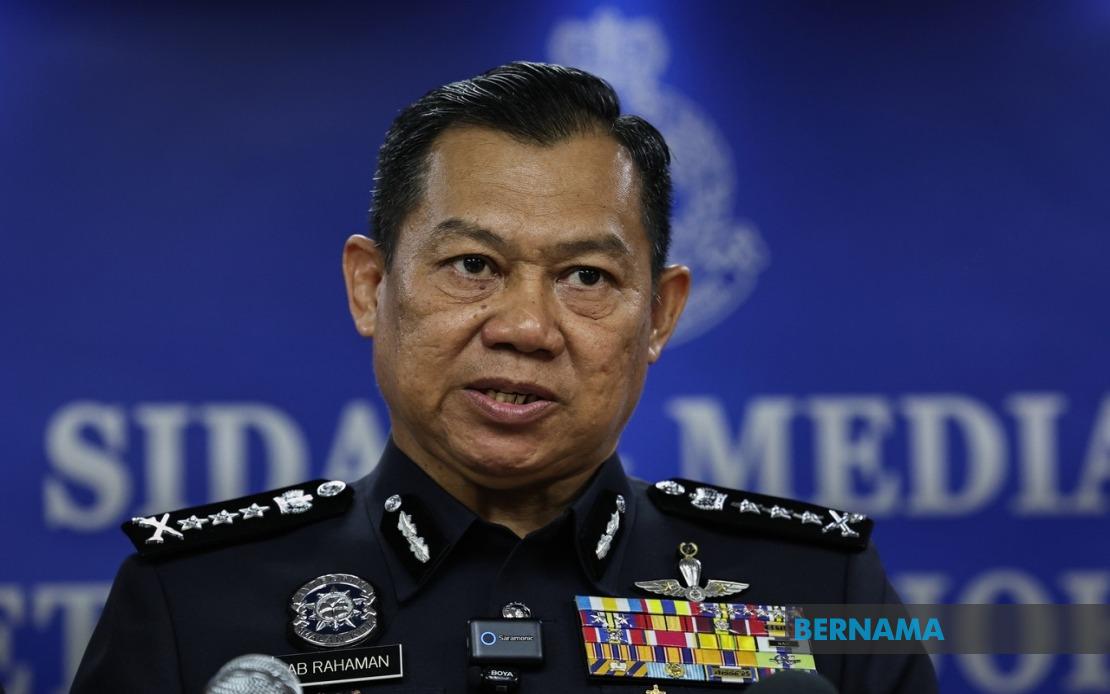
The Royal Malaysia Police has announced a substantial security operation for the upcoming Johor State Election, committing 11,926 officers and personnel to oversee the entire electoral process. Johor Police Chief Datuk Ab Rahaman Arsad revealed the deployment strategy during a media briefing at the Johor Police Contingent Headquarters, emphasizing that the force will be strategically positioned across five distinct phases aligned with different stages of the election cycle. This phased approach allows law enforcement to concentrate resources at critical junctures, from early voting preparations through to post-election operations.
The flexibility embedded within the deployment framework demonstrates operational readiness adapted to evolving circumstances. Ab Rahaman indicated that manpower allocation would be calibrated continuously in response to specific security needs and emerging situational requirements on the ground. Such adaptability reflects lessons learned from previous electoral exercises in Malaysia, where contingencies frequently arise despite extensive pre-election planning. The five-phase structure enables the police to scale operations appropriately rather than maintaining uniform deployment levels across the entire election period, thereby optimizing resource utilization and officer welfare.
Beyond the core PDRM contingent, the police effort receives substantial reinforcement from the Internal Security and Public Order Department (KDNKA), with 54 officers and 701 additional personnel drawn from specialized units. The General Operations Force, Federal Reserve Unit, PDRM Air Unit, and Marine Police Force contributions underscore the comprehensive nature of the security architecture. This multi-agency coordination broadens the tactical toolkit available to election managers, combining conventional ground-based policing with specialized rapid-response capabilities, aerial surveillance potential, and maritime security assets suited to Johor's geographic characteristics.
Johor's significance as Malaysia's second-largest state by population makes election security particularly demanding. The state encompasses diverse constituencies spanning urban commercial centers, agricultural regions, and coastal communities, each presenting distinct policing challenges. Urban areas require crowd management capabilities and traffic coordination, while rural constituencies demand sustained presence and accessibility. The deployment of marine police assets reflects the practical reality that some Johor constituencies include island communities and water-dependent populations requiring tailored security approaches.
The inclusion of aerial assets within the security framework indicates contingency planning for large-scale gatherings or incidents requiring rapid intelligence gathering and response deployment. The PDRM Air Unit can provide real-time situational awareness during peak voting periods or campaign rallies, enabling centralized command centers to monitor developments across dispersed polling locations simultaneously. This technological augmentation complements traditional foot patrols and checkpoint operations, creating layered security coverage appropriate to modern electoral environments.
Election security in Malaysia carries particular sensitivity given the country's multicultural composition and the political importance of state-level contests. Johor's electoral outcomes carry implications extending beyond the state level, potentially influencing federal political calculations and inter-party dynamics. Securing electoral integrity through professional police operations protects public confidence in democratic processes and reinforces the principle that elections proceed under orderly conditions respecting all participants' rights. The substantial personnel commitment signals serious institutional investment in this democratic responsibility.
The phased deployment strategy acknowledges that different election stages demand different security profiles. Early phases preceding election day focus on campaign event security, preventing electoral fraud during nomination processes, and maintaining order at candidate registration venues. Mid-phase operations intensify protective services around sensitive locations such as election management offices and ballot production facilities. Final phases concentrate on polling station security, vote counting oversight, and post-election operations preventing disorder during results announcement.
Coordination between the 11,926 PDRM personnel and 755 additional KDNKA staff requires sophisticated command structures and clear operational protocols. Johor Police Contingent Headquarters will function as the operational nerve center, managing real-time resource allocation, responding to emerging incidents, and maintaining communications with federal oversight bodies including the Election Commission and Home Ministry. Effective inter-agency coordination becomes especially critical when multiple units with distinct training and operational cultures must function seamlessly under unified command structures.
The election security operation reflects broader Malaysian police modernization efforts emphasizing professionalization, community engagement, and technology integration. Rather than presenting law enforcement as an occupying force, contemporary Malaysian electoral policing increasingly emphasizes facilitating democratic participation while preventing disorder and election-related violence. The substantial personnel deployment demonstrates commitment to this balanced approach, positioning adequate resources without creating oppressive atmospherics that might suppress voter participation.
From a regional perspective, Malaysia's approach to election security stands as a model for Southeast Asian democracies grappling with similar challenges. The transparent announcement of deployment numbers and command structures builds public confidence that authorities take electoral security seriously while operating within professional and legal frameworks. This contrasts with security approaches in some neighboring contexts where election-related policing generates concerns about militarization or voter intimidation.
The substantial five-phase deployment for Johor's election underscores that democratic elections in modern Southeast Asia require substantial institutional resources and professional execution. The coordination of nearly 12,700 personnel across a single state election reflects the complexity of managing democratic processes in diverse, geographically dispersed populations. This commitment to professional, systematic security operations helps explain why Malaysian elections, despite occasional tensions, generally proceed with integrity and public acceptance of outcomes.