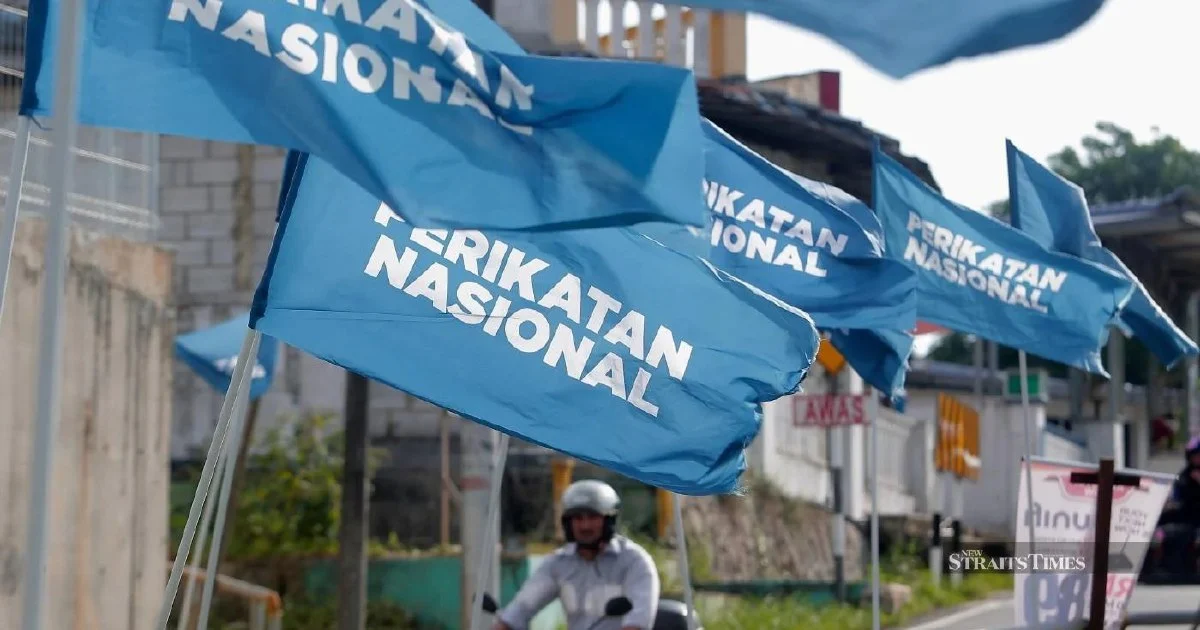
Perikatan Nasional (PN) appears committed to maintaining its coalition partnership with Bersatu in the near term, according to political observers monitoring developments within Malaysia's opposition alliance. The timing of this apparent detente is no coincidence, as the coalition faces critical electoral contests in two key states—Johor and Negri Sembilan—where unified support could prove decisive in determining which political force gains the upper hand in state legislatures and government formation.
The strategic imperative to keep Bersatu within the PN fold reflects deeper calculations about electoral mathematics in these contests. Johor, historically a stronghold for the Malaysian United Indigenous Party (UMNO) and its traditional allies, remains contested terrain where opposition unity could significantly amplify PN's chances of making inroads. Similarly, Negri Sembilan represents another battleground where the consolidation of opposition votes under a single banner could prove substantially more effective than fragmented campaigning across multiple political entities. Analysts emphasise that splintering the coalition now would only benefit their rivals while squandering the organisational advantages that a unified front provides.
The relationship between PN and Bersatu has historically been volatile, marked by tensions over leadership hierarchies, resource allocation, and strategic direction. The partnership, never entirely harmonious, has weathered numerous disagreements since its formation. Yet the proximity of these elections has apparently created a compelling reason for both parties to suppress internal grievances and present a united public face. This reflects a recognisable pattern in Malaysian politics where coalition discipline tends to strengthen as polling dates approach and the stakes become unmistakably real.
Bersatu's position within PN carries particular significance given its influence in several constituencies, particularly in Johor where the party has cultivated considerable grassroots support. The defection or withdrawal of Bersatu would severely diminish PN's competitive capacity in these elections, potentially ceding numerous seats to incumbent administrations without a genuine contest. Coalition managers on both sides therefore have strong incentives to paper over differences and focus messaging on common opponents rather than internal disputes.
The electoral calendar itself serves as a powerful constraint on internal conflict. Once campaigns formally commence, public acrimony between coalition partners becomes counterproductive, potentially damaging both organisations through voter disillusionment. The lead-up to elections typically witnesses intensified efforts at coalition cohesion, with party hierarchies imposing discipline on members tempted to air disagreements openly. This disciplinary framework, while sometimes imperfect, usually holds through election day itself.
From a broader Southeast Asian perspective, the Malaysian opposition's struggles with internal unity reflect challenges common across the region's multi-party democracies. Coalition politics in this part of the world frequently requires uncomfortable alliances between parties with divergent ideologies and competing ambitions. Indonesia, Thailand, and other regional democracies have grappled with similar tensions between the imperatives of electoral cooperation and the centrifugal forces pulling coalitions apart. Malaysia's PN represents another case study in how temporary electoral necessity can suppress but not eliminate underlying organizational friction.
For Malaysian voters, this apparent coalition stability has mixed implications. On one hand, it provides the opposition with a genuine opportunity to contest these state elections with full organisational force behind unified candidates. On the other hand, the suppressed tensions might resurface spectacularly after polling concludes, potentially undermining the legitimacy of any government formation or destabilising state administrations shortly after their establishment. The apparent unity masks unresolved questions about power-sharing and strategic priorities that could fracture suddenly once the immediate electoral imperative passes.
Observers note that previous Malaysian coalition arrangements have demonstrated this pattern repeatedly—unity during campaigns followed by internal ruptures during implementation. The decision to maintain PN-Bersatu cohesion through the Johor and Negri Sembilan elections does not necessarily signal a long-term merger of interests, but rather reflects pragmatic recognition that the moment requires disciplined coordination. Both organisations retain conflicting objectives and leadership aspirations that remain dormant rather than reconciled.
The choice to prioritise electoral unity also reflects both parties' assessment that their individual prospects suffer from division. Neither Bersatu nor PN's other components believes they can achieve their electoral objectives without the other's support base and ground machinery. This mutual dependence, while uneasy, creates sufficient motivation for sustained collaboration through the immediate campaign period. Analysts suggest that post-election dynamics could shift dramatically depending on how these contests unfold and whether either coalition partner can claim disproportionate credit for any victories achieved.
Moving forward, the coherence of PN-Bersatu cooperation will likely depend on election results in these two crucial states. Strong performance could temporarily reinforce unity and create momentum for broader coalition consolidation, while disappointing outcomes might accelerate the internal reckonings already being quietly deferred. Either way, observers expect the current period of maintained alliance to represent a tactical pause rather than a permanent resolution of the underlying tensions that have repeatedly threatened PN's stability.

