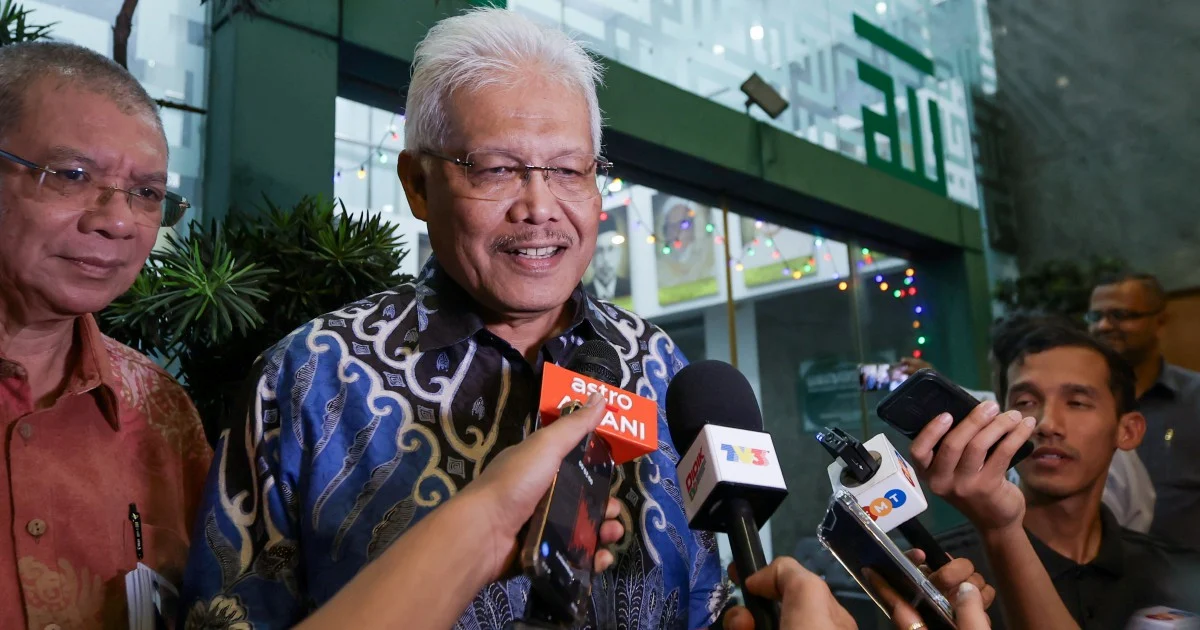
The machinery of parliamentary administration moved into gear this week when Perikatan Nasional's chief whip Datuk Seri Takiyuddin Hassan lodged official documentation with the Speaker's office confirming Datuk Seri Hamzah Zainudin's reappointment as opposition leader. The submission represents a formal acknowledgement within Westminster-style procedure that Hamzah will continue directing the opposition's parliamentary strategy and activities during the current legislative term.
This administrative step underscores the evolving political landscape in Malaysia, where the opposition's formal institutional recognition carries significant symbolic and operational weight. The opposition leader role carries responsibilities for coordinating parliamentary business, managing the opposition's speaking schedule, and serving as the primary interlocutor between the government and the opposition benches. Hamzah's reconfirmation signals continuity in these functions across the transition periods that have characterised Malaysian politics in recent years.
Hamzah Zainudin's tenure has seen Perikatan Nasional navigate complex parliamentary dynamics. The coalition, which comprises PAS and other parties, has assumed the opposition mantle following electoral shifts that repositioned various political forces. His leadership of the opposition bloc reflects the broader recalibration of Malaysia's three-cornered political contest between federal government allies, Perikatan Nasional, and other parliamentary forces. The formal reappointment demonstrates that this arrangement has retained sufficient internal consensus to warrant continuation.
Takiyuddin Hassan's role as chief whip represents the organisational backbone of parliamentary management. Chief whips typically orchestrate attendance, coordinate voting strategies, and enforce party discipline on legislative matters. His submission of the notification paperwork highlights how Malaysia's parliamentary system depends on these formal procedural steps to establish and maintain institutional legitimacy. Every major parliamentary position, from speaker to opposition leader, requires documented acknowledgement within the chamber's administrative framework.
The Speaker's office functions as the neutral arbiter in these procedural matters. While the Speaker answers to Parliament as a whole, the office maintains meticulous records of all parliamentary appointments, resignations, and reconfirmations. These documents form the official record upon which all subsequent parliamentary decisions rest. The notification Takiyuddin submitted becomes part of this permanent archive, establishing Hamzah's authority to act as opposition leader in all official capacities.
For Malaysian parliamentary observers, such procedural confirmations often indicate periods of relative stability within coalition arrangements. Opposition formations in Malaysia have historically experienced considerable volatility, with leaders rotating, parties defecting, and strategic alignments shifting between general elections. The fact that Hamzah retains sufficient backing from PN constituents to warrant reappointment suggests the coalition has consolidated around its current configuration, at least for the immediate term ahead.
The opposition leader's office carries particular significance in Malaysia's context. Unlike some Westminster democracies where opposition parties enjoy automatic state funding or privileges, Malaysian opposition leaders must actively assert their parliamentary standing and rights. The formal documentation creates a paper trail that legitimises Hamzah's authority to claim speaking rights, call parliamentary inquiries, and demand government accountability during debates. Without this notification, the Speaker's office would lack the formal authority to prioritise opposition concerns in parliamentary scheduling.
Regionally, the reappointment reflects how Southeast Asian opposition movements have adapted to the institutional realities of their respective systems. Malaysia's opposition faces structural disadvantages in media access, campaign financing, and institutional support compared to government allies. Formal recognition through parliamentary procedures like this notification provides whatever compensatory mechanisms exist within the constitutional framework. Hamzah's reconfirmation demonstrates how opposition formations continue working through available institutional channels even while operating from a position of comparative disadvantage.
The broader political implications extend to how Perikatan Nasional intends to position itself during coming parliamentary sessions. The reappointment signals that the coalition views Hamzah as the appropriate standard-bearer for opposition concerns and parliamentary strategy. This decision typically precedes important legislative periods when coordinated opposition responses become necessary. Whether particular bills face challenge or scrutiny often depends on opposition leadership decisions about where to concentrate limited parliamentary resources.
Looking ahead, Hamzah's continued tenure as opposition leader positions Perikatan Nasional to engage with anticipated parliamentary business throughout the current term. The coalition must navigate questions about whether to cooperate selectively with government initiatives on certain matters while maintaining adversarial postures elsewhere. Opposition leaders in Malaysia often balance these competing impulses, and Hamzah's reappointment suggests PN has confidence in his capacity to manage these tactical complexities effectively.
The notification also carries implications for parliamentary decorum and inter-party relations. Opposition leaders serve as crucial interlocutors between government and opposition benches during procedural negotiations. A reappointed opposition leader typically carries implicit backing that strengthens their negotiating position on issues ranging from debate schedules to parliamentary committee compositions. Hamzah's confirmation enhances his ability to broker agreements that serve opposition interests within Parliament's institutional structures.

