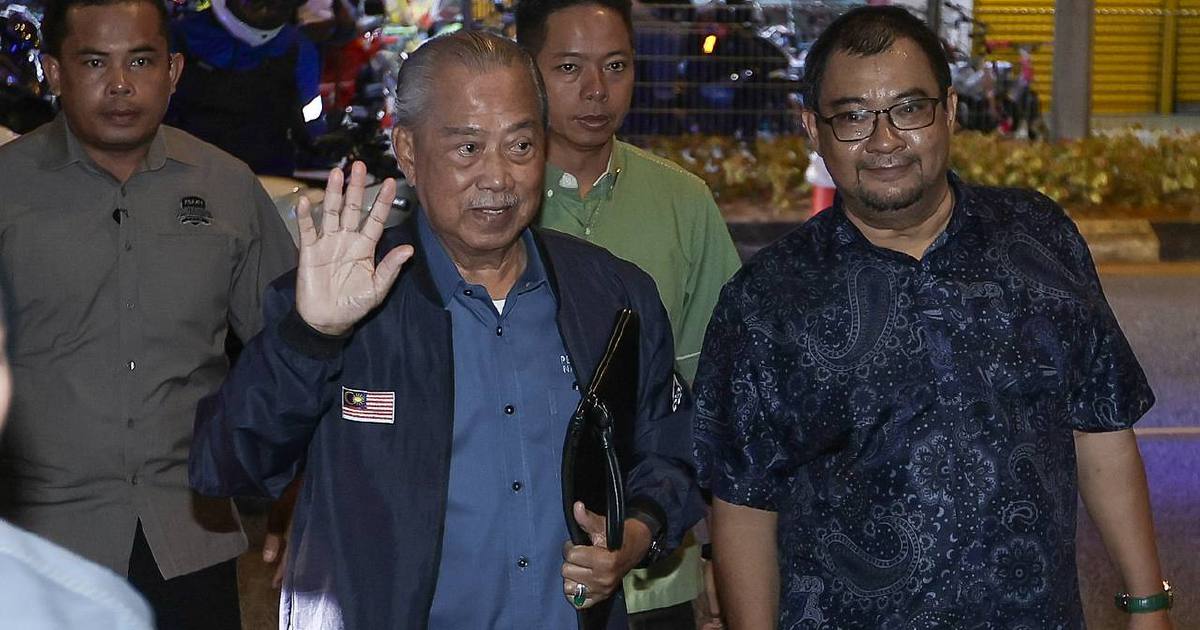
Perikatan Nasional convened an emergency Supreme Council gathering in Kuala Lumpur that centred on broader coalition mechanics and possible recruitment of additional political parties, though the session conspicuously avoided addressing the thorny question of Bersatu's future within the opposition grouping, according to party leadership. The deliberate omission of the Bersatu issue from the agenda signals ongoing tensions within PN's leadership structure regarding how to navigate one of its constituent parties' increasingly precarious position as the coalition seeks to consolidate its political footing.
The strategic decision to sidestep Bersatu's membership status during the emergency convening reflects the complexity of managing an opposition alliance already strained by competing interests and factional divisions. By focusing discussion on attracting fresh political partners rather than evaluating an existing member's standing, PN's hierarchy appeared intent on projecting an image of forward momentum and expansion rather than confronting internal fault lines that could expose weakness ahead of potential political shifts.
Bersatu has occupied an increasingly contested position within PN since the coalition's formation, with tensions escalating over parliamentary strategies, policy direction, and leadership roles. The party's contested status within the broader opposition framework has become a recurring flashpoint, generating speculation about whether it might eventually pursue alternative political alignments or seek accommodation with other parliamentary blocs. By explicitly excluding membership deliberations from this week's emergency session, PN's leadership effectively deferred what many observers view as an inevitable confrontation.
The emphasis on welcoming new members suggests PN leadership is pursuing quantitative expansion as a counterweight to internal qualitative challenges. Recruiting additional parties could theoretically bolster the coalition's parliamentary numbers and strengthen its claim as a credible alternative government, particularly if defections or internal realignments diminish the contributions of existing members. This calculus appears to underpin the decision to concentrate tonight's discussion on prospective recruits rather than stabilising relationships with current partners.
PN's coalition composition has always carried inherent instability, comprising parties with distinct ideological moorings, regional power bases, and leadership ambitions. Bersatu, as the most recently formed major party within the grouping, operates with particular constraints given its association with former Prime Minister Muhyiddin Yassin, whose political fortunes directly correlate with the party's parliamentary utility. Any substantial diminishment of Bersatu's relevance would inevitably weaken Muhyiddin's position within PN's decision-making hierarchy.
The emergency nature of tonight's meeting, rather than a regularly scheduled gathering, suggests PN faced time-sensitive coalition matters demanding immediate attention. This urgency likely relates to responding to recent parliamentary developments, positioning ahead of anticipated political movements by the government coalition, or consolidating support among wavering members as Bersatu's status remains unresolved. The deliberate compartmentalisation of agenda items—addressing some coalition concerns while postponing others—indicates PN's leadership is managing a controlled narrative around party membership discussions.
For Malaysian political observers tracking opposition dynamics, PN's manoeuvre carries significance beyond internal coalition management. How the opposition alliance ultimately addresses Bersatu's status will influence its credibility as a unified alternative, particularly during periods when the ruling coalition faces vulnerability. A coalition appearing internally fractious and unable to resolve basic membership questions risks appearing unprepared to govern, a vulnerability the government coalition would certainly weaponise during any subsequent electoral campaign or parliamentary confidence votes.
Regional political analysts monitoring Malaysia's opposition architecture note that PN's ability to maintain cohesion despite competing pressures distinguishes it from previous opposition coalitions that fractured under comparable stress. Tonight's session, by deferring rather than resolving the Bersatu question, suggests PN leaders believe the coalition benefits from postponing confrontation until circumstances either clarify Bersatu's viability or force a resolution through external political events rather than internal deliberation.
The focus on new membership recruitment also indicates PN may be preparing contingency strategies should Bersatu's position become untenable. Recruiting parties from federal territories, East Malaysia, or previously unaligned groupings could provide alternative sources of parliamentary strength, gradually diminishing reliance on any single constituent party. This hedging strategy would provide PN's leadership with options should Bersatu's internal dynamics or external pressures ultimately necessitate its withdrawal or marginalisation within the coalition structure.
Moving forward, the question of Bersatu's membership status remains suspended rather than resolved, likely to resurface during subsequent coalition discussions or if parliamentary circumstances shift substantially. The emergency meeting's deliberate avoidance of this issue suggests PN leadership believes the coalition's immediate political interests are better served by maintaining formal ambiguity while pursuing other coalition-building opportunities. This tactical patience, however, carries the risk that unaddressed internal tensions could accumulate, eventually forcing more disruptive confrontations than addressing the Bersatu question directly might currently entail.

