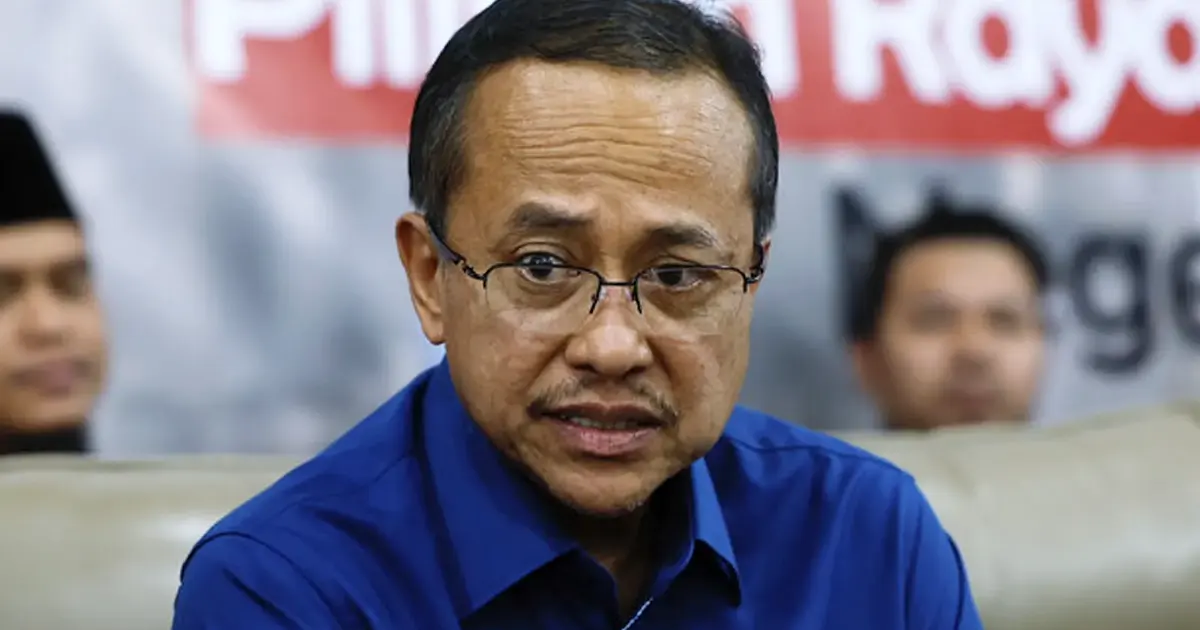
The chairman of Perikatan Nasional has moved to allay anxieties surrounding the shared use of the coalition's logo by two of its major constituent parties, asserting that the arrangement will not generate electoral confusion or administrative complications. Samsuri Mohamad's statement comes against a backdrop of speculation about how the PN symbol might function operationally when deployed by both PAS and Bersatu in upcoming electoral contests, a scenario that has prompted questions from observers about voter interpretation and party identity within the broader coalition framework.
At the heart of Samsuri's reassurance lies a straightforward structural fact: the two parties have agreed to carve out distinct territorial domains for their campaigning efforts, ensuring that voters in any given constituency will encounter a single PN-badged candidate representing either PAS or Bersatu, but never both. This geographic demarcation addresses what many political analysts had identified as the most obvious potential pitfall of the dual-logo strategy. By keeping their electoral footprints separate, the parties create a scenario where the PN brand operates as a unified identifier without the risk of splitting votes or muddying voter messaging within individual races.
The PN coalition itself has undergone considerable evolution since its formation, experiencing fluctuations in membership and occasional friction between constituent parties over resources, seat allocations, and strategic direction. The arrangement involving PAS and Bersatu represents an attempt to reconcile divergent political ambitions while maintaining a coherent electoral identity. For Malaysia's electorate, particularly in constituencies where either party holds significant sway, the approach signals that PN retains structural coherence despite the operational independence of its component organisations.
Bersatu's participation in this configuration deserves particular attention given the party's relatively shorter history and its positioning as a newer force in Malaysian politics. Founded in 2016 and rising to prominence through its role in the 2018 electoral upheaval, Bersatu has navigated various coalition arrangements and strategic pivots. The current logo-sharing mechanism allows the party to benefit from PN's broader brand association while maintaining its own organisational identity, a calculus that reflects both the party's ambitions and its acknowledgment of PN's collective strength.
PAS, by contrast, brings to the equation a longer organisational history and entrenched grassroots networks across numerous states, particularly in the Malay-majority regions. The Islamic party's use of the PN logo represents a strategic choice to emphasise coalition identity even as it continues to mobilise its substantial party machinery. For PAS members and supporters accustomed to the party's own symbolic representations, the adoption of PN branding in electoral contexts introduces a layer of political messaging that privileges coalition-level appeal over purely partisan advocacy.
The clarity that Samsuri sought to establish also addresses international and regional observers who track Malaysian political dynamics closely. Coalition arrangements across Southeast Asia frequently encounter challenges when partner parties pursue overlapping territorial ambitions or when shared symbols create administrative confusion. PN's proactive approach to territorial delineation thus positions the coalition as operationally sophisticated compared to some regional precedents, potentially influencing how external commentators assess Malaysia's political stability and institutional maturity.
From a voter perspective, the PN logo-sharing arrangement carries implications for how citizens interpret electoral choices. In constituencies where PN fields either a PAS or Bersatu candidate bearing the coalition emblem, voters face a voting decision that implicitly endorses not just an individual or party, but a broader political alliance. This multilayered voting decision reflects the reality of coalition politics in contemporary Malaysia, where national outcomes depend substantially on how various component parties perform within their designated zones.
The spokesperson's emphasis on the absence of seat overlap also underscores negotiation dynamics that likely preceded this public clarification. Coalition building in Malaysia requires intricate horse-trading over constituency allocations, and PN's ability to broker an arrangement satisfactory to both PAS and Bersatu suggests active leadership working behind the scenes. Such negotiations are typically complex, involving calculations about party strength in particular regions, incumbent MP performance, and electoral feasibility assessments.
Looking ahead, the sustainability of this arrangement will depend on whether electoral outcomes vindicate the structural framework that Samsuri has articulated. Should either party contest constituencies nominally allocated to the other, or should the PN logo generate unexpected voter confusion despite territorial clarity, tensions could emerge that test the coalition's coherence. Conversely, if the system functions smoothly, it may establish a precedent for how Malaysian coalitions can accommodate multiple parties under unified electoral branding while respecting party autonomy.
Samsuri's intervention also reflects broader PN positioning as the coalition seeks relevance in Malaysia's evolving political landscape. Whether contesting from opposition or participating in government arrangements, PN must continuously signal both cohesion and flexibility. By publicly addressing the logo-sharing question before confusion could crystallise, the chairman has engaged in preventative political communication designed to maintain internal confidence among coalition members and external credibility with the voting public.
The resolution of the logo-usage question, while appearing procedural, touches on fundamental aspects of how Malaysia's multi-party system functions. It demonstrates that even as individual parties maintain distinct identities and organisational structures, coalition mechanics can create shared symbols and aligned electoral strategies. For Malaysian voters monitoring coalition behaviour and calculating their own electoral choices, Samsuri's assurances provide some clarity, though the true test will come when voters actually confront these arrangements at the ballot box.

