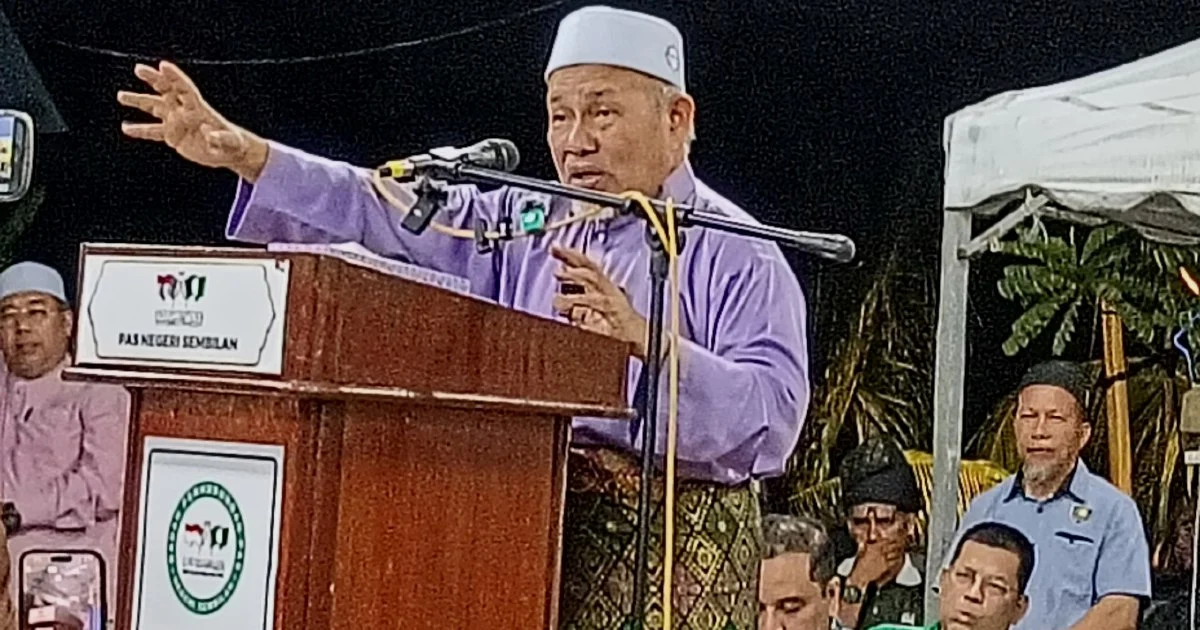
Perikatan Nasional does not belong exclusively to Bersatu but rather represents a collective ownership structure shared among all its constituent members, according to Pas deputy president Datuk Seri Tuan Ibrahim Tuan Man. His remarks came in response to recent assertions regarding sole party control within the coalition, underscoring a deeper tension about the distribution of power and decision-making authority within PN's organisational framework.
The statement reflects an ongoing struggle for influence within the opposition alliance, which has become increasingly significant as PN's political prominence has grown across Malaysian politics. The coalition, which comprises Bersatu, Pas, Perikatan member parties, and other aligned groups, has emerged as a major political force, particularly following the 2022 general election when it substantially improved its parliamentary representation. This growth has inevitably sparked questions about governance structures and who wields ultimate authority over coalition directions and strategies.
Tuan Ibrahim's clarification serves to establish a foundational principle that distinguishes PN from hierarchical party structures where a single entity dominates decision-making. By emphasising collective ownership, he is signalling that member parties expect to exercise meaningful influence over coalition policy, candidate selection, and strategic positioning. This perspective aligns with Pas's traditional role as a significant opposition force and reflects the party's bargaining position within the broader alignment.
The dispute over coalition ownership carries practical implications for how PN operates, particularly regarding candidate nominations for future elections, policy formulation, and resource allocation. Disagreements about ownership can manifest in disputes over who gets to contest in favourable constituencies, which issues the coalition prioritises, and how benefits such as ministerial positions or committee leadership are distributed among member parties. Such conflicts, if unresolved, can undermine coalition cohesion during critical periods like election campaigns.
Bersatu's apparent assertion of dominant control likely stems from its founding role in initiating PN and its status as the numerically significant force within the coalition. The party, led by former Prime Minister Muhyiddin Yassin, played a catalyst role in bringing together disparate opposition and non-aligned groups into a functioning electoral and political alliance. However, Bersatu's position differs fundamentally from outright ownership in the corporate sense; coalitions operate on consensus and mutual agreement rather than hierarchical subordination of members to a single entity.
Pas, as one of the longest-established parties in Malaysian politics with substantial grassroots organisation and parliamentary representation, maintains considerable leverage within any coalition to which it belongs. The party's contributions to PN are significant both in terms of organisational capacity and electoral viability, particularly in rural and semi-urban constituencies across northern and eastern Malaysia where Pas maintains deep community penetration. This reality provides Pas with legitimate grounds to resist characterisations that diminish its role to that of a subordinate member.
For Malaysian readers and observers of regional politics, this dispute illuminates how opposition coalitions maintain internal dynamics that differ markedly from governing arrangements. Unlike coalitions within government, where hierarchical structures and formal power-sharing agreements typically clarify authority, opposition coalitions often operate on more fluid principles where power derives from the relative contribution and bargaining strength of members. The question of ownership and control directly affects these calculations.
The timing of such clarifications also carries strategic significance. As PN continues evaluating its positioning ahead of future elections and government formation scenarios, the clarity regarding internal governance becomes increasingly important. Member parties require assurance that their voices will be heard in critical decisions and that coalitions represent genuine partnerships rather than arrangements where one party makes unilateral determinations affecting all others. Tuan Ibrahim's intervention serves this reassurance function for Pas's leadership and membership.
The broader context involves how opposition coalitions across Southeast Asia have evolved, particularly in how they balance unity with maintaining distinct party identities and interests. PN, unlike some other regional coalitions, brings together parties with sometimes divergent ideological orientations and political strategies. Maintaining these diverse membership requires mechanisms that prevent any single element from overwhelming others, which is precisely what Tuan Ibrahim's statement about collective ownership attempts to establish.
Moving forward, these internal clarifications about power distribution and ownership will likely influence how PN functions as a political entity. Whether PN can successfully navigate these questions about internal governance while maintaining electoral and political effectiveness remains to be seen. The coalition's ability to resolve such tensions transparently will affect not only its internal stability but also its attractiveness to potential coalition partners and voters evaluating its viability as an alternative government in future electoral contests.
These declarations also establish important precedent for how PN's constituents understand their relationship to the broader coalition project. Rather than accepting subordinate status to any single dominant party, member organisations increasingly signal expectations of genuine partnership and shared decision-making authority. Such positioning reflects broader trends within Malaysia's opposition politics toward more decentralised coalition structures and away from arrangements dominated by single powerful figures or organisations.

