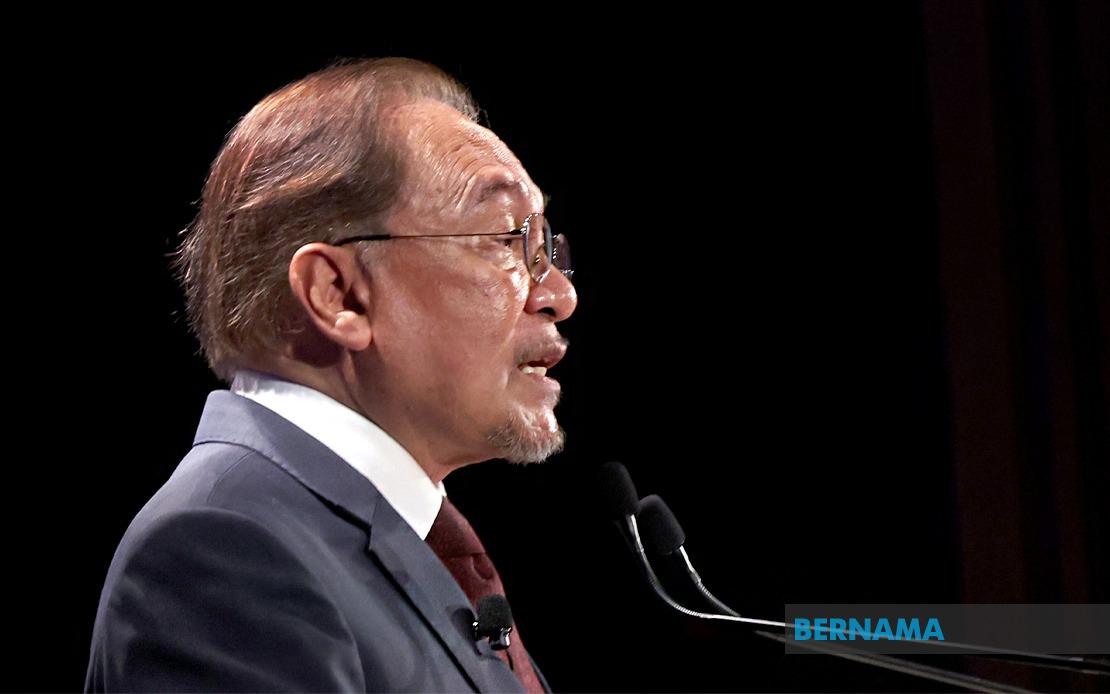
Prime Minister Datuk Seri Anwar Ibrahim's final day in Ashgabat is packed with a succession of state-level meetings and ceremonial engagements designed to deepen Malaysia's strategic partnership with Turkmenistan, the Central Asian energy powerhouse situated along the Caspian Sea's eastern shoreline. The carefully choreographed itinerary reflects the diplomatic importance both nations accord to strengthening bilateral ties amid shifting geopolitical currents in Asia and Central Asia.
The day commenced with formal protocols when President Serdar Berdimuhamedov received Anwar at the Presidential Palace for a welcoming ceremony followed by a private one-on-one conversation between the two leaders. This initial exchange provides the groundwork for substantive bilateral negotiations scheduled to follow, allowing both statesmen to set the tone for discussions and address any pressing bilateral concerns outside the formal setting. The structure of such high-level diplomatic visits typically reserves these initial private meetings for candid exchanges on sensitive matters before moving to structured official proceedings.
Following the bilateral meeting, both leaders engaged in broader talks encompassing the full range of Malaysia-Turkmenistan relations. The agenda encompassed traditional trading partnerships and investment prospects, along with deeper cooperation in extractive industries where Petronas maintains significant operations. Discussions extended to agricultural commodities, renewable energy initiatives, tourism development, educational exchanges, digital economy advancement, and scientific collaboration. This comprehensive approach underscores Malaysia's strategy to position itself as a multifaceted partner rather than limiting engagement to energy transactions alone.
A particularly significant dimension of the discussions centred on regional developments, with both leaders exchanging perspectives on ASEAN's evolving role and Central Asian geopolitical dynamics. For Malaysia, such consultations serve to explain the Association's vision and priorities to Central Asian partners while gathering insights into regional concerns. Turkmenistan's position as a non-aligned nation with a distinctive foreign policy orientation makes such dialogue valuable for understanding alternative approaches to regional cooperation beyond traditional power-bloc alignments.
The formal documentation of enhanced cooperation materialized through multiple agreements signed during the visit. A joint statement encapsulating shared intentions was produced, alongside an Air Services Agreement aimed at facilitating greater connectivity between the two nations. The agreement between Malaysia's foreign ministry and Turkmenistan's foreign affairs institute will institutionalize regular consultations and knowledge-sharing on diplomatic matters. Additionally, arrangements between the Ministry of Transport and Turkmenistan's State Service target logistics and infrastructure cooperation.
The scientific and technological dimensions received particular emphasis through a memorandum of understanding between Malaysia's Academy of Sciences and its Turkmenistan counterpart, positioning both nations to collaborate on research initiatives and institutional capacity-building. Given Southeast Asia's technology aspirations and Central Asia's growing focus on innovation, such partnerships create frameworks for knowledge transfer and joint research endeavours. Simultaneously, multiple documents pertaining to oil and gas cooperation were exchanged, reflecting the enduring centrality of energy collaboration to the bilateral relationship, particularly given Petronas's longstanding investment presence.
Cultural and religious aspects of the visit were reflected through Anwar's attendance at Friday prayers at the Turkmenbashi Ruhy Mosque, a gesture acknowledging Turkmenistan's Islamic heritage and reinforcing people-to-people connections. The subsequent Malaysia-Turkmenistan Forum, jointly inaugurated by both leaders at the Chamber of Commerce and Industry of Turkmenistan, brought together business communities from both countries to explore commercial opportunities and networking possibilities. Such forums serve as practical mechanisms through which private-sector engagement can flourish beyond government-to-government frameworks.
Turkmenistan's significance to Malaysian economic interests extends considerably beyond diplomatic symbolism. In 2025, the Central Asian nation ranked as Malaysia's fourth-largest trading partner within the region, with bilateral commerce totalling RM75.80 million. Malaysian export performance demonstrated particular strength, with outbound shipments valued at RM75.50 million, representing a nine per cent year-on-year expansion. This growth trajectory, though modest in absolute terms, indicates expanding market opportunities and suggests potential for deeper commercial integration.
Petronas's operations in Turkmenistan constitute the most substantial manifestation of Malaysia's economic footprint in the country. Since establishing operations in 1996, the national oil company has accumulated investments exceeding RM52.73 billion, making Turkmenistan a major focus for Petronas's Central Asian strategy. These investments span upstream petroleum exploration and production, downstream refining operations, and liquefied natural gas infrastructure development. The scale of Petronas's commitment underscores Turkmenistan's strategic importance within Malaysia's energy security architecture, particularly as domestic hydrocarbon reserves face depletion pressures.
Ashgabat itself, known internationally as the 'White Marble City', presents a distinctive urban landscape that has garnered global recognition. The capital holds the Guinness World Record for the world's highest concentration of white marble-clad structures, with over five hundred buildings featuring white marble cladding. The city's architectural character, defined by monumental edifices adorned with extensive gold-leaf embellishments and traversed by expansive, meticulously maintained boulevards, projects an image of prosperity and civic pride. This constructed environment reflects Turkmenistan's oil and gas wealth and serves as a tangible representation of the nation's development aspirations.
Geographically, Turkmenistan occupies a crucial position in Central Asia, bordered by Kazakhstan and Uzbekistan to the north, Afghanistan to the southeast, Iran to the south and southwest, and the Caspian Sea to the west. The Caspian Sea itself represents the world's largest landlocked body of water and constitutes a critical resource frontier given its hydrocarbon deposits. Turkmenistan's control over substantial Caspian maritime resources, combined with its terrestrial hydrocarbon reserves, positions it as a central player in regional energy politics and international energy security considerations.
Prime Minister Anwar's delegation included ministerial-level representation reflecting the visit's comprehensive scope. Minister of Investment, Trade and Industry Datuk Seri Johari Abdul Ghani and Minister of Economy Akmal Nasrullah Mohd Nasir accompanied the prime minister, bringing expertise in commercial policy, investment facilitation, and economic strategy. Supporting officials from the Prime Minister's Office and the Foreign Ministry ensured coordination across government agencies and provided technical support for bilateral negotiations. This composition signalled Malaysia's seriousness in elevating the bilateral relationship across multiple policy domains.
The visit concludes with Anwar's media engagement with Malaysian journalists, providing opportunity to articulate the diplomatic achievements and explain the visit's significance to domestic audiences. Such press conferences serve dual functions—offering the Malaysian public insight into the prime minister's international engagements while simultaneously conveying messages to the host nation about Malaysia's commitment to the relationship. The structured conclusion to the visit demonstrates the importance placed on managing perceptions and narratives surrounding high-level diplomatic encounters in contemporary media environments.

