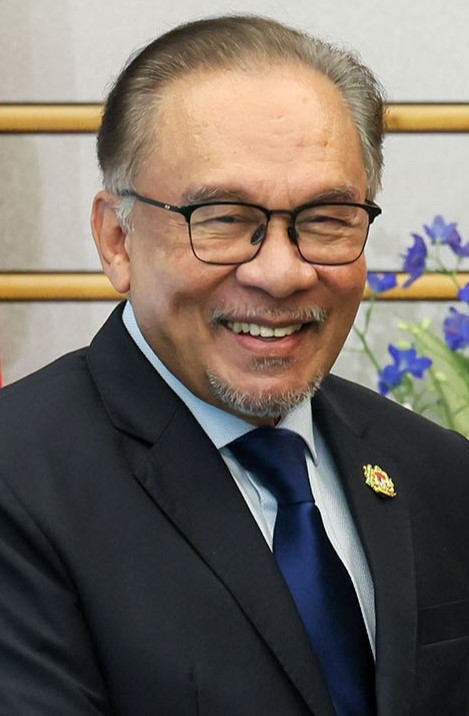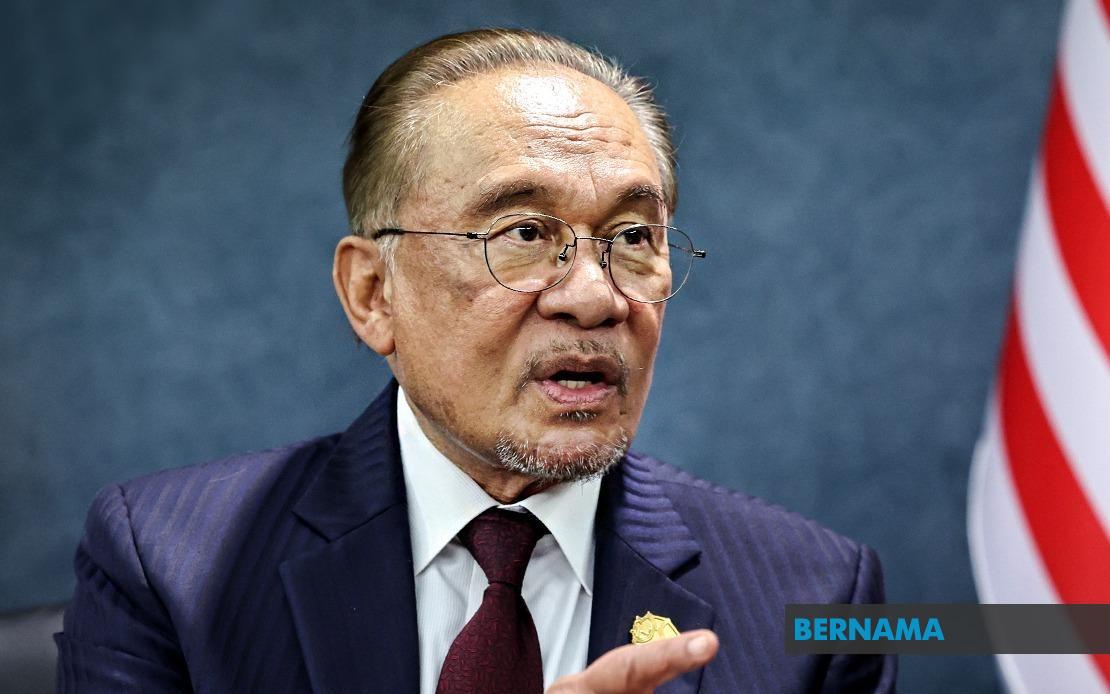
Prime Minister Datuk Seri Anwar Ibrahim is set to deliver remarks at the ASEAN-Russia Business Forum in Kazan on June 17, underscoring Malaysia's continued engagement with Russia at a significant diplomatic juncture. The forum, held at Kazan IT Park, represents one of the centrepieces of the ASEAN-Russia Commemorative Summit, bringing together top business leaders and government officials from across Southeast Asia and the Russian Federation. Anwar, who also holds the portfolio of Finance Minister, will speak directly to representatives from all ASEAN member states and their Russian counterparts about the opportunities and challenges facing bilateral and multilateral commerce in the region.
The timing of this engagement is particularly noteworthy, as the summit coincides with the 35th anniversary of ASEAN-Russia dialogue relations, a relationship that has deepened considerably since its formal inception in 1991. The elevation of ties to a full ASEAN Dialogue Partnership status in 1996 was followed by a further strategic upgrade in 2018, when both sides committed to strengthening cooperation across political, security, economic and sociocultural dimensions. This trajectory reflects a deliberate effort by both ASEAN and Russia to move beyond transactional engagement toward a more comprehensive strategic partnership that addresses contemporary regional and global challenges.
Beyond the business forum, the Prime Minister's schedule includes attendance at a gala dinner held at the Tatar State Academic Theater, where he will have the opportunity to engage in a courtesy call with Russian President Vladimir Putin. Such high-level bilateral moments during multilateral summits serve as critical opportunities for individual leaders to discuss specific bilateral priorities, clarify positions on contentious issues, and chart the direction of country-to-country relations. For Malaysia, these encounters allow the government to communicate its economic interests and strategic concerns directly to Moscow's leadership.
Kazan itself carries symbolic weight in the context of ASEAN-Russia engagement. Situated at the confluence of the Volga and Kazanka rivers approximately 800 kilometres east of Moscow, the city of 1.3 million inhabitants has long served as a cultural bridge between the Russian and Muslim worlds. With more than a millennium of recorded history and a well-established reputation as one of Russia's premier centres of Islamic heritage, Kazan provides an appropriate setting for discussions between a bloc whose member states include significant Muslim-majority populations and a major power with considerable Muslim minority communities. The choice of venue thus sends a subtle message about the inclusive nature of contemporary ASEAN-Russia partnership.
From a purely economic standpoint, the relationship warrants serious attention from Malaysian policymakers and business communities. In 2024, total trade between ASEAN and Russia reached USD18.1 billion, while Russian foreign direct investment in ASEAN countries amounted to USD92.97 million, equivalent to approximately RM367.90 million. These figures, while meaningful, also suggest significant untapped potential given the combined economic weight of both parties and the complementarities in their respective economies.
For Malaysia specifically, Russia ranked as the country's ninth-largest European trading partner in 2025, with bilateral trade valued at RM8.72 billion, or USD2.04 billion. This positions Russia as a moderately important but far from dominant player in Malaysia's external trade architecture. The composition of this bilateral commerce reveals clear patterns of specialisation: Malaysia exports electrical and electronic products, machinery, equipment and components, along with processed food items, while importing primarily petroleum products, minerals, chemicals and chemical-based products from Russia. These import categories reflect Malaysia's energy security interests and industrial inputs requirements, areas where Russia possesses significant natural resources and production capacity.
The business forum setting provides an opportunity for Malaysian companies to explore deeper engagement in sectors where complementarities are strongest. Malaysia's sophisticated manufacturing sector and technology capabilities could find applications in Russia's digitalisation agenda, particularly given Russia's need to modernise infrastructure and develop domestic technological solutions in the face of international sanctions. Simultaneously, Malaysian businesses dependent on energy inputs and raw materials benefit from direct engagement with Russian suppliers, allowing them to negotiate terms and secure supply relationships that enhance operational efficiency.
From a broader geopolitical perspective, Malaysia's participation in this summit reflects the country's commitment to maintaining balanced relationships with major powers across Eurasia. As a non-aligned nation deeply embedded in Southeast Asian institutions and processes, Malaysia has historically avoided Cold War-style zero-sum positioning, instead seeking to cultivate pragmatic partnerships based on mutual benefit. The ASEAN-Russia relationship represents one such avenue through which the region can engage with Moscow on terms that reflect ASEAN's corporate interests rather than those of individual major powers competing for regional influence.
The commemorative nature of this particular summit, marking three and a half decades of formal dialogue, invites reflection on the trajectory and future direction of the partnership. While political-security cooperation has received considerable attention, economic and investment dimensions remain significantly underdeveloped relative to potential. The business forum therefore represents not merely a showcase of existing commercial relationships but a platform for identifying and cultivating new opportunities that could strengthen economic ties and create durable structural interests supporting deeper political engagement.
For Malaysian corporate leaders and government officials participating in the forum, the key challenge involves identifying specific sectors and projects where ASEAN and Russian capabilities can combine productively. Infrastructure development, energy transition, digital transformation and supply chain resilience are areas where dialogue could yield concrete outcomes. Similarly, understanding Russian perspectives on regional economic architecture—including preferences regarding trade arrangements, investment frameworks and technology cooperation—becomes essential for Malaysian strategists seeking to position the country advantageously in a multipolar economic environment.
The summit's location in Tatarstan, governed by digital modernisation priorities highlighted in the welcoming role of the Minister of Digitalisation of Public Administration, Information Technologies and Communications Ilya Nachvin, also signals an emphasis on technology-driven economic cooperation. This aligns well with Malaysia's own digital economy ambitions and presents opportunities for knowledge exchange, technology partnerships and collaborative innovation efforts that could benefit businesses in both jurisdictions.
Ultimately, Prime Minister Anwar's address to the forum and subsequent engagement with Russian counterparts reflects Malaysia's understanding that constructive, multi-dimensional relationships with established powers serve national interests more effectively than confrontational or exclusively alliance-based approaches. By participating actively in ASEAN-Russia institutional frameworks while simultaneously maintaining robust engagement with other major economies, Malaysia positions itself as a pragmatic bridge-builder capable of facilitating beneficial cooperation across traditional geopolitical divides.