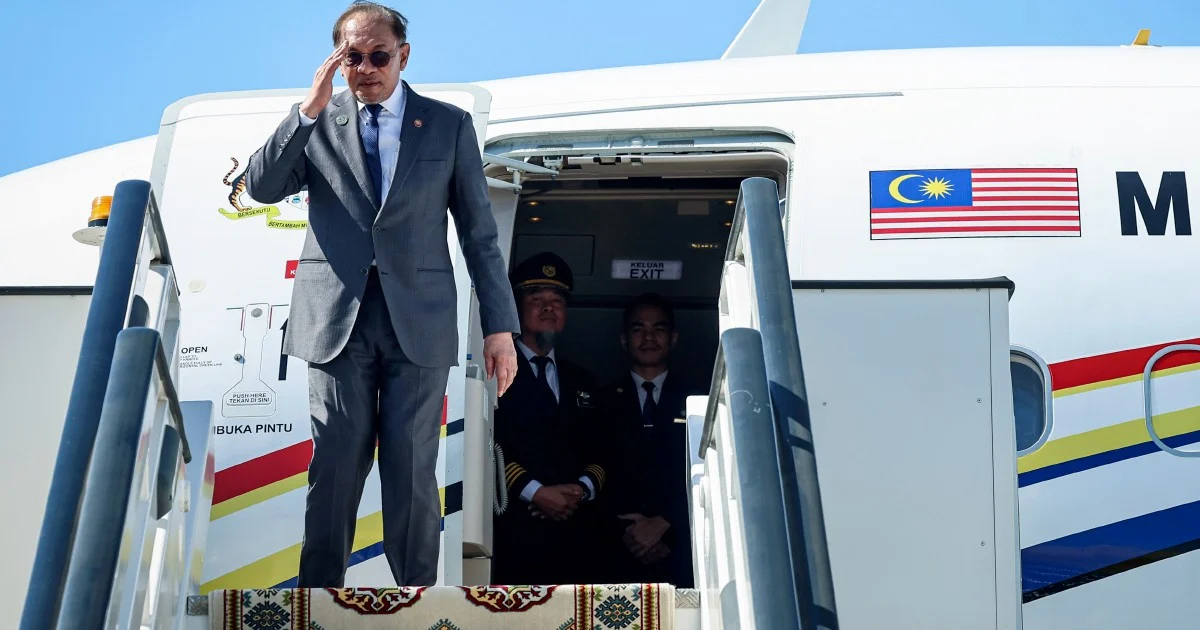
Prime Minister Datuk Seri Anwar Ibrahim touched down in Penang today, transitioning swiftly from an official state visit to Turkmenistan into a packed schedule centred on celebrating Malaysia's fourth estate and promoting the northern state as an investment hub. The timing underscores the government's dual commitment to strengthening bilateral ties in Central Asia while maintaining momentum on domestic economic development and democratic discourse closer to home.
The visit to Penang positions the premier at the centre of the National Journalists' Day (Hawana) 2026 grand finale, an annual occasion that has gained prominence as a platform for dialogue between political leadership and the media establishment. Such gatherings reflect Malaysia's institutional approach to press freedom and the role of journalism in democratic governance, particularly significant given regional tensions over media independence and government accountability across Southeast Asia.
The PM's transition from Turkmenistan, a nation of strategic importance to Malaysia's Central Asian engagement strategy, to Penang signals the administration's effort to balance international relations with substantive domestic programming. Turkmenistan remains a key partner in broader Belt and Road considerations and energy security discussions, making the official visit a component of Malaysia's diversified foreign policy architecture. The abrupt pivot highlights the demanding nature of modern premiership, where leaders must navigate multiple geopolitical and domestic commitments simultaneously.
Penang, under Chief Minister Chow Kon Yeow's administration, has positioned itself as a progressive economic zone within Malaysia. The convergence of Hawana celebrations with investment symposia in the state reflects an emerging pattern where cultural and journalistic events serve as platforms for economic messaging. This integration of soft diplomacy with economic promotion has become increasingly common among Malaysian policymakers seeking to enhance regional competitiveness amid global economic uncertainty.
The National Journalists' Day culmination in Penang carries symbolic weight beyond ceremonial observance. As Malaysia navigates evolving media landscapes shaped by digital disruption and changing consumption patterns, official recognition of journalism's institutional role reinforces government support for traditional media infrastructure. This becomes particularly relevant given concerns across the region about declining journalism revenues and the proliferation of unverified information on social media platforms.
Investment events accompanying the PM's visit likely focus on attracting both domestic and international capital to Penang's manufacturing, technology, and services sectors. The northern state has consistently competed with Kuala Lumpur and Selangor for foreign direct investment, particularly from semiconductor and electrical and electronics manufacturers. Government presence at such forums signals continued commitment to maintaining Penang's profile in Malaysia's investment hierarchy.
The coordination of these activities demonstrates increasing sophistication in how Malaysian government officials utilise high-level visits to consolidate multiple policy objectives. Rather than treating diplomatic missions and domestic ceremonies as separate endeavours, the administration appears to recognise synergies between international engagement and domestic economic promotion. This reflects lessons learned from other Southeast Asian economies where leaders bundle activities to maximise impact and efficient use of time.
Anwar's personal attendance at both Hawana and investment events carries political messaging implications. His visible engagement with journalists reinforces administrative commitment to press interaction, a factor increasingly important for government legitimacy in democratic systems. Simultaneously, his presence at investment discussions demonstrates executive authority over economic policy direction, important as Malaysia seeks to maintain investor confidence amid global macroeconomic headwinds and regional competitive pressures.
Penang's role as host for these national-scale events reflects the state's political significance within the broader Malaysian federation. As a Pakatan Harapan stronghold and economically progressive jurisdiction, Penang frequently hosts federal initiatives that require staging in locations beyond Kuala Lumpur. This geographical distribution of government activities reinforces federalism principles while ensuring regional visibility and development attention across the country.
The confluence of journalistic celebration and investment promotion also speaks to broader narratives about Malaysia's governance model. By emphasising both press freedom observance and economic dynamism, the administration projects an image of a developing democracy committed to democratic institutions while pursuing competitive economic strategies. This positioning becomes increasingly important as Malaysia competes with regional neighbours for international investment capital and skilled talent migration.
Penang's investment appeal centres partly on its existing industrial ecosystem and skilled workforce developed over decades of manufacturing prominence. The addition of government-sponsored investment events maintains momentum in attracting new sectors, particularly technology and higher value-added manufacturing that require reliable governance and institutional stability. The PM's presence amplifies the messaging that federal support remains committed to the state's continued economic trajectory.
Looking forward, the bundling of diplomatic outcomes from Turkmenistan with domestic economic and cultural programming suggests an administrative approach emphasising integrated messaging and efficient deployment of executive resources. For Malaysian businesses, particularly those in Penang, the visit signals ongoing federal commitment to regional economic development, while for international observers, it demonstrates Malaysia's capacity to maintain simultaneous engagement across multiple geopolitical and economic priorities.

