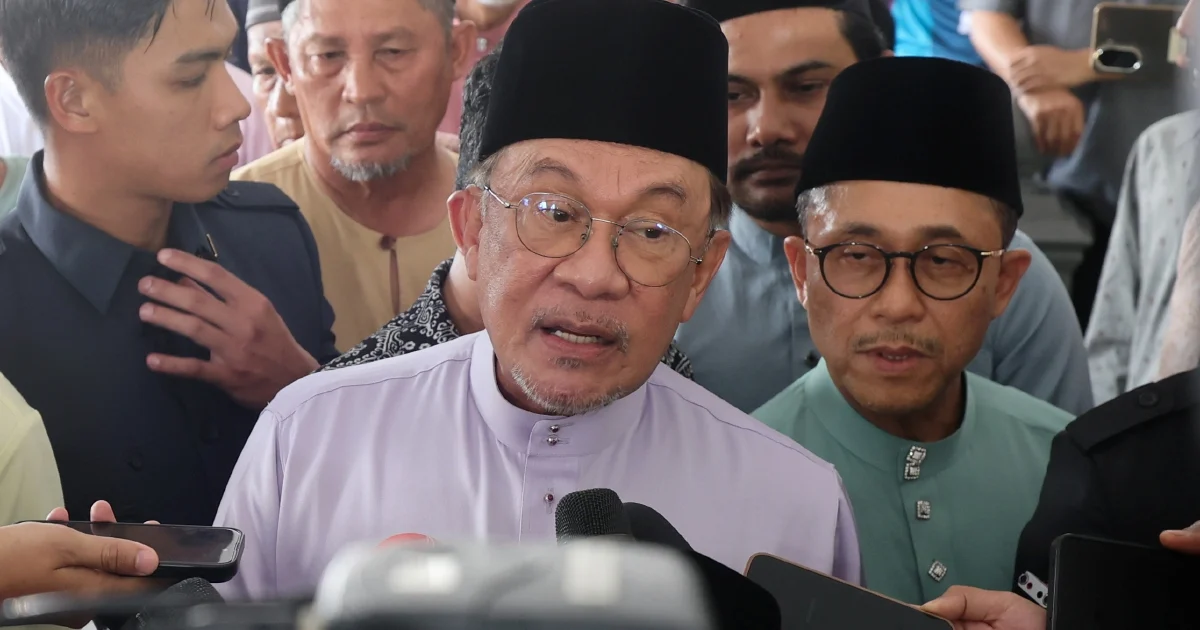
Prime Minister Datuk Seri Anwar Ibrahim has moved to allay concerns among non-Muslim Malaysians over the government's plans to enhance the institutional standing of Syariah courts, emphasizing that such measures will not diminish their fundamental right to practise their faith freely. Speaking in Putrajaya, the Prime Minister sought to clarify the scope and intentions behind the judicial modernization initiative, positioning it as an effort to improve administrative efficiency and legal standards within Malaysia's dual legal system rather than as a step toward expanding the jurisdiction of Islamic courts into areas affecting non-Muslim communities.
The statement comes amid broader discussions in Malaysia's political landscape regarding the role of religious institutions in a multi-faith society. As Southeast Asia's foremost Islamic-majority democracy, Malaysia has long maintained a constitutional framework that theoretically protects religious autonomy across different faiths while granting state-level religious authority over Muslim personal law matters such as marriage, inheritance, and family disputes. The elevation of Syariah court status forms part of a larger conversation about how Islamic jurisprudence can operate more effectively within the nation's federal structure without encroaching upon the constitutionally protected sphere of non-Muslim religious practice.
Understanding Malaysia's bifurcated legal system is crucial for appreciating the Prime Minister's reassurance. The Syariah courts, which function at both state and federal levels, handle matters exclusively concerning Muslims and their affairs under Islamic law. The civil courts, meanwhile, operate independently and address all other legal matters, including those involving non-Muslims and cases of mixed religious communities. By design, these two systems operate in parallel rather than in subordination to one another, with each maintaining distinct jurisdictions. The government's strengthening initiative appears focused on enhancing the professionalism, infrastructure, and procedural efficiency of Islamic courts to better serve Muslim litigants within their designated sphere.
For non-Muslim communities in Malaysia—comprising Chinese, Indian, indigenous, and other religious groups—the assurance carries significant symbolic weight in a political environment where concerns about religious freedom are occasionally voiced. These communities maintain their own mechanisms for addressing personal law matters through customary practices and, in some cases, parallel systems recognized under state law. The Prime Minister's explicit confirmation that structural improvements to Syariah institutions will not affect their religious freedoms suggests the government is committed to maintaining the established constitutional arrangement that has, for over six decades since independence, permitted relative religious coexistence despite occasional tensions.
The timing of this clarification reflects Malaysia's ongoing negotiation of plural governance. In recent years, Malaysia has witnessed periodic debates about the boundaries between religious and civil authority, particularly in states where Islamic-focused parties hold substantial political influence. Episodes involving children in interfaith families, religious conversion cases, and the scope of Islamic council authority have occasionally generated public discourse about whether Syariah jurisdiction was expanding beyond its traditional scope. Against this backdrop, the Prime Minister's statement appears calibrated to reassert the government's commitment to constitutional constraints on religious authority while simultaneously advancing the operational capacity of courts serving the Muslim majority.
The articulation of this position also reflects international observation of Malaysia's governance model. As a BRICS member and developing democracy that hosts significant non-Muslim populations and international commerce, Malaysia faces external scrutiny regarding its treatment of minorities and religious freedom protections. Clarifying that judicial modernization will not alter the rights of non-Muslim citizens serves both domestic and international audiences, signaling that economic development and institutional strengthening need not come at the expense of religious pluralism.
Within the Malaysian context, such reassurances carry practical implications for business confidence and civil stability. Malaysia's multicommunal character has long been central to its economic identity, particularly in Kuala Lumpur and Penang, where Chinese and Indian merchants and professionals comprise significant segments of the professional and entrepreneurial classes. Any perception that religious minorities' fundamental freedoms might be compromised could affect business sentiment and potentially influence migration patterns among highly educated professionals. The Prime Minister's clarification thus also functions as an economic signal, indicating that Malaysia remains committed to the institutional framework that permits citizens of different faiths to coexist within a single legal system.
The practical challenge facing policymakers involves enhancing the capacity and legitimacy of religious courts without either creating overlapping jurisdictions or allowing religious authority to drift beyond established boundaries. In states like Selangor and Johor, where there have been occasional disputes about whether Syariah courts were overreaching into matters affecting non-Muslims or mixed-faith families, stronger institutional frameworks and clearer procedural guidelines could actually strengthen legal certainty for all communities by more precisely delineating jurisdictional boundaries. A well-functioning Syariah system that efficiently handles matters within its designated scope may actually prevent the friction that arises when delays or inefficiencies in Islamic courts encourage attempts to expand their authority into adjacent areas.
The Prime Minister's remarks also position the government as committed to judicial excellence across its entire legal system. Modern, well-resourced Syariah courts staffed with appropriately trained judges and equipped with contemporary technology serve not only Muslim litigants but also Malaysian society's image as a competent, professional entity capable of delivering justice effectively. This institutional strengthening narrative avoids zero-sum framings in which advancing Islamic courts is presented as reducing space for other communities or legal traditions.
Looking forward, the practical implementation of these reassurances will matter significantly. Non-Muslim Malaysians will likely monitor whether promises made at the level of executive authority translate into operational reality, particularly in states where religious authorities sometimes press against constitutional limits. Clear legislative frameworks defining Syariah court jurisdiction, robust appeals processes that allow aggrieved parties to challenge overreach, and consistent application of established boundaries will be essential to validating the Prime Minister's guarantee.
The statement also reflects the government's broader positioning of Malaysia as a stable, multi-religious state capable of balancing development with pluralism. In an era when other Southeast Asian nations occasionally grapple with religious nationalism or communal tensions, Malaysia's ability to strengthen institutions while maintaining constitutional protections for minorities remains a distinguishing feature of its governance model. The Prime Minister's explicit clarification that judicial enhancement will not compromise non-Muslim rights thus represents not merely a tactical reassurance but a restatement of the constitutional architecture upon which Malaysian multicommunalism rests.

