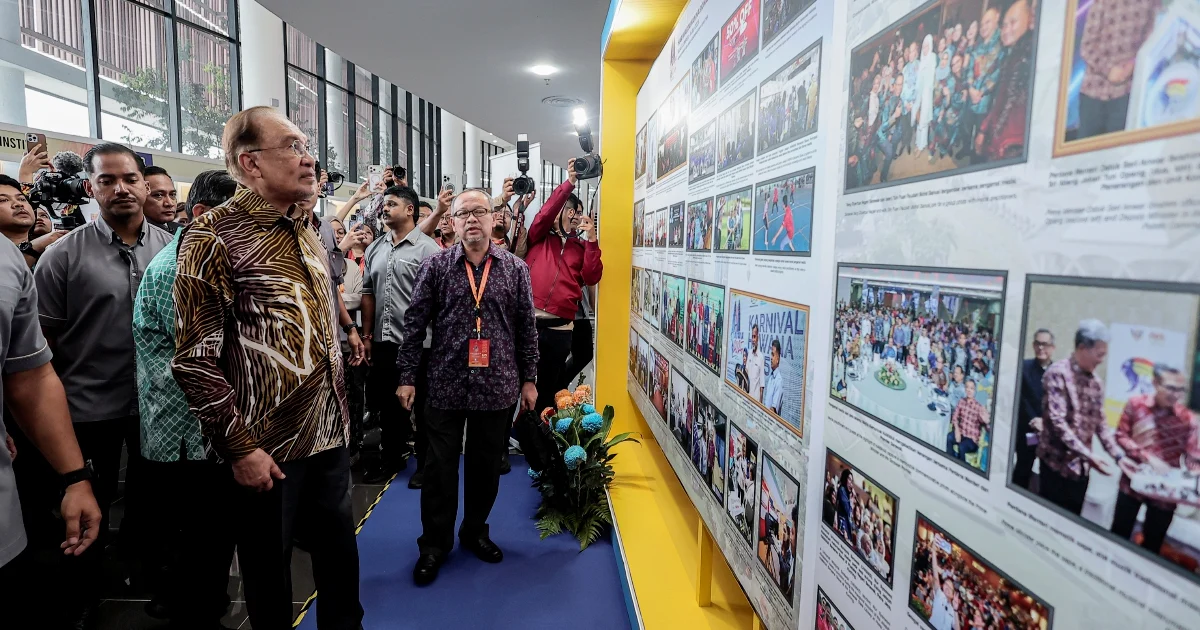
Prime Minister Datuk Seri Anwar Ibrahim has unveiled a RM1 million government injection into Tabung Kasih@Hawana 2026, underlining the administration's determination to strengthen the financial security of journalists and media professionals across Malaysia. Speaking at an event in his Permatang Pauh constituency, Anwar framed the allocation as part of a broader governmental strategy to nurture and revitalise the media landscape during a period of significant transformation.
The welfare fund initiative arrives at a critical juncture for Malaysia's journalism sector. Newsroom employment has contracted over the past decade as traditional media outlets have battled declining advertising revenues and audience migration to digital platforms. The allocation signals recognition at the highest political level that the industry faces structural challenges requiring tangible government support beyond rhetorical endorsement.
Tabung Kasih@Hawana 2026 functions as a dedicated assistance mechanism for journalists encountering financial hardship or facing unexpected emergencies. The fund typically addresses circumstances such as medical crises, family bereavement, or redundancy situations—scenarios increasingly common as newsrooms downsize and consolidate operations. By directing capital toward this safety net, the government acknowledges that media professionals often lack the institutional protections available in larger corporate sectors.
Anwar's announcement carries particular significance given Malaysia's fractious relationship with press freedom and media independence in recent years. Political transitions have periodically strained government-media relations, with accusations of bias and pressure flowing in multiple directions. The financial commitment suggests an attempt to reposition the government as supportive of journalism as a sector, potentially aimed at rebuilding confidence among journalists who may harbour suspicion toward state involvement in media affairs.
The timing of the announcement—specifically at Hawana 2026, presumably a media industry conference or gathering—indicates deliberate outreach to news professionals and industry stakeholders. The location choice in Permatang Pauh, Anwar's parliamentary seat, also demonstrates willingness to demonstrate government investment in the constituency level, creating visible evidence of political commitment to supporting workers in the information sector.
Regionally, Malaysia's approach to journalist welfare contrasts with practices in neighbouring countries. Singapore maintains relatively robust institutional frameworks for media professionals, while Indonesia has struggled with similar pressures facing Malaysian newsrooms. Thailand's media sector operates under different regulatory constraints. The Malaysian welfare fund model represents a distinct approach—leveraging government resources to provide direct assistance rather than pursuing structural reforms or legislative protections that might prove contentious.
The broader ecosystem supporting Malaysian journalism requires multifaceted intervention. Beyond individual welfare provision, the sector confronts challenges including shrinking advertising markets, the rise of unregulated online news sources, subscription model viability, and audience fragmentation across platforms. A RM1 million allocation addresses symptoms rather than underlying structural issues, yet represents measurable commitment and provides immediate relief to professionals in distress.
Anwar's emphasis on "transforming the media industry" suggests recognition that journalism in Malaysia requires adaptation to digital realities. Traditional publishing models have become economically unsustainable for many outlets, forcing difficult decisions about redundancies and service consolidation. Government support for welfare mechanisms may function as a transitional buffer as the sector restructures toward sustainable digital-first operations and hybrid revenue models combining subscriptions, grants, and advertising.
The announcement also reflects labour considerations. Malaysian journalists traditionally operated with modest remuneration compared to other professional fields, and salary stagnation has worsened amid industry contraction. Newsroom staff have absorbed cuts without corresponding role expansion or advancement opportunities. Welfare support acknowledges this squeeze and attempts to offset broader insecurity within the profession.
Implementation details remain sparse, but Tabung Kasih@Hawana 2026 presumably operates under transparent governance structures with clear eligibility criteria and application processes. The fund's effectiveness depends on accessibility and awareness among eligible beneficiaries—journalists and their families must understand how to access support when needed. Previous similar initiatives have sometimes suffered from under-utilisation due to insufficient communication or bureaucratic complexity.
International media freedom organisations frequently cite financial sustainability challenges as contributing factors to declining news quality and ethical standards. When journalists face economic precarity, they become vulnerable to corruption and pressure from commercial interests. By supporting welfare mechanisms, governments can indirectly reinforce conditions enabling independent journalism, though direct editorial intervention remains a concern requiring vigilant monitoring.
The government's allocation also signals openness to dialogue with media industry representatives and recognition that journalism constitutes a public good deserving state investment. This framing differs markedly from adversarial approaches that characterise government-media relations in some contexts, potentially establishing foundation for more constructive engagement across institutional boundaries.
Moving forward, the sustainability of government support for journalist welfare depends on political consensus transcending electoral cycles. Allocations announced during one administration must survive transitions to successor governments, particularly given Malaysia's tradition of competitive politics. Whether Tabung Kasih@Hawana 2026 becomes institutionalised with reliable, multi-year funding or remains subject to annual political recalibration will determine its ultimate impact on media professional security and sector stability.

