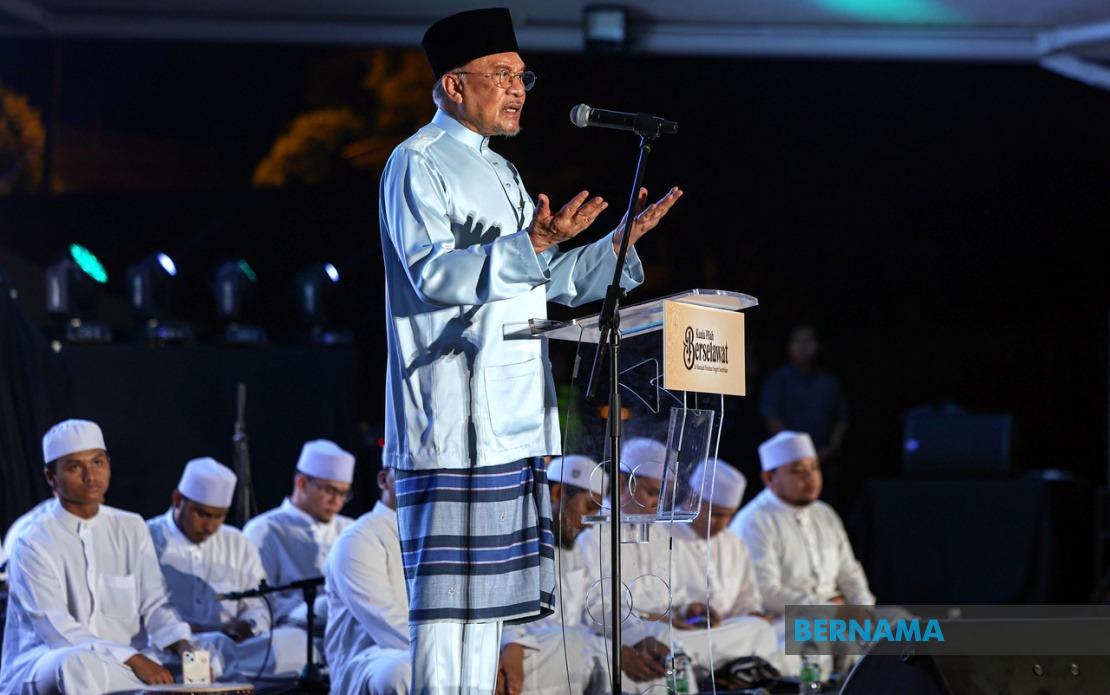
Prime Minister Datuk Seri Anwar Ibrahim has issued a forceful directive that all investigations arising from the Royal Commission of Inquiry into Lembaga Tabung Haji must proceed with complete transparency and without any shield of protection for those implicated in misconduct. Speaking at an event in Kuala Pilah on July 30, the Prime Minister underscored that the commission's findings establish clear lines of responsibility, and his administration intends to pursue these matters vigorously through formal investigative channels.
The Lembaga Tabung Haji, Malaysia's pilgrimage fund management body, has long been subject to scrutiny regarding its financial management and operational practices. The Royal Commission's investigation into the institution represents a significant institutional effort to examine governance issues and accountability mechanisms within this crucial organization that manages savings for hundreds of thousands of Malaysian Muslim pilgrims. By insisting that the RCI's conclusions become the foundation for further action, Anwar positioned the inquiry not as a mere fact-finding exercise but as a prelude to substantive accountability measures.
Anwar's emphasis on transparency signals a departure from what he characterises as previous patterns of institutional opacity. His explicit reference to the absence of "cover-ups" and the statement that "we have waited long enough" suggests frustration with the pace and thoroughness of past approaches to similar institutional failures. This rhetorical positioning appeals to public sentiment regarding governance failures and reinforces the government's stated commitment to institutional reform and anticorruption efforts.
The significance of this announcement extends beyond the immediate Tabung Haji matter. For Malaysian citizens, particularly those with savings in the institution, the Prime Minister's assurance of transparent investigation addresses legitimate concerns about the safety and management of their accumulated pilgrim funds. The Tabung Haji serves millions of Malaysians, making this issue one with substantial personal financial implications for ordinary citizens planning to perform the Hajj.
The presence of senior government officials at the Kuala Pilah event—including Minister in the Prime Minister's Department (Religious Affairs) Datuk Dr Zulkifli Hasan, his deputy Marhamah Rosli, Education Minister Fadhlina Sidek, and Selangor Menteri Besar Datuk Seri Amirudin Shari—underscored the government's unified messaging on the matter. This collective attendance suggested that the administration views the Tabung Haji issue as sufficiently important to warrant high-level political presence and commitment.
The challenge ahead involves translating this rhetorical commitment into concrete action. Malaysian governance has historically struggled with follow-through on anticorruption pledges, particularly when investigations potentially implicate politically connected individuals or senior public servants. The Prime Minister's unequivocal statements therefore represent both a genuine reform agenda and a test of political will. The actual investigative bodies—whether law enforcement agencies, anti-corruption bodies, or judicial institutions—will ultimately determine whether this commitment translates into meaningful consequences.
From a regional perspective, Malaysia's handling of the Tabung Haji matter carries implications for broader institutional confidence across Southeast Asia. As other nations grapple with religious institution governance and pilgrim fund management, Malaysia's approach to accountability serves as either a model or cautionary tale. A transparent investigation with concrete results would reinforce Malaysia's positioning as a country serious about institutional reform, while inadequate action would undermine such claims.
The administrative and investigative complexities involved should not be underestimated. Determining culpability across multiple years, different management teams, and complex financial transactions requires sophisticated forensic analysis. The RCI's work presumably identified specific areas of concern, but translating findings into prosecutable cases involves additional evidentiary and legal hurdles. These technical challenges mean that despite genuine political commitment, the timeline and ultimate outcomes remain uncertain.
For ordinary Malaysians invested in the Tabung Haji, this announcement offers procedural assurance but limited practical clarity about their fund's security or management improvements. The Prime Minister's statement addressed accountability for past conduct rather than prospective reforms to prevent future issues. Comprehensively addressing public concerns would require simultaneous discussion of governance restructuring, management changes, and stronger oversight mechanisms.
The political context matters as well. Anwar's administration has prioritised institutional reform as central to its legitimacy and policy agenda. By publicly committing to transparent investigations into high-profile governance failures, the government signals that no institution remains beyond scrutiny. This positioning affects how the administration is perceived across various constituencies, particularly among voters concerned with standards of governance and accountability.
The road ahead requires sustained political commitment, bureaucratic competence, and judicial independence. The Prime Minister's statements establish the framework and the expectations, but sustained action across multiple institutional actors will determine whether these words translate into meaningful accountability. For Malaysians observing how their government handles this consequential matter, the coming months will reveal whether such commitments carry substance beyond ceremonial declaration.

