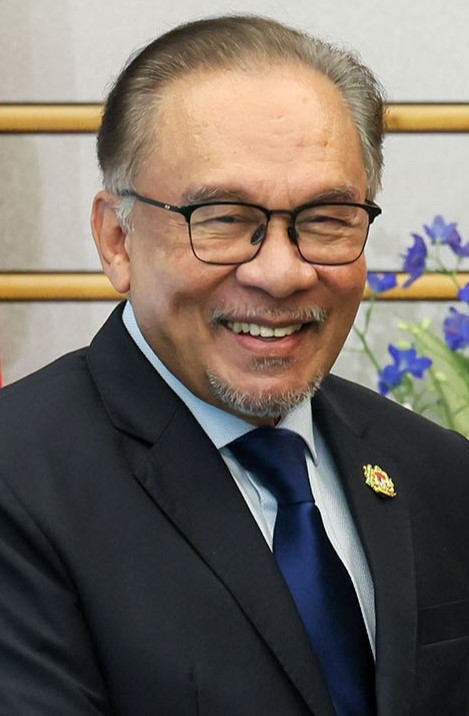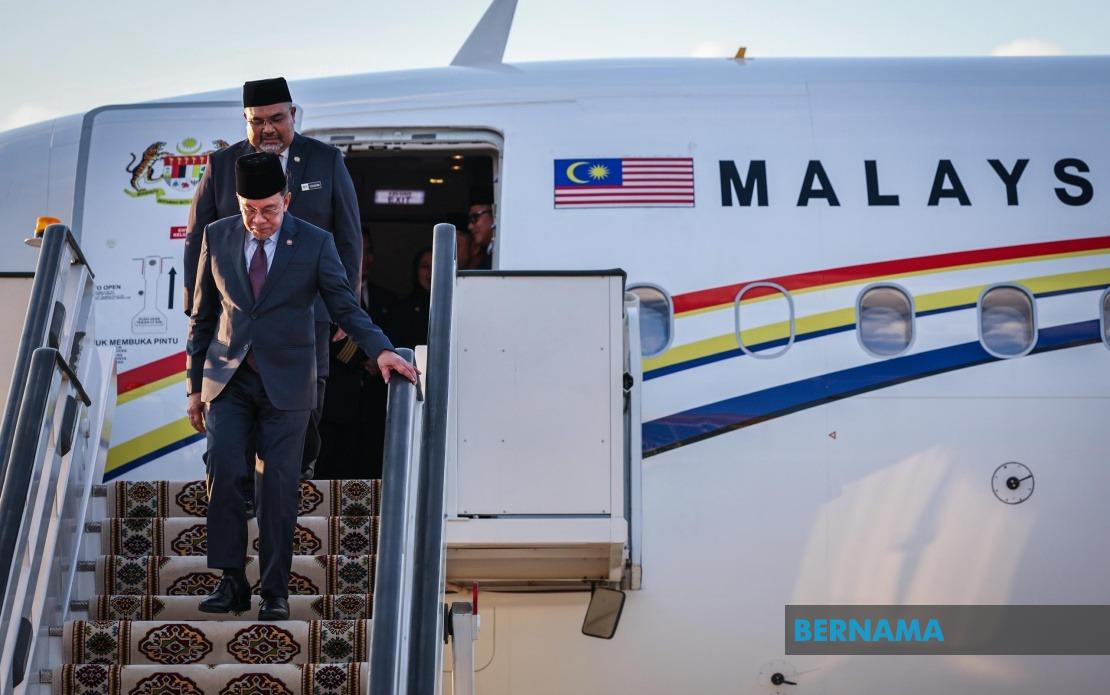
Prime Minister Datuk Seri Anwar Ibrahim touched down in Ashgabat on June 18, completing the first leg of his Central Asian tour. After wrapping up a working visit to Kazan in the Republic of Tatarstan, he proceeded to Turkmenistan's capital, often called the "White Marble City" for its distinctive architecture. His aircraft landed at Ashgabat International Airport at 8 pm local time, marking the beginning of a carefully coordinated two-day official engagement with one of Central Asia's most strategically important energy-producing nations.
The prime minister's delegation reflected the economic significance attached to the trip, with Minister of Investment, Trade and Industry Datuk Seri Johari Abdul Ghani and Minister of Economy Akmal Nasrullah Mohd Nasir accompanying him alongside key officials from the Prime Minister's Office and the Foreign Ministry. Upon arrival, Anwar was received by Malaysia's Ambassador to Turkmenistan Mohd Suhaimi Ahmad Tajuddin, while the host country's representation was led by Deputy Chairman of the Cabinet of Ministers for Oil and Gas Guvanch Agajanov, underlining Turkmenistan's focus on energy sector engagement.
This visit represents a reciprocal gesture following Turkmenistan President Serdar Berdimuhamedov's official visit to Malaysia in December 2024, demonstrating the two countries' commitment to deepening bilateral relations. For Malaysia, the occasion holds particular significance as it marks the first official prime ministerial visit to Turkmenistan, and notably, it constitutes only the fifth visit by a Malaysian prime minister to this Central Asian republic. The deliberate scheduling and high-level composition of the delegation underscore Kuala Lumpur's strategic interest in strengthening partnerships within Central Asia, a region increasingly important for trade diversification and energy security in the broader Asian context.
On his first evening in Ashgabat, Anwar, who concurrently serves as Finance Minister, was scheduled to attend a dinner with Malaysian citizens residing in Turkmenistan and diplomatic friends of Malaysia. This engagement provides an opportunity to connect with the Malaysian community abroad and reinforce people-to-people ties, a cornerstone of Malaysia's soft diplomacy efforts in the region.
The substantive portion of the visit commences on June 19 with a ceremonial welcome at the Presidential Palace hosted by President Berdimuhamedov. Following protocol, Anwar will participate in a one-on-one meeting with the Turkmenistan leader, providing a confidential forum to discuss matters of strategic importance. These private discussions typically address bilateral concerns and opportunities that merit frank discussion away from formal settings. Subsequently, broader bilateral talks are scheduled, during which both delegations will explore deepening cooperation across multiple sectors.
A cornerstone event will be the signing of a joint statement and exchange of agreements and memoranda of understanding already concluded by the two governments. These formal instruments represent the culmination of months of diplomatic groundwork and technical negotiations between Malaysian and Turkmenistan officials. The documents likely encompass economic cooperation, investment frameworks, and potentially sector-specific arrangements particularly relevant to energy and trade.
Anwar will also partake in an official luncheon hosted by President Berdimuhamedov, providing a more relaxed setting for substantive discussions. Subsequently, the prime minister is expected to perform Friday prayers at Turkmenbashi Ruhy Mosque, also known as the Gypjak Mosque. This gesture carries significant cultural and diplomatic weight, demonstrating respect for Turkmenistan's religious heritage and Islamic faith, and presenting Malaysia as a nation valuing interfaith understanding and cultural sensitivity.
The bilateral programme culminates in a joint Malaysia-Turkmenistan Forum at the Chamber of Commerce and Industry of Turkmenistan, co-officiated by both leaders. This platform provides business communities from both nations the opportunity to explore commercial partnerships and investment prospects. Following the forum, Anwar will conduct a press conference addressing the Malaysian media, offering an opportunity to articulate the visit's outcomes and Malaysia's vision for the relationship.
From a commercial perspective, the visit occurs against a backdrop of strengthening economic ties. In 2025, Turkmenistan ranked as Malaysia's fourth-largest trading partner among Central Asian nations. Total bilateral trade reached RM75.80 million, with Malaysian exports comprising RM75.50 million, representing a notable nine per cent increase year-on-year. While these figures may appear modest in global terms, the growth trajectory and market potential warrant sustained engagement.
Petroliam Nasional Bhd, Malaysia's national oil company, has established Turkmenistan as a major investment destination. Since 1996, Petronas has accumulated investments totalling RM52.73 billion in the country, making it one of Petronas' most significant international operations. This deep financial commitment reflects the enduring importance of Turkmenistan's hydrocarbon sector to Malaysia's energy security strategy and Petronas' global portfolio expansion.
For Malaysia, deepening ties with Turkmenistan carries broader geopolitical implications. Central Asia represents an emerging opportunity for Malaysian businesses seeking to diversify beyond traditional Southeast Asian markets. The region's energy wealth, geographic position bridging Europe and Asia, and growing middle-class consumer base present compelling economic prospects. By elevating diplomatic engagement at the prime ministerial level, Malaysia signals its ambition to expand beyond Southeast Asia and position itself as a credible partner in Central Asian development.
Turkmenistan, for its part, benefits from Malaysia's diplomatic experience, Islamic credentials, and established business networks spanning Asia and the Middle East. Closer ties facilitate knowledge-sharing on governance, economic development, and technology transfer, while Malaysian investment and expertise enhance Turkmenistan's diversification efforts beyond its traditional energy sectors.
The visit exemplifies contemporary Malaysian diplomacy's strategic calculus: balancing engagement across multiple regions to maximise economic opportunity, secure energy supplies, and strengthen Malaysia's voice in global affairs. As the region undergoes transition and reorientation following geopolitical shifts, Malaysia's sustained engagement in Central Asia demonstrates astute positioning for future partnerships and prosperity.