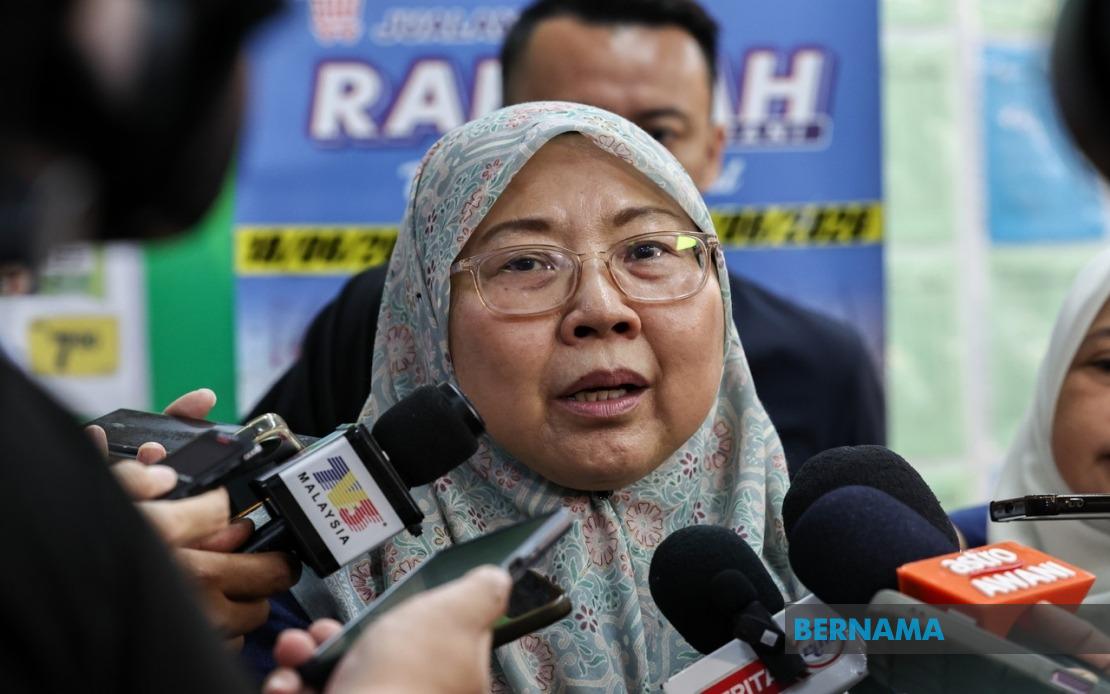
PKR's candidate selection process for the Johor and Negeri Sembilan state elections has reached the final stages, with party secretary-general Datuk Dr Fuziah Salleh confirming that the list is 99 per cent finalised. The party intends to contest 20 state seats in Johor and 16 seats in Negeri Sembilan, with formal announcements of the chosen candidates anticipated within the coming days. This timeline allows the party minimal room for last-minute adjustments before nomination periods commence.
A key feature of PKR's strategy for both elections will be the emphasis on generational balance and gender representation. According to Fuziah, the party is deliberately constructing its candidate roster to blend experienced figures with newcomers, whilst ensuring women and younger candidates feature prominently in the lineup. She indicated that the specific proportion of fresh faces entering the fray would only be revealed during the official candidate announcement, creating anticipation within party ranks and the broader political commentariat.
The Johor state election timeline has been clearly mapped out by the Election Commission. Nomination day is scheduled for June 27, with polling set for July 11 following the dissolution of the State Legislative Assembly on June 1. The Johor state assembly comprises 56 seats in total. Prior to dissolution, Barisan Nasional held a dominant position with 40 seats, followed by Pakatan Harapan with 12 seats, Perikatan Nasional with three, and MUDA with one seat. PKR's decision to contest 20 seats represents a calculated approach to maximising its representation within the Pakatan Harapan coalition framework.
Negeri Sembilan's electoral calendar differs slightly, with nomination scheduled for July 18 and early voting on July 28, with the main polling day set for August 1. The Negeri Sembilan state assembly, which has 36 seats, was dissolved on June 5. Before dissolution, Pakatan Harapan held 17 seats, Barisan Nasional controlled 14, and Perikatan Nasional occupied five seats. PKR's contest of 16 seats in this smaller state legislature reflects the party's ambition to strengthen its presence in a state where the opposition alliance had narrowly maintained control.
A significant complication emerged regarding seat allocation within the Pakatan Harapan coalition, particularly the contentious Puteri Wangsa constituency in Johor. Johor Amanah has challenged PKR's claim to this seat, with Amanah vice chairman Dr Zuhan Zain expressing disagreement with handing the constituency to PKR. The dispute centres on PKR's assertion that Puteri Wangsa rightfully belongs to them after being temporarily loaned to MUDA during the 2022 state election. Fuziah acknowledged that Amanah's position represents a legitimate claim within coalition dynamics, but emphasised that the matter has been escalated to the highest leadership levels of both parties for resolution.
Intra-coalition disputes over seat allocations are not uncommon in Malaysian politics, particularly when component parties believe they have grounds to contest previous arrangements. The Puteri Wangsa disagreement underscores the delicate balancing act required to maintain Pakatan Harapan's cohesion while accommodating the electoral ambitions of its constituent parties. How this dispute is resolved will likely set a precedent for handling similar disagreements that may emerge during ongoing negotiations between Pakatan Harapan partners in both states.
Parallel to candidate finalisation, PKR faces a separate internal discipline matter involving Subang Member of Parliament Wong Chen. Following a disciplinary investigation, Wong Chen publicly challenged the party to expel him, an unusually confrontational stance within party discipline procedures. Fuziah confirmed that this matter has been referred to PKR's Disciplinary Board for further action. The board must now determine appropriate consequences, though Wong Chen's apparent willingness to accept expulsion suggests an underlying dispute of some gravity within the party.
The Wong Chen situation carries broader implications for PKR's internal management during a critical period when the party is mobilising resources for two simultaneous state election campaigns. Disciplinary proceedings occurring parallel to candidate announcements and campaign preparations could prove disruptive, particularly if the matter receives significant media attention or sparks internal faction tensions. The way PKR's leadership handles this case will be closely watched by party members and opponents alike, as it demonstrates the party's commitment to internal accountability.
For Malaysian political observers, these parallel state elections in Johor and Negeri Sembilan represent important tests of Pakatan Harapan's electoral strength and coalition stability. Johor is economically significant and geographically large, making it a priority battleground for all major coalitions. Negeri Sembilan, though smaller, has demonstrated susceptibility to political shifts. PKR's decision to contest 20 and 16 seats respectively reflects confidence in the party's candidate quality and voter appeal, though the coalition will ultimately succeed or fail based on how voters respond to the full slate of candidates across all component parties.
The staggered timing of the two elections—with Johor voting in July and Negeri Sembilan in August—allows Pakatan Harapan to concentrate its campaign resources sequentially. A strong result in Johor could generate momentum for the Negeri Sembilan contest, whilst a disappointing outcome might necessitate urgent strategic reassessment. Both elections occur within a broader context of evolving Malaysian politics, where voter preferences continue to shift and coalition dynamics remain fluid. PKR's performance will be instrumental in determining not only the composition of two state legislatures but also the trajectory of national coalition politics in the months ahead.

