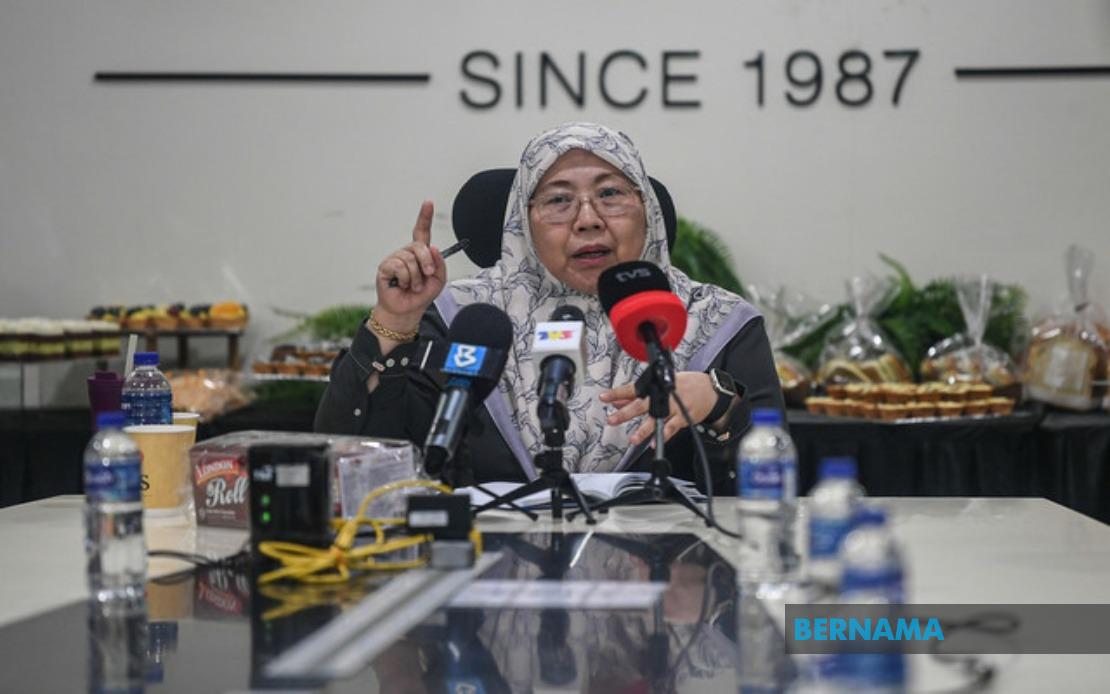
PKR's senior leadership has offered an explanation for the recent departure of a significant faction to rival coalition partner MIC, characterising the move as rooted in personal advancement concerns rather than ideological or strategic differences. Speaking during a working visit to Skudai on June 30, PKR secretary-general Datuk Dr Fuziah Salleh described the exodus as "rather strange," suggesting the party's internal analysis points to a straightforward motivation: members who felt sidelined in the internal hierarchy seeking greener pastures elsewhere.
The defection came to public attention on June 28 when M. Murugan, who previously held the position of vice-chairman on the Johor PKR State Leadership Council, announced his departure alongside approximately 200 supporters. The group formally joined the MIC Iskandar Puteri division, marking a notable shift in the political landscape ahead of the scheduled state election. For a coalition partner like MIC, the acquisition of PKR members represents both a symbolic and numerical gain, though the circumstances of their arrival may carry implications for party cohesion and the perception of MIC as a secondary choice for ambitious politicians.
Fuziah's characterisation of the departures as position-driven offers PKR a face-saving narrative, but it also raises broader questions about internal party management and the distribution of leadership opportunities. In Malaysian politics, the tension between rewarding loyalty and accommodating ambitious newcomers or rising figures has long been a source of internal friction across parties. The suggestion that members felt sufficiently overlooked to seek alternative political homes indicates either a particularly competitive internal environment within PKR's Johor structure or a perception among some members that their contributions were not being adequately recognised through appointment or advancement.
The timing of these departures, occurring less than two weeks before the Johor state election scheduled for July 11, adds a layer of electoral significance to what might otherwise be viewed as routine party management issues. The loss of approximately 200 members to a coalition partner at such a critical juncture could affect ground mobilisation, campaign resources, and the party's ability to field strong grassroots support in targeted constituencies. For voters attempting to gauge the stability and momentum of competing coalitions, such defections send mixed signals about internal satisfaction and organisational health.
Fuziah's public response strategy appears designed to minimise reputational damage by suggesting that those who left were primarily motivated by personal career advancement rather than principled disagreements with PKR's direction or governance. By wishing the departing members well in their pursuit of significant positions within MIC, she implicitly frames them as ambitious climbers rather than disillusioned members with substantive complaints about party policy or leadership. This approach allows PKR to maintain its self-image as an ideologically coherent force while externalising the blame for departures.
However, the broader political context of Johor state politics complicates this simple narrative. PAS president Tan Sri Abdul Hadi Awang's recent call for voters to reject Pakatan Harapan candidates has introduced new dynamics into the electoral competition. For PKR, which anchors PH's presence in peninsular Malaysia, such statements from a nominal coalition partner represent both a strategic challenge and an opportunity for narrative reframing. Fuziah's observation that PAS's position appears designed to revive cooperation with Barisan Nasional suggests PKR's analysis sees the larger picture as one of shifting coalitional alignments rather than purely internal party matters.
The strategy attributed to Perikatan Nasional in this context—attempting to attract Barisan Nasional supporters—reveals the complex triangulation occurring in Johor politics at the state level. Fuziah's assessment that PN's approach might expose internal tensions within that coalition rather than successfully poaching BN voters reflects PKR's reading that the opposition coalition's unity is fragile. PAS's public statements calling for voters to reject PH, while ostensibly coordinated with PN, could indeed damage PN's credibility if seen as undercutting strategic objectives or revealing fundamental disagreements about long-term direction.
For Malaysian observers tracking coalition dynamics, this incident illustrates the persistent challenge of maintaining multi-party coalitions in a competitive electoral environment. Both PH and PN face recurring tensions as their constituent parties balance coalition loyalty against member ambitions and strategic autonomy. The defection of PKR members to MIC, while characterised by Fuziah as individually motivated, may also reflect broader uncertainties about the viability or prospects of the coalitions themselves. If influential figures at the state level lack confidence in their party's trajectory within its coalition structure, the consequences extend beyond individual career calculations.
The Johor state election itself represents a crucial test for both major coalitions. With 172 candidates contesting 56 seats across the state, voter turnout and preference patterns will reveal whether the various coalition strategies are resonating. Early voting is scheduled for July 7, with main polling on July 11. For PKR specifically, the loss of membership and organisational capacity in Johor through these departures could impact performance in constituencies where MIC gains ground, particularly in areas with significant Indian Malaysian populations where MIC traditionally maintains influence.
Fuziah's overall assessment—that the situation ultimately benefits Pakatan Harapan by exposing tensions within the opposition coalition—reflects an optimistic reading by PKR's leadership. Whether such optimism proves warranted will depend on how effectively PH mobilises remaining supporters and how successfully the party rebuilds damaged ground-level networks in Johor. The defections, whatever their root cause, represent a tangible loss of human capital and organisational strength at a moment when PKR can least afford such gaps.

