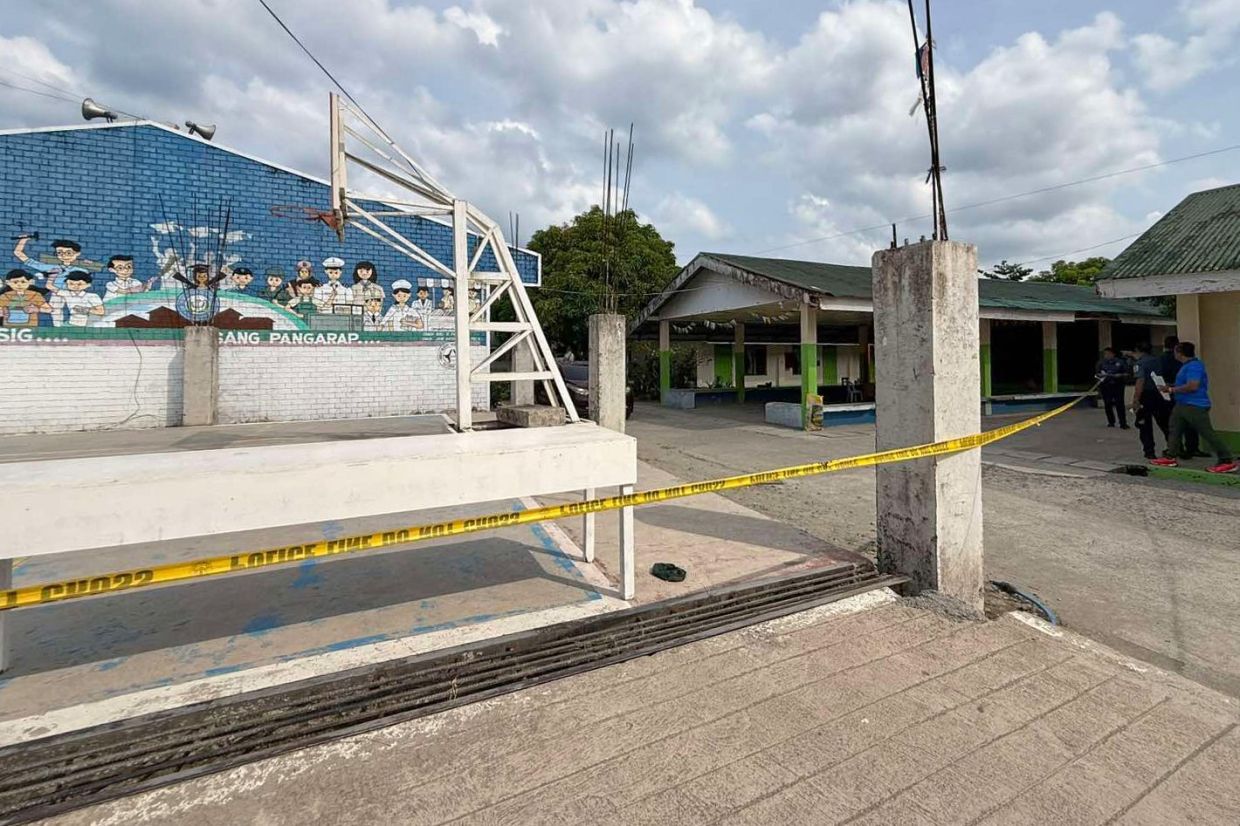
Philippine police have taken a 14-year-old female student into custody following an alleged threat posted on social media targeting Tolosa National High School in Leyte province. Interior Secretary Jonvic Remulla announced the detention during a press briefing at Camp Crame on Thursday, noting that the case emerged from intelligence provided by Senator Bam Aquino regarding the student's online activity from the previous evening.
The Grade 10 student, whose identity has been withheld due to her minor status, created posts that threatened violence against her classmates with alarming specificity. The threatening messages, which circulated across multiple Facebook accounts allegedly operated by the minor, instructed fellow students to prepare for potential harm. One account stated: "Hello. Send this to your friends. Yo, from Tolosa, prepare yourselves, especially to you, as you owe me. Get ready. I will disrupt the school." The follow-up post escalated the threat further, warning that the perpetrator would be unrecognisable but that violence would come without warning, adding ominously that casualties could include those who were shot or stabbed.
The Philippine National Police Criminal Investigation and Detection Group moved swiftly to locate and interview the minor once authorities were alerted. Investigators utilised social media analysis and information from concerned individuals to confirm the student's identity and establish her connection to multiple accounts used to disseminate the threat. Despite these leads, the minor's parents proved uncooperative when approached by local police from Tolosa Municipal Police Station, declining to provide details about the circumstances surrounding the posts. The student herself demonstrated reluctance during questioning, with officials attributing her reticence to anxiety about potential consequences.
An important factor limiting law enforcement action emerged from the Philippines' juvenile justice framework. The minor could not be formally charged under Republic Act No. 9344, the Juvenile Justice and Welfare Act, which restricts criminal prosecution of minors based on their age and developmental status. Consequently, the Philippine National Police transferred the student to the Department of Social Welfare and Development, which ultimately released her pending further evaluation of her circumstances and any required support services.
Investigators uncovered evidence suggesting the minor had deliberately deleted her social media accounts and posts once she learned that authorities had located her, an action that hindered the complete recovery of evidence. Interviews with the student and her family established that neither the teenager nor her relatives possessed access to firearms, a significant finding that reduced the immediate operational risk. Interior Secretary Remulla characterised the initial family engagement as productive, noting that subsequent interactions appeared to have neutralised the threat and rendered it inactive.
The investigation revealed that personal and domestic difficulties likely motivated the threatening behaviour. Remulla indicated that the minor faced family challenges that may have contributed to her decision to post alarming content online. Crucially, authorities found no substantive evidence of an organised conspiracy, no indication that other individuals were involved in planning any actual violence, and no concrete preparations suggesting the threats represented genuine intent to carry out an attack.
The timing of the Tolosa incident cannot be separated from a tragedy that unfolded at San Jose National High School in Tacloban City just days earlier. That Monday, two students aged 14 and 15 opened fire at their school, killing three fellow students and wounding at least twenty others in what represented a devastating breach of school security. The shocking nature of the Tacloban shooting appears to have created an environment in which copycat threats emerged, with Remulla suggesting that the Tolosa student may have been influenced by media coverage and awareness of the actual attack.
A notable connection between the two incidents concerns an online game called GoreBox, which authorities identified as a point of common interest among the suspects in the Tacloban shooting and the minor in the Tolosa case. Both groups were described as avid players of the violent video game, prompting the Cybercrime Investigation and Coordinating Centre to impose a temporary ban on the application. The decision reflects growing concern among Philippine authorities about the potential links between violent digital media consumption and real-world school-based violence, though criminologists remain divided on whether games directly cause violent behaviour or simply appeal to individuals already inclined toward aggression.
For Malaysian and broader Southeast Asian observers, the Leyte incidents highlight the urgent need for coordinated responses to school safety threats in the digital age. Social media platforms enable rapid dissemination of threatening content that can trigger panic across school communities, yet also provide law enforcement with investigative tools and intelligence opportunities. The challenges faced by Philippine authorities—including parental non-cooperation, juvenile justice limitations, and the difficulty of distinguishing genuine threats from attention-seeking behaviour—mirror concerns across the region as schools grapple with evolving security threats in an interconnected digital environment.
The case also underscores the vulnerability of adolescents to normalisation of violence through both online gaming and social media exposure to real-world incidents. In societies where school shooting incidents remain uncommon, the Philippine incidents represent a troubling anomaly that may inspire imitative threats or copycat attempts elsewhere in Southeast Asia. Educational institutions throughout the region are reassessing security protocols, mental health support systems, and digital literacy programmes to address these emerging vulnerabilities.

