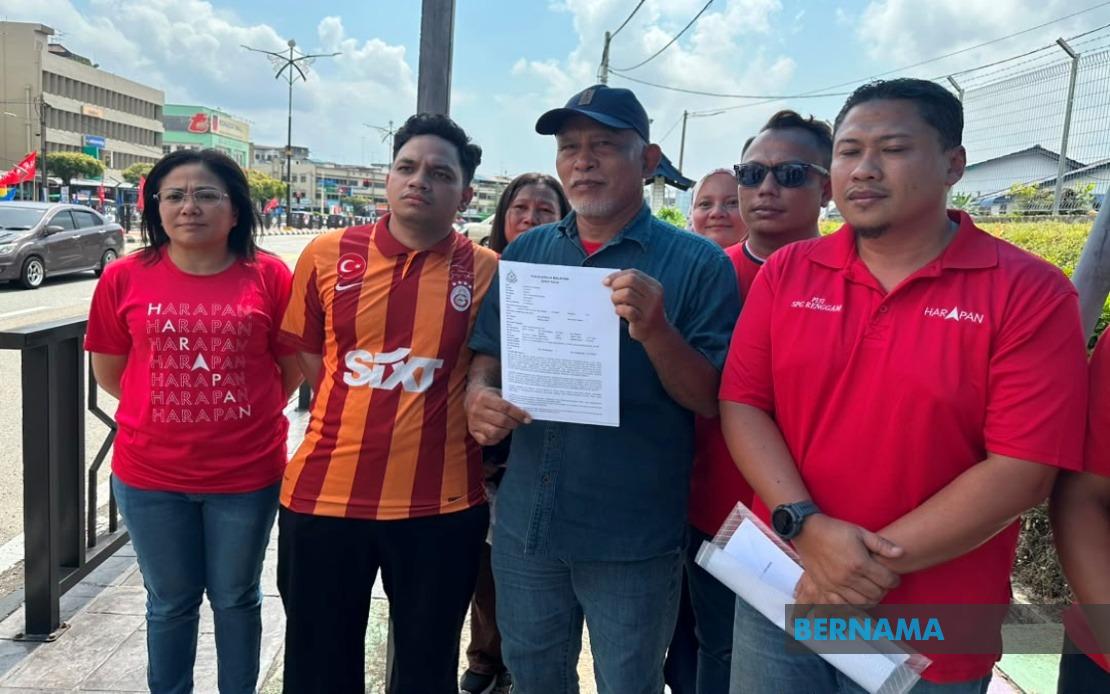
A representative of the Pakatan Harapan candidate contesting the Machap seat has filed a police report accusing Johor Menteri Besar Datuk Onn Hafiz Ghazi of improperly involving Technical and Vocational Education and Training students in politically motivated activities. The complaint, lodged at Simpang Renggam district police headquarters, centres on allegations that students from local TVET institutions were marshalled to attend programmes designed to mobilise support for Barisan Nasional candidates during the state election campaign.
Khiru Nasir Rohani, who brought the complaint and serves as Simpang Renggam Amanah deputy division chief, contends that the incident represents a breach of electoral law. He argues that the coordinated mobilisation of vocational students for partisan purposes violates provisions of the Election Offences Act 1954, particularly clauses prohibiting undue influence and the misuse of official authority or institutional resources for campaign activities. The allegation strikes at the heart of electoral fairness, suggesting that government machinery and educational facilities were leveraged to confer advantage on one coalition.
The specific incident that prompted the report involved TVET students allegedly being required to participate in a programme held in Kluang on July 4. Organisers subsequently used the gathering as a platform for open campaigning in support of BN candidates seeking election to the state legislature. The deployment of captive audiences of students—individuals who may feel constrained by institutional hierarchies to decline participation—raises concerns about the voluntariness of attendance and genuine political engagement. Such tactics have long been a flash point in Malaysian electoral politics, where the boundary between legitimate political outreach and coercive state influence remains contested.
Khiru Nasir has appealed to multiple enforcement and oversight bodies to investigate the matter thoroughly. His call for intervention from the police, the Malaysian Anti-Corruption Commission, and the Election Commission underscores the seriousness with which the allegation is being treated and the broader institutional concerns it raises. A comprehensive inquiry would examine whether official resources were misappropriated, whether students faced pressure to attend, and whether the government apparatus was deployed in violation of electoral neutrality principles that ought to constrain state actors during campaigning periods.
The timing of the complaint is significant, emerging as the Johor state election campaign enters its final phase. A total of 172 candidates are vying for 56 state seats, with polling scheduled for Saturday following the filing of the report. This compressed election calendar means that investigative agencies face limited time to examine allegations and potentially take action before voters go to the polls. The urgency also reflects the competitive nature of the contest and the stakes involved for all parties.
For Pakatan Harapan, the complaint represents a strategic effort to highlight governance concerns and present the BN administration as willing to abuse institutional authority for electoral advantage. The broader narrative constructs a picture of an incumbent government leveraging all available tools—including control of state institutions and educational programmes—to maintain power. This framing resonates with PH's positioning as a reform coalition committed to ending what it characterises as systemic abuse of state machinery for partisan ends.
From the Barisan Nasional perspective, the allegation comes at a moment when the government is mobilising heavily to defend its position in Johor, Malaysia's second-most populous state. Vocational education programmes represent both genuine policy initiatives and potential mobilisation assets, and the accusation that they were weaponised for campaigning challenges the administration's electoral credibility. Onn Hafiz, as Menteri Besar, bears responsibility for institutional conduct across the state, making such allegations personally consequential.
The incident also illuminates persistent tensions in Malaysian electoral practice regarding the distinction between legitimate government communication and improper campaign activity. While politicians and officials routinely appear at public events and educational institutions, questions arise about the context, timing, and pressure exerted on audiences. TVET students, many from economically disadvantaged backgrounds pursuing practical skill development rather than academic credentials, may feel particular pressure to comply with institutional directives regarding attendance at government-sponsored events.
Election law in Malaysia contains specific provisions designed to prevent such conduct, recognising that state resources and institutional leverage create asymmetries incompatible with genuinely competitive elections. The legal framework attempts to cabin official activity during campaign periods, yet enforcement remains inconsistent and often contested. Investigations into this allegation could establish precedent regarding state institutional conduct during election campaigns, particularly regarding educational settings where hierarchical relationships and institutional authority run deep.
The complaint also reflects broader anxieties within Malaysian democracy about the state's institutional capture for partisan purposes. As one coalition controls national government while another dominates in particular states, these tensions surface repeatedly. A thorough investigation would signal whether enforcement agencies are willing to apply electoral law evenhandedly or whether investigations become weaponised tools themselves. For regional observers and international democracy monitors, how Malaysian authorities handle such allegations carries implications for assessments of institutional independence and electoral integrity.
Looking ahead, the investigation's trajectory will likely influence both immediate electoral dynamics in Johor and longer-term perceptions of institutional neutrality. Whether the police, MACC, and Election Commission mount credible inquiries capable of reaching firm conclusions before polling day remains uncertain, but the filing of the report ensures the allegations remain part of the campaign narrative. The outcome may reshape voter perceptions of institutional conduct and governmental legitimacy, making the investigation outcome consequential not merely for the parties involved but for Malaysian democracy's health more broadly.

