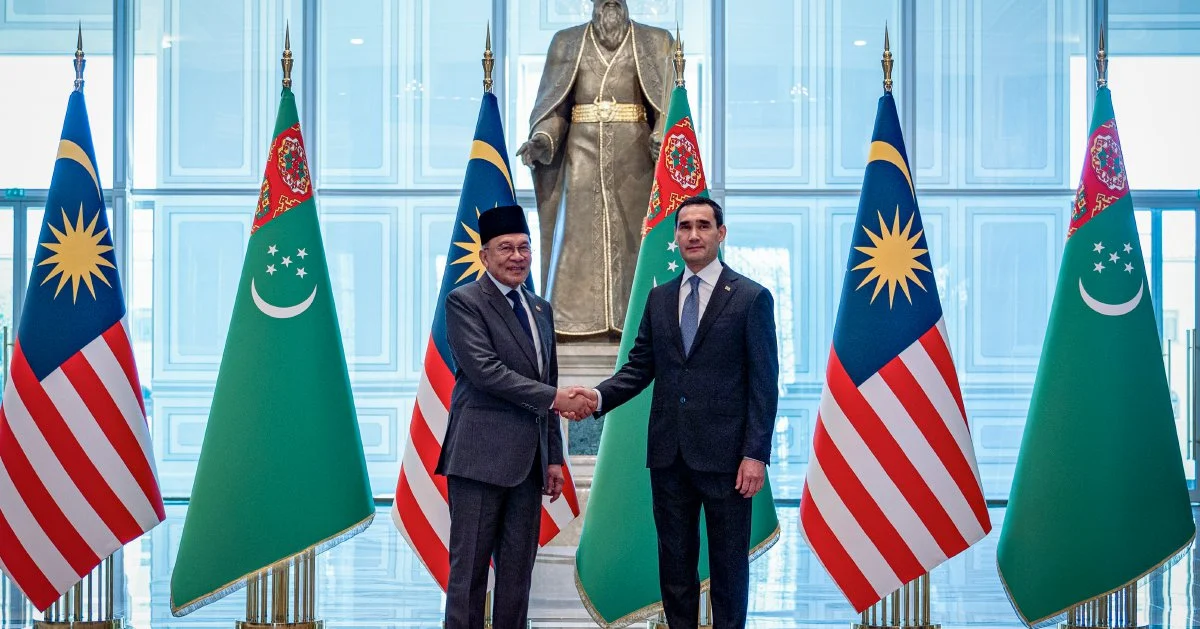
Petronas's growing involvement in Turkmenistan has become a crucial foundation for revitalized Malaysia-Turkmenistan relations, particularly following Prime Minister Datuk Seri Anwar Ibrahim's latest official trip to the Central Asian nation. The national oil and gas champion's deepening footprint in Turkmenistan signals both the consolidation of energy partnerships and Malaysia's broader strategic positioning within Central Asia—a region increasingly important to diversifying the country's economic and diplomatic portfolio beyond traditional Southeast Asian markets.
The timing of Petronas's expanded engagement coincides with elevated political attention from Kuala Lumpur towards Turkmenistan and the wider Central Asian region. This convergence reflects a deliberate effort to transform energy sector cooperation into a springboard for multifaceted bilateral relations. Rather than viewing oil and gas ventures as isolated commercial transactions, both nations are treating these projects as catalysts for sustained diplomatic and economic dialogue, creating institutional channels through which both governments can advance shared interests in energy security, infrastructure development, and trade facilitation.
Petrolas's long-established operational presence in Turkmenistan provides the company with substantial competitive advantages and institutional knowledge that newer market entrants cannot easily replicate. This embedded position allows the Malaysian giant not merely to execute projects efficiently but also to serve as a bridge between Malaysian business interests and Turkmenistan's resource-rich economy. The company's track record, accumulated relationships with Turkmen government agencies, and understanding of local regulatory frameworks position it uniquely to identify and capitalize on emerging opportunities in both hydrocarbon extraction and downstream processing.
Turkmenistan's hydrocarbon reserves rank among the world's most substantial, with proven natural gas reserves that secure the nation's position as a major global energy supplier. For Malaysia, which faces its own energy transition challenges and domestic production constraints, accessing stable long-term gas supplies through Petronas's Turkmen operations offers strategic value extending far beyond immediate profit generation. Such partnerships help secure energy supply chains at a time when global market volatility and geopolitical tensions threaten traditional supply routes and pricing stability across Asia.
The diplomatic visit by Prime Minister Anwar Ibrahim underscores Malaysia's commitment to elevating relations with Central Asian states from episodic engagement to structured, sustained partnership. By publicly endorsing and highlighting Petronas's role in this relationship, the Prime Minister signals to both Malaysian investors and the Turkmen government that energy cooperation carries strategic national importance. This political backing facilitates smoother project implementation, regulatory approvals, and dispute resolution—critical factors determining whether ambitious energy ventures succeed or encounter costly delays.
For Malaysian companies beyond Petronas, the strengthened bilateral relationship creates spillover opportunities across multiple sectors. Construction firms, engineering consultants, financial services providers, and technology companies can leverage the credibility and market access that Petronas's established presence generates. In competitive emerging markets, such ancillary benefits often prove as valuable as direct participation in flagship energy projects, as they lower barriers to entry and reduce perceived investment risk for Malaysian enterprises exploring Central Asian opportunities.
The Central Asian energy sector also represents a counterbalance to Malaysia's traditional dependence on Middle Eastern oil and gas supplies. Diversifying energy partnerships across geographically dispersed regions reduces vulnerability to supply disruptions, price manipulation, and regional conflicts that could otherwise compromise national energy security. Turkmenistan's geographic position—bridging Europe, Asia, and the Middle East—further enhances its strategic value as a reliable alternative supply source and potential transit hub for energy flowing to Malaysian refineries and petrochemical facilities.
From Turkmenistan's perspective, Petronas represents a trusted international operator capable of deploying sophisticated technology and management expertise while respecting host-country interests and sovereignty. Unlike some multinational energy companies that prioritize short-term extraction and departure, Petronas's extended commitment to Turkmenistan suggests alignment with national development objectives, including workforce training, technology transfer, and sustainable resource management. Such collaboration models increasingly appeal to resource-rich nations seeking responsible international partnerships.
The renewed momentum in Malaysia-Turkmenistan ties through Petronas also reflects broader regional trends within Central Asia. Nations in this region, traditionally oriented towards Russia and China, increasingly recognize the value of diversifying partnerships with established Asian economies like Malaysia. This multipolar approach to international relations allows smaller Central Asian states to exercise greater strategic autonomy while accessing varied sources of capital, technology, and expertise. Malaysia's enhanced engagement fits this emerging pattern, positioning the country as a preferred alternative to traditional powers.
Petrolas's expansion in Turkmenistan should be understood within the context of Malaysia's national energy transition strategies. As the country navigates the shift towards cleaner energy sources and reduced carbon emissions, natural gas serves as a crucial transitional fuel. Securing reliable, long-term gas supplies from stable suppliers like Turkmenistan provides Malaysia with the energy foundation necessary to sustain economic growth during the transition period while domestic renewable energy infrastructure expands. This pragmatic approach balances environmental objectives with economic realities.
Looking forward, the deepening Malaysia-Turkmenistan partnership through Petronas's operations is likely to generate additional collaborative initiatives across sectors including energy training, technology development, and infrastructure investment. Both governments possess incentives to expand beyond traditional energy relationships into value-added activities that generate employment, transfer expertise, and create lasting economic benefits extending beyond commodity exports. Such diversification ultimately strengthens bilateral ties and makes partnerships more resilient to commodity price fluctuations.

