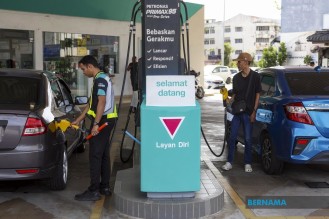
Malaysia's fuel supply landscape shows stability in the near term, with Petronas confirming that petrol stations under its control will maintain adequate fuel stocks through August. The reassurance came from Datuk Seri Azalina Othman Said, Minister in the Prime Minister's Department (Law and Institutional Reform), following discussions at a National Economic Action Council meeting in Kuala Lumpur on June 25. Her statement directly addressed concerns raised by parliamentarians about fuel availability and the government's preparedness should global energy disruptions persist beyond the initial forecast period.
Petrolas Dagangan Bhd, the publicly listed fuel distribution arm of national oil company Petronas, operates an extensive network that supplies approximately 50 percent of the nation's domestic fuel requirements. This commanding market share underscores the critical importance of the company's supply chain continuity to Malaysia's broader energy security and economic functioning. The scale of the operation means that any disruption would immediately reverberate across transportation, manufacturing, and commercial sectors nationwide. The company's ability to maintain adequate stocks through the coming months therefore carries significance well beyond the petrol pump.
The fuel supply guarantee emerged from official correspondence that Petronas submitted to the government, providing quantifiable reassurance about inventory levels and distribution capacity. This direct engagement between Malaysia's energy champion and policymakers reflects the elevated attention being paid to energy resilience at the highest levels of government. The specificity of the August timeline suggests that Petronas has conducted detailed assessments of its storage facilities, refinery operations, and supply chain logistics to provide this confident projection. Such precision carries weight in energy policy discussions, where supply forecasts directly influence contingency planning and public confidence.
Global energy market volatility, particularly arising from geopolitical tensions in West Asia, has prompted Malaysian authorities to establish institutional mechanisms for continuous monitoring and rapid response. To this end, the government has created a dedicated Crisis Management Task Force operating under the National Economic Action Council framework. This task force functions as a nerve centre for energy security coordination, collecting real-time data on fuel, petroleum, and energy supply situations while assessing vulnerabilities that could emerge in coming months. The institutional structure reflects recognition that energy security requires constant vigilance and cross-agency coordination rather than ad-hoc crisis response.
Beyond monitoring current stocks, the task force maintains responsibility for multiple interconnected objectives that shape Malaysia's energy resilience strategy. These responsibilities encompass maintaining price stability in fuel markets—a politically sensitive issue affecting consumer purchasing power and industrial competitiveness—while simultaneously combating smuggling operations and irregular trading activities that drain legitimate supplies. The dual mandate of ensuring both availability and affordability demonstrates the complexity of managing energy policy in a nation dependent on fuel imports and vulnerable to international price fluctuations. Preventing fuel leakage through illegal channels proves particularly important given Malaysia's geographic proximity to less-regulated markets where price differentials create smuggling incentives.
Diversification of crude oil sourcing represents a strategic pillar of Malaysia's response to West Asian supply uncertainty. The government is actively pursuing acquisition agreements with producers located outside geopolitically volatile regions, specifically targeting exporters in West Africa and the Americas. Such geographical diversification reduces dependency on any single region and insulates Malaysia from localized supply disruptions. However, the sourcing strategy acknowledges practical constraints: crude oil cannot be substituted arbitrarily, as refineries require specific crude grades to operate efficiently. Commercial negotiations must therefore balance supply security objectives against technical compatibility and price competitiveness. This complexity means that diversification, while desirable, unfolds within parameters set by refinery specifications and market conditions.
For Malaysian businesses and consumers, the Petronas statement provides near-term reassurance about fuel availability, a foundational input for economic activity. Transport operators, manufacturing facilities reliant on fuel-powered machinery, and logistics companies can reasonably assume uninterrupted fuel access through the August horizon. This certainty allows businesses to plan operations without the anxiety of imminent supply shocks. Small and medium enterprises, particularly those in supply chain management and transportation sectors, benefit disproportionately from this clarity, as fuel cost volatility and supply uncertainty impose outsized burdens on operations with limited financial buffers. The government's articulation of supply security therefore carries immediate practical implications for business confidence and investment planning.
Regional energy markets are watching Malaysia's response framework with interest, as the nation's approach offers lessons for other Southeast Asian economies similarly exposed to global energy market disruptions. Malaysia's strategy combines transparency about supply timelines, institutional coordination mechanisms, and proactive diversification efforts. These elements form a coherent response model that other nations in the region contending with energy security questions might evaluate or adapt. The establishment of a dedicated crisis task force, in particular, represents administrative innovation in addressing energy vulnerability, institutionalizing what might otherwise remain episodic concern into systematic management.
Looking beyond August, the implicit challenge facing policymakers involves extending the stability that Petronas has guaranteed in the near term into a longer planning horizon. The government's existing strategies—crude oil diversification, supply monitoring, and price management—provide foundations for sustained energy security, but their success depends on sustained international cooperation, continued access to alternative suppliers, and stable commercial relationships. The window through August provides time for these strategies to mature and demonstrate effectiveness. Whether the fuel supply stability Petronas has committed to proves sustainable into late 2026 and beyond will depend heavily on whether global energy markets stabilize and whether Malaysia's diversification efforts yield reliable alternative sources at commercially acceptable terms.
The coordination between Petronas, government agencies, and the National Economic Action Council demonstrates institutional maturation in energy policy management. Rather than treating fuel supply as a commodity issue detached from broader economic strategy, Malaysian policymakers have recognized energy security's foundational importance to economic resilience. This integration of energy policy into higher-level economic decision-making structures represents a shift toward holistic risk management. For Malaysian citizens and businesses, the practical implication is that fuel availability—long taken for granted—now receives executive-level attention and institutional safeguards commensurate with its economic importance.

