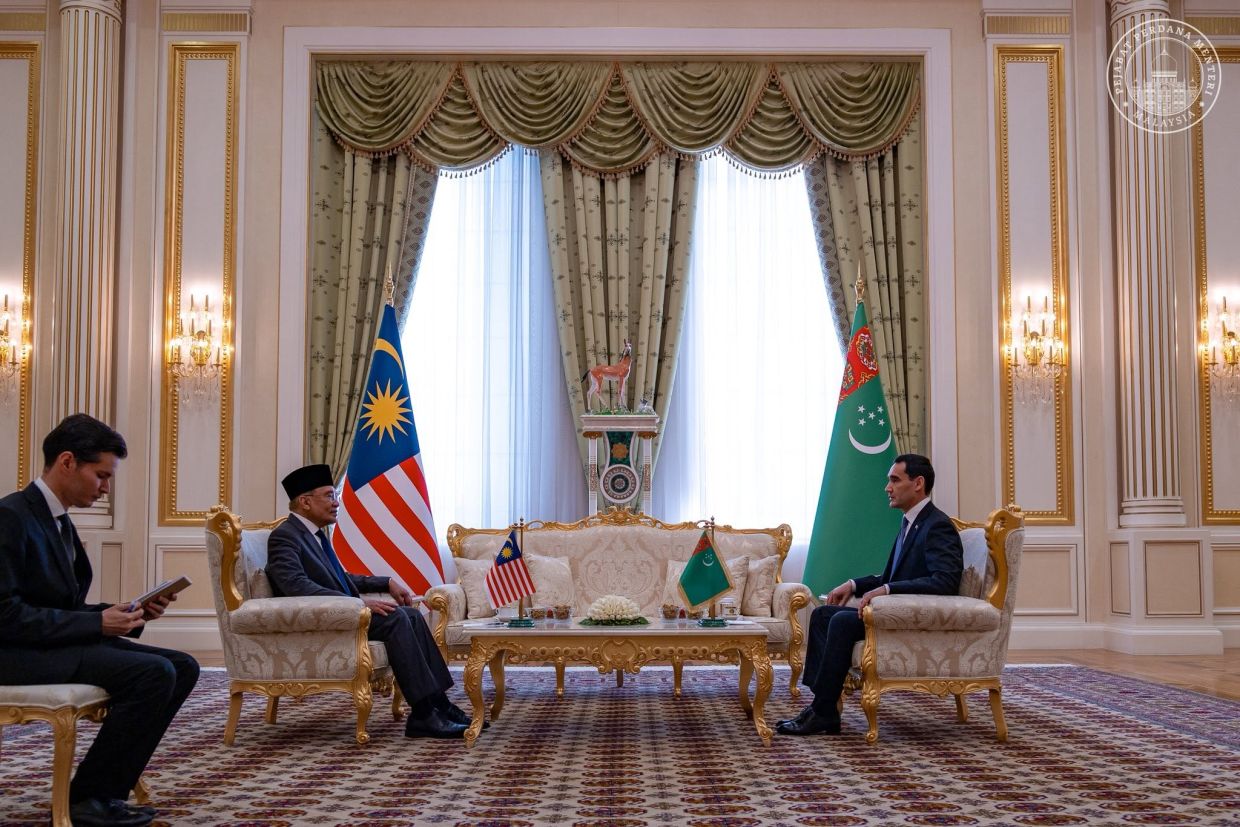
Prime Minister Datuk Seri Anwar Ibrahim and Turkmenistan President Serdar Berdimuhamedov jointly oversaw the formal signing of a strategic partnership between Malaysia's national oil company PETRONAS and Turkmenistan authorities during an official state visit to Ashgabat. The agreement represents a significant milestone in deepening economic and energy collaboration between the two nations, underscoring Malaysia's expanding influence in Central Asian energy markets and its capabilities in delivering world-class technical expertise.
The partnership agreement carries particular significance as it commemorates three full decades of Malaysia-Turkmenistan cooperation within the energy sector. This sustained engagement has provided the foundation for mutual understanding and trust, enabling both nations to build progressively deeper commercial relationships. The longevity of this collaboration distinguishes it within Malaysia's broader Central Asian partnerships, reflecting consistent commitment from both governments to maintaining strategic alignment in one of the world's most resource-rich regions.
According to the Prime Minister's Office, the agreement extends far beyond immediate commercial transactions. The partnership is designed to facilitate knowledge transfer and technological advancement, ensuring that both Malaysian and Turkmen professionals benefit from exposure to international best practices and innovations in energy exploration, extraction, and production. This focus on capacity building represents a deliberate strategy to strengthen the human capital and institutional capabilities that will sustain long-term competitive advantage for both parties in an evolving global energy landscape.
Turkmenistan possesses some of the planet's most substantial natural gas reserves, positioning the nation as a critical player in global energy security, particularly for European and Asian markets seeking diversification away from traditional suppliers. The newly formalized partnership explicitly targets expansion of PETRONAS's involvement in developing these hydrocarbon resources. For Malaysia, securing deeper access to Turkmen gas projects enhances the company's portfolio of reserve replacements at a time when sustaining production volumes becomes increasingly challenging for regional competitors.
The Malaysian government views this strategic arrangement as external validation of the nation's energy sector capabilities. By engaging with Turkmenistan at the presidential level and securing formal partnership status, Malaysia demonstrates that its engineering expertise, technological systems, and project management capabilities command respect among sophisticated resource-owning nations. This international confidence translates into enhanced prestige for Malaysian firms competing for opportunities throughout Central Asia, the Middle East, and Africa, where similar energy development challenges require sophisticated solutions.
From a bilateral trade perspective, the partnership arrives at an opportune moment. Malaysia recorded RM75.80 million in total trade with Turkmenistan during 2025, with Malaysian exports reaching RM75.50 million—a nine percent increase year-over-year. Positioned as the fourth-largest trading partner among Central Asian nations for Malaysia, Turkmenistan's economy provides meaningful albeit modest current volumes that remain ripe for expansion. The strategic partnership announcement is likely to accelerate trade growth as supply chain relationships deepen and joint ventures materialize.
PETRONAS's investment trajectory in Turkmenistan illustrates the company's long-term commitment to the market. Cumulative investments have reached RM52.73 billion since 1996, representing nearly three decades of sustained capital deployment. This substantial financial commitment underscores confidence in the country's geological potential and political stability. For context, investments of this magnitude typically only occur when international energy companies perceive enduring opportunities and satisfactory operational conditions, signaling to other Malaysian businesses that Turkmenistan remains a viable destination despite global economic uncertainties.
The MADANI government's explicit welcome of this partnership reflects the administration's broader strategic objective of elevating Malaysia's standing as a credible, technologically advanced player in global energy markets. Rather than portraying Malaysia as merely a resource exporter, policymakers increasingly emphasize the nation's capacity to export expertise, management systems, and high-value services. Energy sector partnerships with resource-wealthy nations reinforce this narrative and create tangible demonstration effects that encourage other Malaysian companies to pursue international expansion.
Prime Minister Anwar's two-day official visit to Ashgabat, which began the previous day, provided the diplomatic framework for elevating bilateral relations beyond routine commercial interactions. The formal ceremonial reception at the Presidential Palace, coupled with bilateral meetings between Malaysian and Turkmen delegations, signals mutual commitment at the highest political levels. This senior-level engagement facilitates resolution of regulatory impediments, clarification of government expectations, and establishment of collaborative frameworks that expedite commercial negotiations between private entities.
Central Asia remains strategically underpenetrated by Malaysian commercial interests relative to the region's economic potential. Turkmenistan, as a major hydrocarbon producer with geopolitical positioning between Russia and Afghanistan, warrants sustained Malaysian attention. The energy partnership announcement establishes PETRONAS as an anchor investor and strategic partner, potentially encouraging complementary investments from other Malaysian companies in logistics, infrastructure, finance, and service sectors. The multiplier effects of such clustering could substantially expand Malaysia's economic footprint throughout the country.
Looking forward, the partnership opens pathways for exploring emerging energy opportunities beyond conventional oil and gas. As global energy systems transition toward diversification, Turkmenistan's potential in renewable energy development, hydrogen production, and carbon capture represents frontier opportunities where Malaysian technological expertise could contribute meaningfully. Positioning PETRONAS within these future conversations during the partnership's formative stages ensures Malaysia remains relevant as Turkmenistan's energy economy evolves.
The strategic partnership ultimately reflects enlightened resource management by both nations. Malaysia gains preferred access to developing high-value energy reserves while building international credibility for its technical capabilities. Turkmenistan secures an experienced, reliable international partner capable of deploying modern technology while navigating complex global markets. Within the context of regional competition for Central Asian energy resources and influence, this bilateral deepening represents a calculated investment in mutual prosperity and strategic alignment.

