The Social Security Organisation (PERKESO) is preparing for a transformative shift in its caseload, with Human Resource Minister Datuk Seri R. Ramanan projecting that annual claims could increase by as much as 200 per cent from the current baseline of 170,000 cases. This anticipated expansion reflects the structural changes coming to Malaysia's worker protection framework, driven by the phased introduction of several landmark initiatives designed to extend coverage beyond traditional employment relationships.
The projected growth stems directly from three significant policy developments: the LINDUNG 24 Jam scheme, the Gig Workers Act 2025, and a Traveller Scheme still in development stages. Together, these initiatives represent a fundamental broadening of PERKESO's mandate to encompass gig economy workers, informal sector participants, and other vulnerable groups previously excluded from statutory protection. For Malaysian workers and businesses alike, this expansion signals both opportunity and challenge—extended safety nets for millions currently operating outside formal employment structures, but also heightened administrative and financial demands on the social security system.
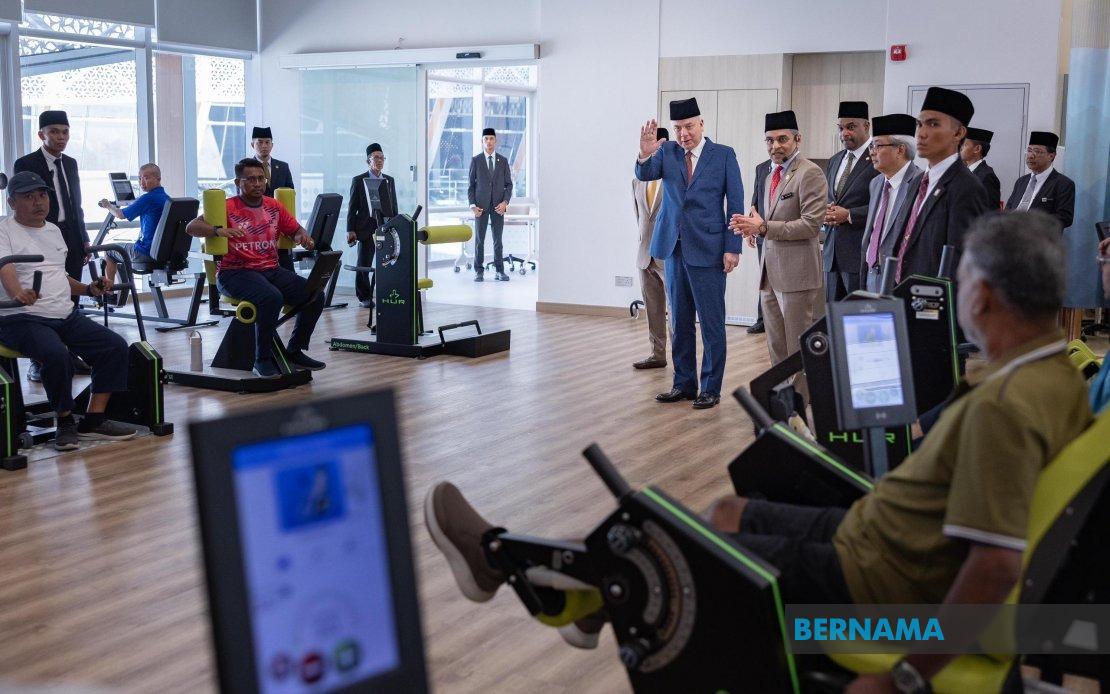
The minister acknowledged that managing such a dramatic influx of claims demands not merely scaled-up operations but a wholesale reimagining of how rehabilitation services are delivered. Speaking at the opening of the Sultan Nazrin Shah PERKESO Rehabilitation Centre in Meru Raya, Ipoh, Ramanan stressed that rehabilitation capacity must evolve in tandem with new coverage schemes. The centre, officially opened by Sultan Nazrin Shah, the Sultan of Perak, represents PERKESO's answer to this challenge, embodying both technological innovation and strategic repositioning within Southeast Asia's health and disability landscape.
Built at a cost approaching RM1 billion, the Sultan Nazrin Shah PERKESO Rehabilitation Centre has earned recognition as Southeast Asia's largest rehabilitation facility. Its scale reflects the ministry's conviction that comprehensive worker protection extends beyond income replacement—claimants require genuine pathways back to productive employment and economic participation. The facility can accommodate up to 700 patients simultaneously and is designed to serve approximately 3,000 individuals annually. Since commencing operations in July 2025, the centre has already treated 1,095 patients, predominantly for accident-related injuries, occupational diseases, spinal cord injuries, and non-communicable conditions including stroke.
The centre's most distinctive feature is its concentration of advanced robotics and cybernetic rehabilitation technology. Through a partnership with Cyberdyne Inc of Japan, PERKESO has deployed 65 Hybrid Assistive Limb (HAL) units—the largest collection anywhere globally—comprising lower limb, single joint, and lumbar variants. These devices represent a qualitative leap in Malaysia's rehabilitation capacity, enabling patients with severe mobility impairments to regain functional independence through assisted movement and neural plasticity retraining. Beyond the HAL systems, the facility integrates an Advanced Biomechanics Rehabilitation Platform combining robotics, virtual reality, and movement simulation, alongside an Advanced Movement Analysis Laboratory utilising motion capture technology, force plates, and electromyography systems.
Safety training and accident prevention receive dedicated focus through the Motorcycle Safety Training Track (MSTT), operated under PERKESO's Centre for Applied Prevention in Social Security. This facility directly addresses Malaysia's high prevalence of motorcycle-related workplace injuries through simulator training, live track instruction, and motorcycle inspection workshops. The emphasis on prevention aligns with the broader shift evident in the ministry's strategy: securing workers' wellbeing through proactive intervention rather than reactive claims management alone.
Equalising attention to economic reintegration, the centre delivers comprehensive vocational rehabilitation spanning technical trades, culinary arts, creative disciplines, administrative skills, and beauty services. This breadth reflects recognition that rehabilitation's ultimate purpose is restoring employment capacity and earnings potential. The ministry has forged partnerships with industry participants to embed practical on-the-job training in culinary arts, barista work, and entrepreneurship, creating genuine pathways from rehabilitation into productive roles. Job placement support operates through PERKESO's MYFutureJobs platform, which leverages digital matching to connect recovered workers with employers actively recruiting.
The significance of this investment extends beyond individual patient outcomes to broader economic considerations. A rehabilitation system capable of efficiently returning workers to the labour force reduces long-term dependency on income benefits while preserving human capital that might otherwise be lost. For Malaysia's economy, particularly as labour shortages intensify across several sectors, maximising the productive potential of injured or disabled workers represents both an ethical imperative and an economic necessity. The Sultan Nazrin Shah centre's positioning as a potential global referral hub suggests Malaysia is staking a claim to regional expertise in a growing field.
Yet the anticipated 200 per cent surge in claims presents formidable operational challenges. Extending coverage to gig workers—who often work irregular hours, lack stable employer relationships, and face documentation difficulties—demands administrative sophistication beyond traditional employment-based schemes. The Gig Workers Act 2025 addresses a workforce segment that has grown substantially but remained largely unprotected, while the LINDUNG 24 Jam scheme and Traveller Scheme target additional demographics. Each requires customised claims processes, benefit calculations, and rehabilitation approaches.
Financial sustainability warrants scrutiny, particularly given the anticipated caseload explosion. A 200 per cent increase in annual claims suggests contribution bases and reserve funds must expand proportionately, or benefits risk compression. The ministry's confidence in PERKESO's capacity hinges partly on whether premium structures adequately reflect expanded coverage and new risk profiles. Gig workers often lack consistent income streams to sustain contributions at conventional rates, creating potential collection and sustainability complications.
From a regional perspective, Malaysia's deliberate expansion of worker protection into informal and gig economy segments positions the country as a pioneer among Southeast Asian nations. Most regional peers have made only tentative moves toward similar coverage, leaving PERKESO's experience as a potential reference point for policy-makers elsewhere grappling with comparable challenges. The technological investments at the Sultan Nazrin Shah centre likewise establish Malaysia as a destination for advanced rehabilitation expertise, potentially attracting regional referrals and establishing new service revenue streams.
The strategic coherence of the ministry's approach—linking expanded coverage schemes with dramatically upgraded rehabilitation and reintegration infrastructure—reflects a sophisticated understanding that protection schemes fail unless claimants receive genuine support returning to work. The centre's emphasis on technology, vocational training, and job matching suggests PERKESO is moving beyond traditional social security roles toward functioning as an active labour market participant, directly engaged in workforce development and economic participation. As the new schemes activate and caseloads begin their anticipated rise, this institution will reveal whether Malaysia's social security infrastructure can successfully navigate the demands of modern, diverse employment relationships.

