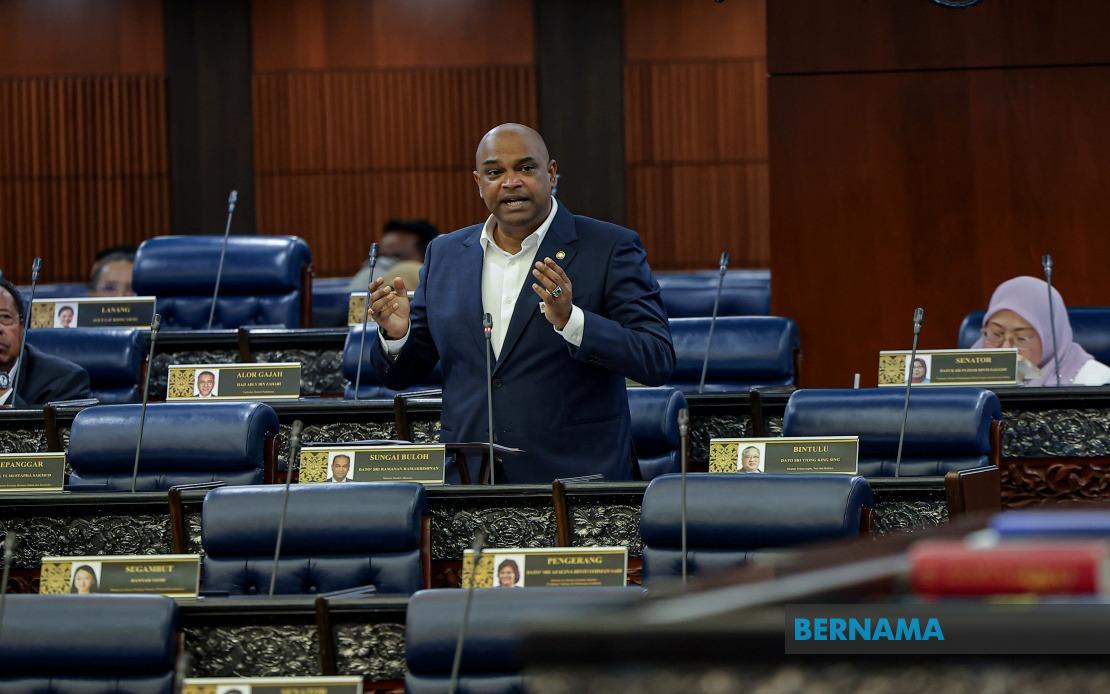
Malaysia's Social Security Organisation (PERKESO) has demonstrated robust performance in its core mandate of serving contributors, achieving a compliance rate exceeding 96 percent in claims and benefit payment processing during the previous year. Human Resources Minister Datuk Seri R. Ramanan disclosed this accomplishment to Parliament on June 24, highlighting the organisation's commitment to maintaining consistent service standards across its expanding portfolio of social protection schemes.
The enhanced performance reflects PERKESO's implementation of more stringent Customer Charter standards introduced from the previous year, establishing clear processing timelines for various benefit categories. The organisation has segmented its service delivery targets based on claim complexity, recognising that different benefit types require varying levels of assessment and documentation verification. Funeral Benefit and Temporary Disablement Benefit claims now operate on a two-day processing window, while more complex assessments such as Permanent Disablement Benefit, Invalidity Pension, Survivor's Pension and Dependant's Benefit claims operate within a three-day framework once all required documentation reaches PERKESO.
The newly introduced LINDUNG Kerjaya scheme, a programme component rolled out in 2025, has demonstrated even more impressive results, with customer charter performance reaching an average of 99.68 percent across all benefit claims processing activities. This elevated performance metric suggests that PERKESO's operational refinements are yielding measurable results in administrative efficiency. The scheme's success provides a template for potential improvements across the broader PERKESO service ecosystem and demonstrates that clearly defined timeframes coupled with system modernisation can substantially improve organisational output.
Underlying this performance improvement is PERKESO's substantial investment in digitalisation infrastructure designed to streamline the claims journey from submission to settlement. The organisation has deployed the LINDUNG Faedah PERKESO portal as a centralised digital platform through which contributors can lodge claims and monitor processing status. This portal represents a shift toward self-service options that reduce processing friction points and enable real-time visibility into claim progression. For Malaysian workers accustomed to navigating increasingly digital government and corporate services, this development aligns with contemporary expectations for transparent, technology-enabled service delivery.
The 1Best system, fully operationalised this year, represents PERKESO's comprehensive overhaul of internal benefits processing infrastructure. This upgraded system architecture enhances the organisation's capacity to manage the growing volume of claims while maintaining accuracy and compliance with statutory requirements. The implementation of such enterprise-level systems typically involves substantial capital investment and organisational change management, signifying PERKESO's strategic commitment to modernisation as a pathway to improved contributor experience and administrative efficiency.
Complementing digital infrastructure investments, PERKESO has launched the PRIHATIN application to provide contributors with easier access to comprehensive information regarding available services. This digital tool addresses a common pain point in social security administration—contributor awareness and understanding of entitlements. By democratising access to service information through a dedicated application, PERKESO reduces barriers that previously compelled contributors to visit physical offices or navigate complex websites to understand their coverage and benefit options.
Beyond digital solutions, PERKESO has established the Prihatin Squad (SPP), a dedicated advisory service comprising officers deployed to provide direct assistance to contributors, beneficiaries and insured persons. This human-centred approach complements technological investments by recognising that certain population segments, particularly older contributors or those unfamiliar with digital platforms, benefit from face-to-face guidance. The squad model also reflects PERKESO's recognition that claims procedures, though standardised, often involve contributor anxiety and confusion that human interaction can effectively address.
For occupational accident claims, which often involve complex medical assessments and time-sensitive requirements, PERKESO has strengthened coordination mechanisms through the INSPIRE System, which establishes direct electronic linkages between healthcare facilities and PERKESO's processing infrastructure. This hospital-PERKESO integration accelerates information flow and eliminates documentation delays that traditionally characterised accident claim processing. Emergency accident cases have been streamlined to completion within 24 hours, a substantial improvement that acknowledges the urgent financial needs of workers facing temporary or permanent work incapacity.
Fraud prevention constitutes another operational dimension where PERKESO has implemented layered safeguards. The organisation employs artificial intelligence for preliminary screening of submitted claims, flagging applications exhibiting characteristics inconsistent with legitimate claims. However, recognising AI's limitations in complex human circumstances, PERKESO maintains manual verification protocols as a secondary validation step prior to benefit approval. This hybrid approach—combining algorithmic efficiency with human judgment—represents contemporary best practice in social security administration, particularly relevant in Southeast Asia where claim circumstances often involve informal work arrangements and variable documentation standards that challenge algorithmic analysis.
For Malaysian workers and their families, these operational improvements translate into more predictable claim processing timelines and reduced uncertainty regarding benefit eligibility and payment schedules. Small business operators who comply with PERKESO requirements gain confidence that their social security contributions translate into reliable coverage. The enhanced digital accessibility particularly benefits younger workers and entrepreneurs accustomed to mobile-first service interactions, while the maintained human advisory services protect older or less digitally-proficient contributors from exclusion due to technological barriers.
The performance metrics disclosed by Minister Ramanan position PERKESO as a comparatively efficient social security administrator within Southeast Asia's regional context, where social protection coverage remains unevenly developed across the region. As Malaysia faces demographic pressures including an ageing workforce and shifting employment patterns toward gig economy arrangements, PERKESO's demonstrated operational capacity becomes increasingly valuable. The compliance rates suggest the organisation possesses sufficient administrative bandwidth to accommodate expanded beneficiary populations, whether through coverage extensions or increased claim volumes.
These improvements also carry implications for Malaysia's broader social safety net effectiveness. When citizens experience reliable, prompt claim processing, they develop greater confidence in social protection systems and are more likely to maintain compliance during periods of economic uncertainty. Conversely, sluggish or unreliable claims processing undermines social security legitimacy, particularly among contributors who perceive their premium payments as unconditional obligations rather than investments in genuine risk protection. PERKESO's demonstrated performance improvements strengthen public confidence in Malaysia's social insurance architecture and reinforce the fundamental value proposition underlying the social security social contract.
As PERKESO continues refining its operational model through ongoing digitalisation and system enhancement, the organisation faces ongoing challenges inherent to social security administration in an economy characterised by significant informal employment, cross-border migration for work, and evolving occupational hazard profiles. The 96 percent compliance achievement represents substantial progress, yet the remaining four percent gap invites examination of persistent bottlenecks or claim categories requiring additional process refinement. Sustained monitoring of performance metrics across demographic and claim type categories will illuminate whether PERKESO's improvements have distributed equitably across all contributor populations or whether certain segments continue experiencing processing delays.

