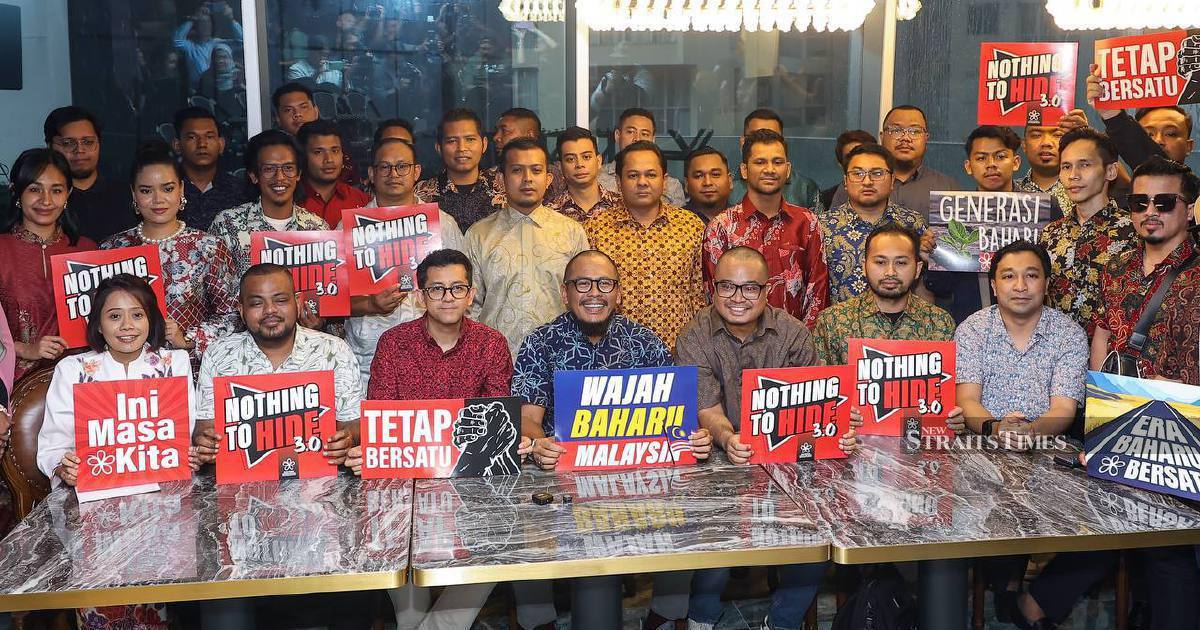
Kota Siputeh assemblyman Mohd Ashraf Mustaqim Abdul Munir has projected a bullish outlook on the possibility of strengthening relations between Pas and Bersatu, the two primary components of the Perikatan Nasional (PN) coalition. Speaking from Kuala Lumpur, the Bersatu representative employed domestic imagery to characterise the nature of recent disagreements, comparing the pair to a household in which partners maintain their commitment despite periodic disagreement.
This assessment reflects a careful political narrative being cultivated within PN circles at a time when strain has become increasingly visible between the Islamic party and the breakaway faction led by former premier Muhyiddin Yassin. The metaphor deployed by Mohd Ashraf Mustaqim Abdul Munir suggests that underlying institutional bonds remain intact, and that the current moment represents a transient phase of adjustment rather than a fundamental rupture in the coalition arrangement.
The comparison to domestic partnerships carries significant political weight in Malaysia's context, where coalition stability has repeatedly proven decisive in determining which bloc commands parliamentary confidence. By framing contemporary tensions as manageable friction rather than existential conflict, Bersatu's representative seeks to project an image of resilience that could stabilise investor confidence and, crucially, reassure grassroots supporters on both sides that their parties' shared electoral and governing objectives remain viable.
Recent months have witnessed mounting public disagreement between Pas and Bersatu over strategic direction, resource allocation, and the balance of power within PN-governed states. These tensions have surfaced across multiple domains, from ministerial portfolios to parliamentary voting patterns, raising questions about whether the coalition structure could withstand additional pressure or external political developments that might force partners to recalibrate their priorities.
For Malaysian politics observers, this latest reassurance from a senior Bersatu figure arrives at a moment when the stability of existing coalitions remains contested. The Barisan Nasional government under Prime Minister Anwar Ibrahim has worked to consolidate its position since the 2023 general election, whilst PN has undergone significant internal reorganisation following the transition of power. The degree to which PN's two main components can resolve their differences will substantially influence their competitive positioning ahead of future electoral cycles and policy deliberations in parliament.
The Perikatan Nasional arrangement itself emerged from specific historical circumstances—the departure of several UMNO and Bersatu figures from their original parties and the subsequent realignment of political forces. That these founding partners now experience friction reflects both the inherent difficulty of holding diverse factions within unified structures and the relentless pressures that Malaysian coalition politics exerts on party discipline and leadership cohesion.
Mohd Ashraf Mustaqim Abdul Munir's measured optimism suggests that behind-the-scenes dialogue between Pas and Bersatu leadership has been occurring, and that sufficient common ground remains to justify continued partnership. The marriage analogy further implies that separation would carry costs both parties wish to avoid, whether in terms of electoral competitiveness, parliamentary representation, or the ability to resist pressure from competing blocs seeking to poach disaffected members.
For regional observers, the internal dynamics within PN merit attention given Malaysia's position as a major Southeast Asian democracy and economic hub. Coalition stability at the federal and state levels affects investor sentiment, policy continuity, and the predictability of governance frameworks that foreign businesses and institutions depend upon. Sustained friction between PN partners could eventually cascade into broader institutional instability if legislative arithmetic becomes uncertain or if executive authority becomes contested across different tiers of government.
The timing of such reassurances also carries strategic significance. By publicly articulating confidence in the partnership's durability, Bersatu representatives can signal to potential allies, swing voters, and nervous stakeholders that PN remains a coherent political force capable of providing stable alternative governance should electoral circumstances shift. This narrative also serves to discipline any internal voices tempted to break ranks or explore realignment opportunities with other coalitions.
Looking forward, the sustainability of Pas and Bersatu's partnership will depend partly on their ability to negotiate functional division of authority and resources across federal and state governments where both parties maintain presence. Recent tensions have highlighted the need for clearer coordination mechanisms and conflict resolution procedures, particularly on issues where Islamic governance principles intersect with questions of economic policy and administrative jurisdiction.
The household metaphor deployed by Mohd Ashraf Mustaqim Abdul Munir ultimately reflects a calculation that reconciliation remains preferable to separation for both parties. Yet it also implicitly acknowledges that such arrangements require constant maintenance, periodic negotiation, and mutual agreement to suppress grievances that might otherwise metastasise into formal rupture. For Malaysia's political system, the success or failure of PN's internal partnership will shape competitive dynamics well beyond the coalition's immediate circles.

