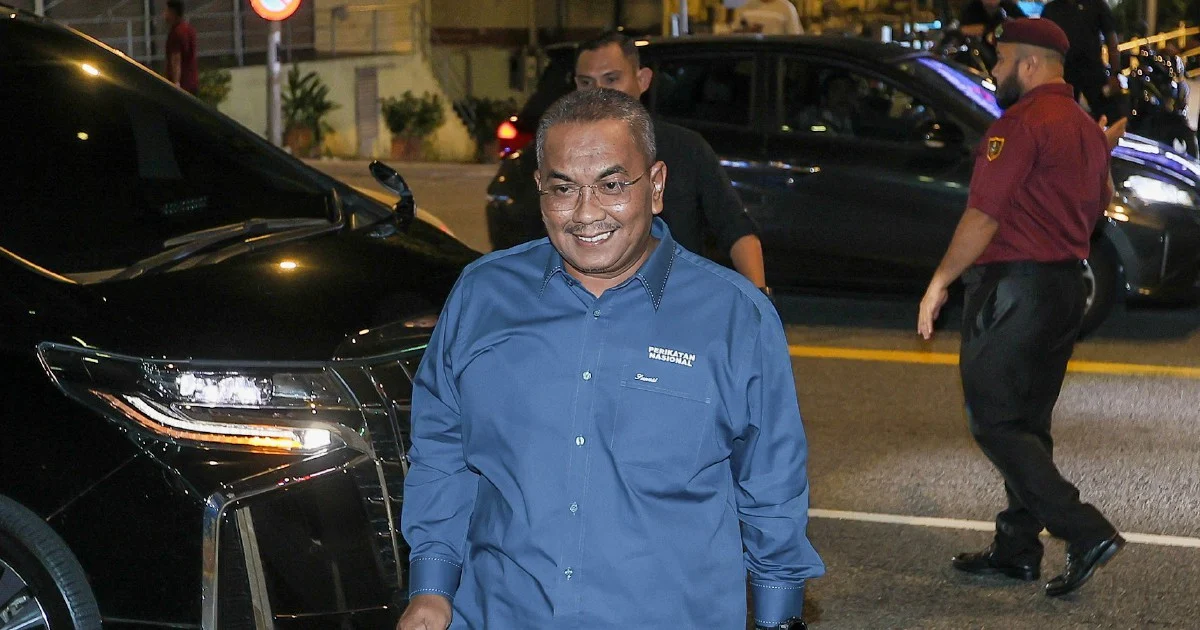
Perikatan Nasional has firmly settled speculation about its electoral strategy for the Johor state election, confirming it will field candidates under its own party logo rather than adopting the Barisan Nasional symbol. The clarification came from PN election director Datuk Seri Muhammad Sanusi Md Nor, who dismissed circulating rumours suggesting a possible merger or joint ticket arrangement with the long-established Barisan coalition.
The statement carries significance for Malaysia's evolving political landscape, where coalition arrangements and electoral alliances have become increasingly fluid over the past decade. The distinction between contesting under PN's own identity versus adopting BN's banner speaks to deeper questions about party positioning and electoral viability in one of the country's most politically consequential states. Johor has historically served as a political bellwether for national trends, making the composition and strategy of competing coalitions matter considerably to both state and federal politics.
Sanusi's pronouncement effectively closes the door on speculation that Perikatan Nasional might seek shelter under BN's established political machinery and voter networks, at least for the Johor contest. Such rumours had circulated among political observers and analysts who noted the historical dominance of BN structures in the state and questioned whether PN possessed sufficient ground organisation to compete effectively as an independent political entity. The coalition's decision to proceed with its own identity represents either considerable confidence in its electoral strength or a deliberate choice to build political capital through a standalone campaign.
The timing of this clarification matters within the broader context of Malaysian federal politics. Relations between Perikatan Nasional and Barisan Nasional have oscillated between cooperation and tension since PN's formation, with both coalitions vying for dominance within the ruling government structure. The Federal Territory was administered jointly by these coalitions, and several states have witnessed intricate negotiations about electoral alliances. Johor presents a fresh test case for whether PN can establish independent electoral credibility in a major state without relying on BN's organisational infrastructure.
For Johor voters, the decision signals that the coming election will present a genuine choice between two distinct political coalitions rather than a cosmetic rebranding of the same political machinery. Perikatan Nasional, comprising Parti Islam Se-Malaysia, Bersatu, and other parties, brings a different political philosophy and personnel compared to the traditional BN configuration anchored by UMNO and MCA. This distinction becomes particularly relevant for constituencies where these coalitions present competing candidates, allowing voters to differentiate between rival political visions rather than choosing between similar alternatives.
The assertion that there are no plans to use the BN banner appears designed to preempt further speculation and provide clarity to party members and supporters about PN's strategic direction. Political rumours, particularly regarding potential mergers or absorptions by larger coalitions, can undermine campaign momentum and create uncertainty among grassroots operatives who need clear direction and confidence in their party's independence. By publicly shutting down these possibilities, Sanusi provides the organisational clarity necessary for effective campaign preparation.
Johor's political significance cannot be overstated. As the home state of former Prime Minister Muhyiddin Yassin and several other prominent PN figures, the state represents a crucial proving ground for the coalition's political viability. A strong showing in Johor would validate PN's claim to be a genuinely independent political force capable of competing nationally, while disappointing results might have ramifications for the coalition's standing in federal politics and its relationship with Barisan Nasional. The electoral contest therefore transcends mere state-level politics, carrying implications for how Malaysia's national political equation evolves.
The decision also reflects practical considerations about electoral law and voter psychology. Contesting under a unified PN logo creates consistent branding across all PN-fielded candidates, simplifying voter recognition and campaign messaging. It also avoids the potential confusion that might arise if some candidates campaigned under PN's identity while others adopted BN symbols, which could dilute the distinctiveness of either coalition's message and create voter uncertainty about which organisation actually controls candidate selection and resource allocation.
Looking ahead to the actual campaign period, this declaration sets expectations for how political parties and observers should interpret PN's performance. Electoral victories achieved under PN's own banner carry different political meaning than victories achieved under a borrowed BN identity, affecting both internal party morale and external perceptions of which coalition possesses genuine electoral strength. The state election therefore becomes a referendum on whether Perikatan Nasional has successfully established itself as a legitimate independent political force capable of winning major constituencies on its own merits rather than riding on the coattails of more established political machinery.

