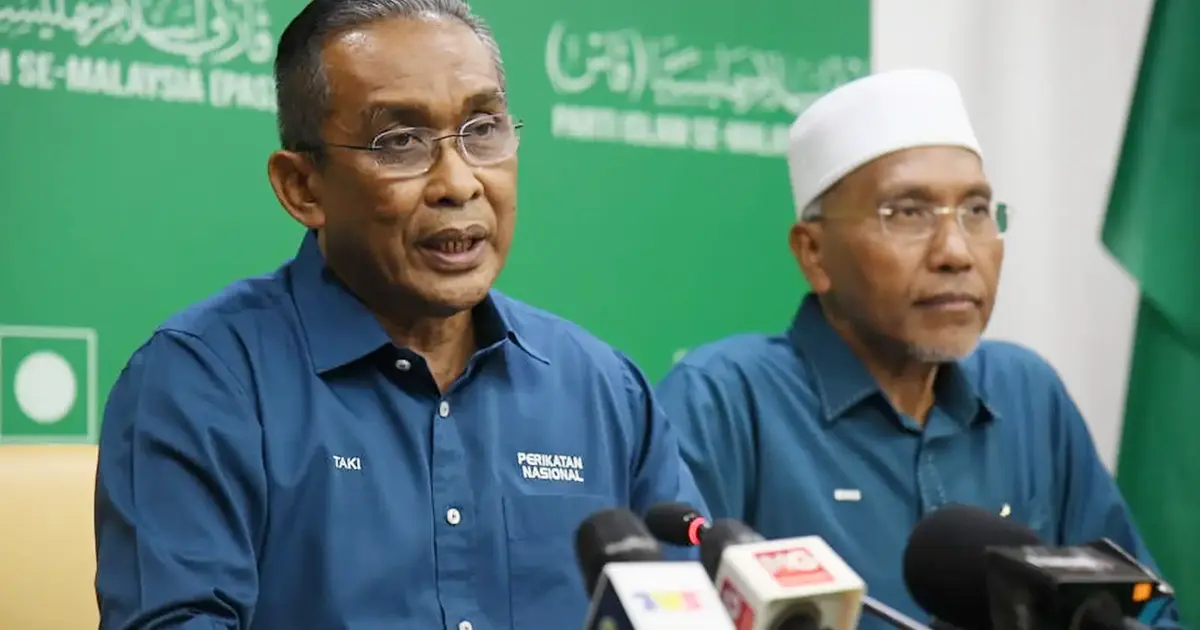
Perikatan Nasional has established a new framework requiring formal authorization from its chairman before any meetings or organized events can take place, according to a statement from the coalition's secretary-general Takiyuddin Hassan. This procedural shift comes amid reports that Bersatu president Muhyiddin Yassin had initiated steps to convene a Supreme Council meeting without prior coordination through established channels, prompting the clarification on governance protocols.
The announcement underscores growing formality around decision-making within the four-party coalition, which comprises Bersatu, PAS, Gerakan, and PKR's breakaway faction. By centralizing approval authority with the chairman's office, the coalition aims to ensure that major gatherings follow agreed-upon administrative procedures rather than being called unilaterally by individual member parties. This represents a departure from more flexible arrangements that may have characterized earlier periods of the PN's formation and development.
For Malaysian political observers, the move signals potential underlying tensions between coalition partners about the distribution of power and influence. Bersatu, as the largest and most influential component party within PN, has historically played a dominant role in shaping coalition direction. The secretary-general's intervention suggests that other parties—or the coalition machinery itself—seek to establish clearer checks on the convening authority of individual party presidents, preventing any single faction from unilaterally determining the PN's agenda.
The timing of Takiyuddin's statement is significant given the fractious nature of Malaysian coalition politics. The PN was formed as an alternative political configuration following the collapse of the Pakatan Harapan government in early 2020, initially serving as the foundation for the Muhyiddin administration. Since then, internal strains have periodically emerged as parties navigate competing interests, with control over mechanisms like meeting schedules becoming markers of broader power dynamics within the coalition.
Regarding implications for regional political stability, the professionalization of PN's internal governance could either strengthen or weaken the coalition depending on how parties respond. Clearer rules may reduce uncertainty and prevent destabilizing surprises, but they could also formalize existing divisions if member parties perceive the chairman's veto power as being wielded to suppress legitimate voices. In Southeast Asia's volatile political environment, where coalition governments are increasingly common, how the PN manages internal democracy may offer lessons—positive or cautionary—to observers across the region.
The requirement for chairman approval also reflects broader patterns in Malaysian politics where procedural rules frequently become contested terrain. When a single party dominates a coalition, disputes over meeting protocols often disguise deeper disagreements about direction and decision-making authority. PAS and Gerakan, as junior partners within PN, may view centralized approval as protecting the coalition's stability, while Bersatu might regard the same mechanism as limiting its prerogatives as the largest component.
For Malaysian voters and civil society organizations monitoring PN activities, the new protocol introduces greater transparency into when and why major coalition meetings occur. Rather than Supreme Council gatherings being convened with little advance notice, the secretary-general's statement indicates that such events will now follow prescribed administrative channels. This could enhance predictability around PN policy announcements and strategic decisions, allowing stakeholders more opportunity to prepare responses.
Takiyuddin's role as secretary-general has historically been a stabilizing one within PN structures. By articulating these procedural requirements, he positions the secretariat as a neutral custodian of coalition rules rather than as an instrument of any particular party faction. This distinction matters in Malaysian coalition politics, where secretariats often become contested spaces reflecting the balance of power between constituent parties.
The statement also has implications for how PN manages its relationship with other political blocs. If the coalition presents itself as increasingly disciplined and rule-bound, it may enhance its appeal to fence-sitter parties or independent lawmakers considering alignment. Conversely, if the new protocols are perceived as stifling legitimate participation by smaller parties, they might damage PN's cohesion at critical moments when maintaining unity proves essential for political survival or legislative success.
Looking forward, whether this formalization of meeting approval mechanisms endures depends on whether all PN partners regard them as fair and equally applied. If the chairman's office uses approval authority to marginalize certain parties' voices or block legitimate grievances from being aired, the rule could become a flashpoint rather than a stabilizing device. The next significant test will likely come when the PN faces a contentious decision requiring Supreme Council input, revealing whether parties accept chairman oversight or seek to circumvent it.

