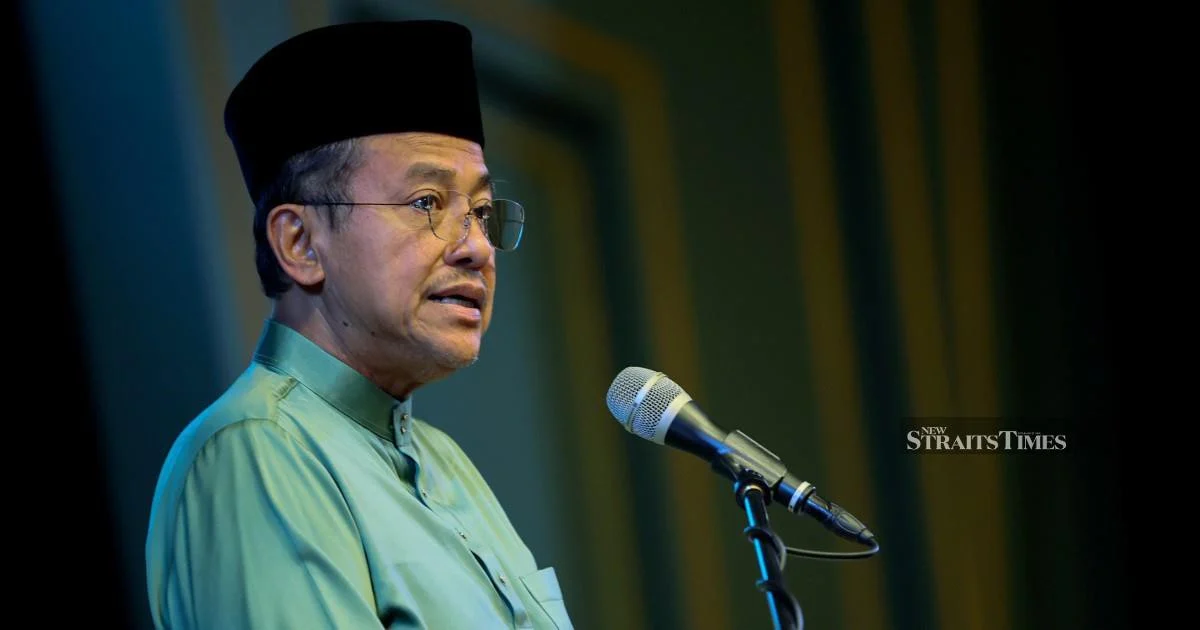
The Perikatan Nasional coalition faces a critical juncture as its leadership council prepares to assess Bersatu's standing within the alliance, a development that underscores mounting internal tensions within the opposition bloc that has positioned itself as an alternative to the current federal government. The discussion, announced by PAS vice-president Datuk Seri Dr Ahmad Samsuri Mokhtar in Temerloh, signals that senior figures within the three-party coalition are grappling with fundamental questions about the party's future trajectory and its viability as a unified political force.
The convening of such a high-level meeting reflects deeper fractures within PN that have surfaced periodically over the past year, with disagreements emerging over strategic direction, resource allocation, and the distribution of political influence among its constituent parties. Bersatu's position has become increasingly precarious following the party's earlier realignment efforts and internal leadership dynamics that have periodically threatened the coherence of the broader coalition. The fact that this matter requires deliberation at the leadership council level indicates that party heads believe the issue demands urgent attention to prevent further deterioration.
For Malaysian political observers, this development carries significant implications for the stability of opposition politics heading into critical periods of political contestation. A weakened or destabilised PN could reshape the entire electoral landscape, potentially affecting how voters perceive the viability of non-governmental alternatives. The coalition's internal cohesion has always been more fragile than its Barisan Nasional counterparts, relying heavily on personal relationships and occasional alignment of strategic interests rather than deep ideological bonds or historical institutional roots.
Bersatu's trajectory within PN has been complicated by its own internal struggles and its previous positioning within federal government structures. The party's relationship with the broader coalition remains influenced by questions of legitimacy and whether it brings sufficient electoral value to justify its seat allocation and influence within decision-making structures. These calculations become more urgent as politicians across Malaysia contemplate the timing and nature of the next general election cycle.
PAS, as the largest component of PN and the party represented by Mokhtar, has its own considerations regarding coalition viability. The Islamic party's electoral strength, particularly in East Coast states, forms a cornerstone of PN's political foundation, yet this positioning also means PAS must balance its own interests against maintaining coalition unity. The vice-president's decision to speak publicly about the meeting suggests that party leadership wants to manage perceptions and signal to party members and voters that serious deliberation is occurring about the coalition's future.
The broader context involves Malaysian politics' continuing fragmentation, where multiple competing blocs vie for voter attention and support. The Perikatan Nasional represents one major grouping, while Pakatan Harapan commands its own coalition dynamics, and various independent or loosely affiliated politicians maintain leverage as potential kingmakers. Within this complex environment, the stability of any single coalition matters considerably, as defections, realignments, or collapse can dramatically alter the political mathematics.
Bersatu's specific challenges within PN merit examination beyond the immediate coalition structure. The party's electoral performance, its effectiveness in mobilising voters, and its ability to contribute to coalition-wide strategic objectives all factor into whether senior PN figures view it as essential or expendable. Additionally, questions surrounding party leadership, internal discipline, and the party's messaging clarity can influence how coalition partners assess their peers' utility and reliability.
The timing of this leadership council discussion also warrants attention. Scheduled deliberations about a coalition partner's position typically emerge when tensions have reached a threshold requiring formal institutional resolution. The fact that Ahmad Samsuri Mokhtar publicly announced the agenda suggests that PN leadership intends to address this matter transparently, or at least to signal that the matter is being handled through proper procedural channels rather than through backroom negotiations or public disputes.
For state-level politics, PN's internal coherence carries particular significance. In states where PN maintains government, coalition stability directly affects the capacity of elected representatives to govern effectively and deliver on electoral mandates. In opposition-held states, a fractured PN may struggle to present a unified, credible alternative to incumbent administrations. The electoral calculations specific to each geographic region therefore influence how different party leaders view coalition membership and the importance of maintaining alliance discipline.
Moving forward, the outcomes of tomorrow's meeting will likely shape PN's political positioning for months ahead. Whether the council affirms Bersatu's position, demands institutional reforms, or signals potential recalibration will have ripple effects across state governments, parliamentary alignments, and voter perceptions of the coalition's viability. The leadership council's decision-making process and the manner in which any conclusions are communicated to the broader party membership and public will reveal much about how PN manages internal conflicts and maintains coalition discipline during a period of political uncertainty.
The meeting also reflects the practical reality that coalition politics in Malaysia requires continuous negotiation and recalibration as parties reassess their relative positions and future prospects. For voters contemplating their political choices, PN's internal management of these questions may either inspire confidence in the coalition's maturity and institutional capacity or raise concerns about underlying instability. As Malaysian politics continues its fractious evolution, the health and coherence of major political blocs remain central to understanding how power will be contested and ultimately distributed in the country's democratic arena.

