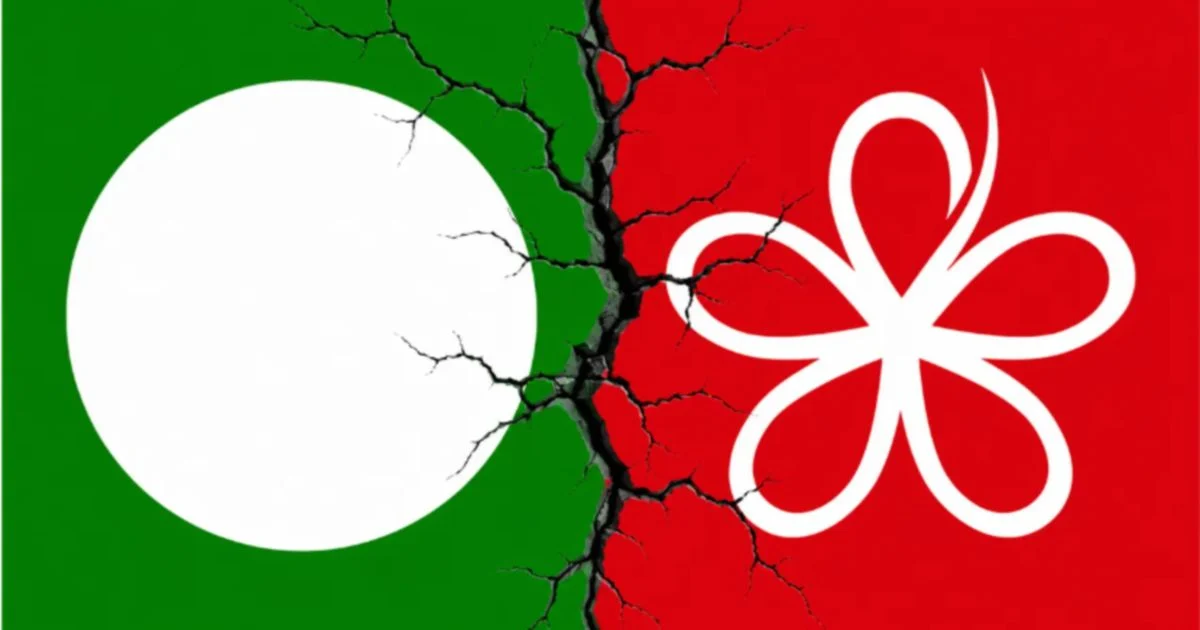
The deepening divide between PAS and Bersatu within the Perikatan Nasional coalition poses a significant threat to the bloc's viability as a cohesive political force heading into the 16th General Election, with analysts increasingly warning that internal instability could prove costly at the ballot box.
The friction between the two largest components of Perikatan Nasional reflects fundamental disagreements over strategy, resource allocation, and the direction of the coalition itself. These tensions have become increasingly visible to the electorate, undermining the unified front that opposition blocs typically need to challenge the ruling establishment. As party cadres engage in public disputes and contradictory messaging reaches voters through both traditional and digital channels, the coalition risks appearing disorganised and unfit to govern.
PAS, as the dominant Islamic party within Perikatan Nasional, brings substantial support from conservative Muslim voters across the country, particularly in the northern and eastern regions. Bersatu, meanwhile, commands influence among ethnically diverse constituencies and carries the residual political capital of its former leadership. The tension between these two parties creates a power struggle that extends beyond ideological differences into practical competition for prominence within the coalition framework.
The impact of this rift extends beyond internal coalition dynamics. Voters who might otherwise consider Perikatan Nasional as an alternative to the current government face uncertainty about the coalition's internal stability and trustworthiness. In Malaysian electoral politics, where voters frequently shift allegiances based on assessments of governance capacity and party cohesion, such visible divisions can rapidly erode support. The phenomenon is particularly acute among swing voters in marginal constituencies who often decide elections based on perceptions of which coalition can deliver effective administration.
For PAS, maintaining coalition unity is essential to translating its grassroots mobilisation capacity into parliamentary seats. The party has invested significantly in organisational infrastructure, particularly in rural and semi-urban areas, but relies on the coalition framework to achieve the geographic spread necessary for significant parliamentary representation. Should the coalition fracture, PAS risks finding itself isolated, potentially facing electoral losses in mixed demographics where Bersatu's presence might otherwise ensure competitive outcomes.
Bersatu faces equally pressing challenges. Unlike PAS, which has decades of established party structures and voter loyalty networks, Bersatu depends heavily on coalition partnerships for political viability. The party's base, though passionate, remains concentrated geographically and demographically. Division within Perikatan Nasional threatens to reduce Bersatu's relevance, potentially pushing it to the margins of Malaysian politics. This dynamic creates perverse incentives, as party leaders may prioritise short-term tactical gains over long-term coalition stability.
The Malaysian electoral system amplifies the consequences of coalition weakness. Because the country employs a first-past-the-post mechanism across 222 parliamentary seats, fragmented opposition forces struggle to consolidate anti-government sentiment efficiently. When coalitions appear unstable, sophisticated voters may shift towards establishing parties they perceive as more durable, regardless of ideological preference. This has historically benefited governments over fractious oppositions, a pattern that Perikatan Nasional cannot afford to repeat if it hopes to challenge for power.
Regional implications of this rift deserve consideration. Perikatan Nasional has positioned itself as a Southeast Asian political model, with some international observers viewing it as a potential alternative governance framework. However, internal divisions undermine such claims and may affect the coalition's ability to present itself credibly to foreign governments and investors who value political stability. Malaysia's image as a stable democracy depends partly on visible signs of political maturity and organisational coherence within its major power blocks.
The timing of this tension is particularly problematic. As Malaysia approaches the next general election cycle, expected within the next two years, both PAS and Bersatu face critical decisions about resource deployment and candidate selection. These processes are typically sources of significant internal friction, and when conducted against a backdrop of already-strained relations, they risk triggering open conflict. Recent disputes over nomination procedures and contested seats have already signalled deeper fault lines that extend beyond personalities into institutional design.
Observers note that coalition management requires explicit mechanisms for conflict resolution and power-sharing. Perikatan Nasional has historically lacked the formalised structures that successful coalitions require, operating instead through personal relationships and informal understandings. As relationships deteriorate and leadership changes occur, the absence of institutional frameworks becomes increasingly problematic. Without clear protocols for decision-making, resource distribution, and dispute arbitration, minor disagreements escalate into coalition-threatening crises.
The trajectory of this conflict will significantly influence Malaysian politics heading into GE16. Should the rift narrow and parties achieve genuine reconciliation, Perikatan Nasional could present itself as a unified alternative enjoying broad appeal. Conversely, if tensions persist or intensify, the coalition risks unravelling entirely, fragmenting votes across competing blocs and effectively returning the political landscape to the fluid, unpredictable dynamics of recent years. For Malaysian voters and international observers monitoring the country's democratic health, the stability of Perikatan Nasional has become a matter of substantial political significance.