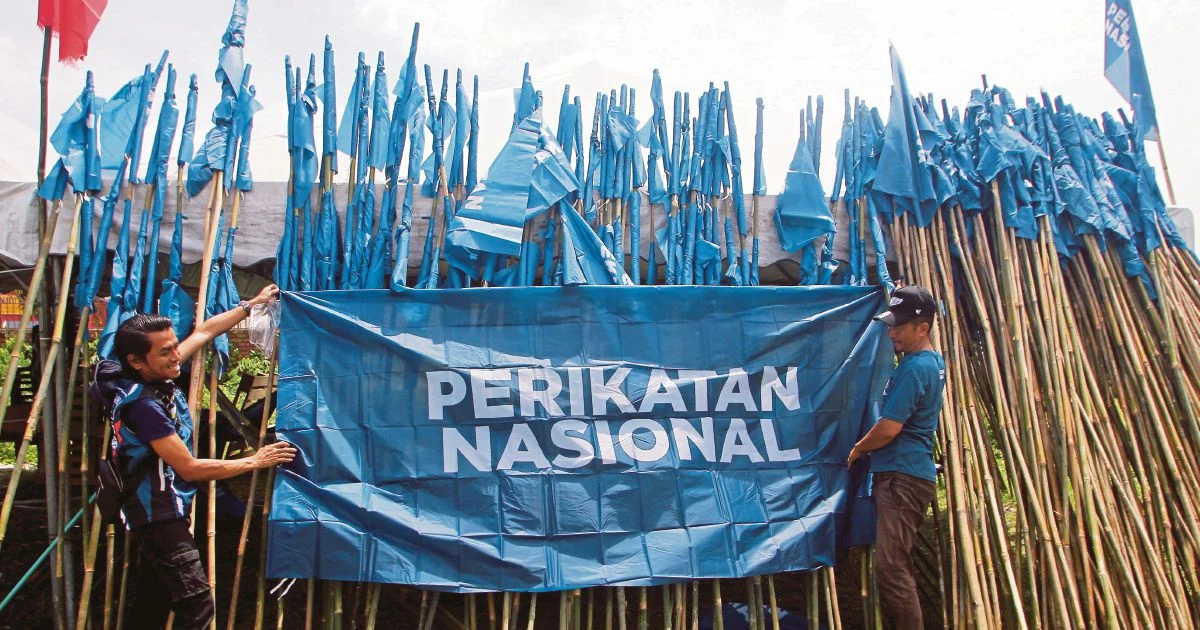
The Perikatan Nasional coalition will convene its Supreme Council on June 22 at a venue in Kota Baru to grapple with a series of structural and procedural questions that have created friction among its constituent parties. Chief among these concerns is the thorny issue of logo usage and the mechanisms by which the coalition will formally endorse candidates competing in future elections, matters that strike at the heart of how the bloc operates as a unified political entity.
These discussions come at a pivotal juncture for PN, a relatively young coalition that has struggled to cement cohesion amid competing interests within its membership. The bloc's internal governance frameworks remain unsettled in several respects, and the June 22 gathering represents a critical opportunity to establish clearer protocols that will guide the coalition through the electoral cycle ahead. Without settled conventions on these matters, PN risks appearing disorganised to voters and inviting further defections or disputes among member parties.
The logo question carries symbolic and practical weight. In Malaysian politics, a recognisable coalition emblem serves both as a unifying symbol and as a ballot designation for voters. Clarity over who controls usage rights, how the logo can be deployed by individual parties, and under what circumstances the mark may be modified or restricted constitutes foundational coalition business. The fact that this remains unresolved after PN's formation suggests either deliberate ambiguity during the coalition's founding or a failure to anticipate how member parties would approach branding and campaign mechanics.
Candidate endorsement protocols matter equally. Malaysian electoral alliances typically establish procedures by which the coalition decides which candidates will represent PN in particular constituencies, how disputes between member parties over the same seat are resolved, and what level of central coordination versus local autonomy applies. Without clarity on these rules, member parties may each pursue their own candidate selection strategies, creating overlapping nominations that confuse voters and dilute the coalition's aggregate vote share. The June 22 meeting will need to establish binding or at least widely respected guidelines on these processes.
For Malaysian observers, PN's structural challenges reflect broader tensions within opposition coalition-building. Unlike Barisan Nasional, which operated for decades under established hierarchies and UMNO dominance, newer coalitions like PN and Pakatan Harapan have struggled to forge durable institutional arrangements. Both blocs have experienced internal friction over candidate selection and resource allocation, suggesting that creating functional multi-party coalitions in Malaysia's political environment remains genuinely difficult, particularly when member parties maintain significant regional power bases or ideological differences.
The timing of this meeting also signals PN's preparation for elections that may come sooner rather than later. Malaysian governments typically serve out their full terms, yet political dynamics can shift rapidly. By establishing clearer internal protocols now, PN aims to present a more unified and professional image to the electorate, particularly important given perceptions that the coalition lacks the organisational maturity of more established political entities. Uncertainty about logo usage and candidate selection damages that image and provides ammunition to rival coalitions.
For member parties within PN, the June 22 discussion will require delicate navigation. Larger parties like PAS and Bersatu will expect significant say over endorsements and logo usage, while smaller members will fear being marginalised in these decisions. The coalition's survival depends on forging compromises that give all members meaningful participation and security, yet concentrate enough authority at the central level to ensure coherent electoral strategy. This balancing act has proven elusive for PN thus far.
The broader Southeast Asian context is also relevant. Coalition politics across the region—from Thailand to Indonesia to the Philippines—frequently stumble on exactly these kinds of procedural questions. Successful regional opposition coalitions tend to be those that establish clear, transparent, and binding rules governing resource distribution and representation. PN's willingness to tackle these issues head-on, rather than allowing them to fester, may indicate learning from other regional examples or simply mounting internal pressure to professionalize.
From a Malaysian voter perspective, the June 22 meeting represents an opportunity for PN to demonstrate that it has moved beyond the ad-hoc coalition arrangements that characterised its early years. Voters increasingly demand that political parties and coalitions operate with transparent governance and clear decision-making frameworks. A PN that emerges from this meeting with settled protocols on logo usage and candidate endorsements will present itself as more serious and organised than a coalition perpetually negotiating these fundamentals.
The outcome of this Supreme Council gathering will likely remain partially opaque to the public, as coalition meetings typically produce vague joint statements rather than detailed policy documents. Nevertheless, the decisions reached—or the failure to reach decisions—will inevitably become apparent through subsequent electoral announcements and candidate selections. How member parties subsequently honour or circumvent the agreed protocols will reveal whether the June 22 meeting established genuine institutional change or merely provided a temporary veneer of unity over continuing fissures.

