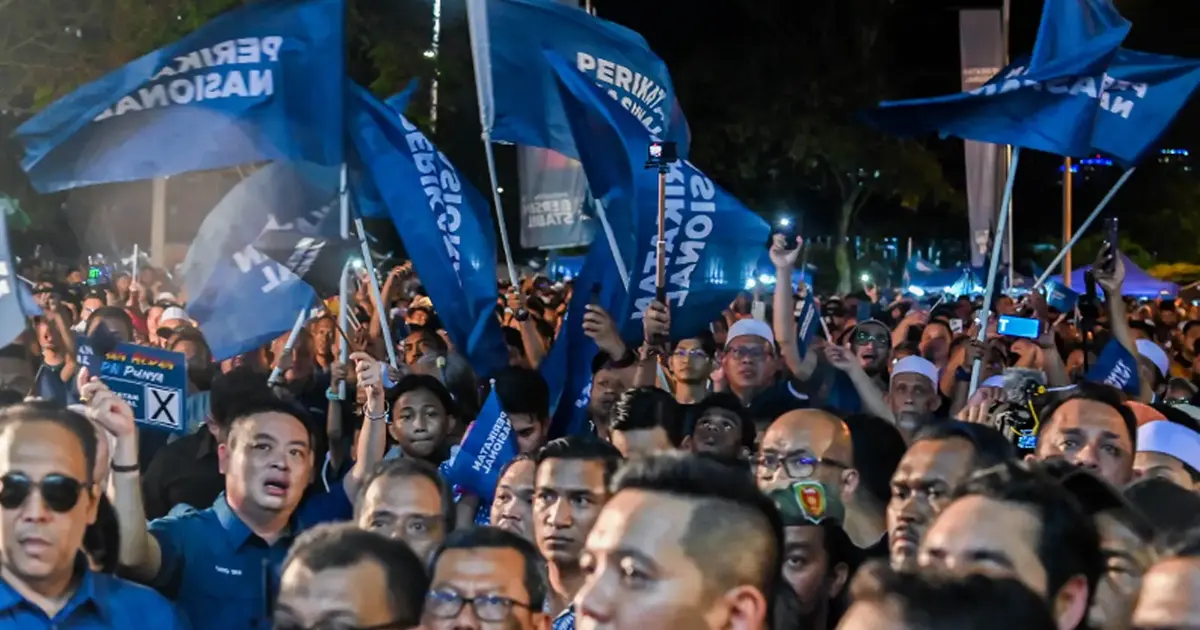
The unity coalition Perikatan Nasional faces an increasingly precarious future as internal strife between its two dominant parties—PAS and Bersatu—threatens to destabilise the entire bloc, according to prominent political observers. Yusri Ibrahim, chief researcher at the Ilham Centre, has characterised the mounting friction between these factions as having progressed beyond conventional disagreements into what amounts to sustained asymmetric conflict, marking a critical juncture for a coalition that has sought to position itself as a viable national alternative.
The deterioration of relations between PAS and Bersatu represents more than routine coalition friction. These two parties, which formed the backbone of Perikatan Nasional's parliamentary presence, have grown increasingly hostile towards one another over policy direction, resource allocation, and leadership positioning. Such ruptures within opposition coalitions carry particular significance in Malaysia's political landscape, where fragmented blocs struggle to mount effective challenges to incumbents. The instability within PN undermines the coherence necessary for any credible counter-narrative to government messaging and legislative strategy.
What distinguishes the current phase from earlier disagreements, according to Yusri Ibrahim's analysis, is the shift from diplomatic dispute resolution towards tactics characteristic of guerrilla warfare—asymmetric, decentralised attacks that erode cohesion from within rather than through formal mechanisms. This metaphorical characterisation reflects the reality that both parties are now deploying indirect methods of pressure, including public criticism, media campaigns, and tactical positioning that prioritises individual party interests over collective coalition strength. The psychological toll of such sustained conflict typically forces members of either faction to question the value of remaining within a deteriorating partnership.
For Malaysian politics broadly, the potential unravelling of Perikatan Nasional carries significant implications. Opposition coalitions function as essential democratic counterweights, holding governments accountable and providing voters with meaningful electoral alternatives. A PN collapse would bifurcate the opposition into competing factions lacking the critical mass necessary to constrain executive overreach or mount cohesive parliamentary scrutiny. This consolidation of power dynamics typically benefits whoever controls the government machinery, regardless of party affiliation.
The Southeast Asian context amplifies these concerns. Regional democracies increasingly face pressures towards centralised executive authority, often justified through security narratives or administrative efficiency claims. When opposition coalitions fracture, governments face fewer institutional checks on their decision-making capacity. Malaysia's experience of shifting coalition politics over recent years demonstrates how rapid realignment can either strengthen or weaken democratic institutions depending on whether successor configurations emerge with genuine programmatic unity or merely represent temporary marriage-of-convenience arrangements.
Bersatu's recent trajectory, particularly its founding narrative centred on party-building and leadership renewal, appears fundamentally at odds with PAS's longstanding organisational structure and ideological commitments. Where Bersatu emerged as a relatively secular, technocratic force within PN, PAS maintains its identity as an Islamic party with specific constitutional and religious policy agendas. These foundational differences create structural incompatibilities that surface repeatedly in coalition decision-making, from legislative priorities to electoral strategy and ministerial appointments.
The PAS camp's concerns about Bersatu's trajectory reflect anxieties about dilution of Islamic-centered governance priorities. Conversely, Bersatu observers worry that PAS's institutional strength within PN has progressively marginalised more moderate voices within the coalition framework. Such zero-sum framings, once embedded in coalition dynamics, prove remarkably resistant to resolution through conventional negotiation because they reflect genuine philosophical divergence rather than mere tactical disputes about vote-sharing or portfolio allocation.
Regional precedents suggest that opposition coalition collapse typically benefits entrenched governmental actors, regardless of which incumbent administration currently holds office. When unified opposition blocks fracture, governing parties face reduced parliamentary pressure, fewer coordinated legislative challenges, and weaker alternative platforms for public discourse. The subsequent realignment period typically favours those controlling state apparatus, media access, and resource distribution—advantages that accrue disproportionately to current office-holders.
Yusri Ibrahim's warning arrives amid mounting evidence of deteriorating coordination between PN's constituent parties. Public recriminations have become increasingly frequent, with party leaders making barely-veiled criticisms rather than maintaining conventional coalition discretion. This breakdown of internal communication protocols signals that reconciliation mechanisms have either failed or become deliberately circumvented by factional elements seeking to force broader realignment. Such dynamics typically prove self-reinforcing once initiated, as initial ruptures create incentives for deeper positioning that become progressively harder to reverse.
For Malaysian political stakeholders, the implications extend beyond immediate parliamentary mathematics. A PN collapse would trigger broader repositioning across the political landscape, potentially opening space for alternative coalitional arrangements or fundamental shifts in electoral strategy. However, such transitions typically occur in contexts of considerable uncertainty, voter confusion, and reduced political accountability during the interim period. The stability that even fractious coalitions provide—predictability in legislative behaviour, clarity in electoral messaging, organised challenge to government initiatives—dissipates during collapse phases.
The timeframe for PN's potential unravelling remains uncertain, though Yusri Ibrahim's escalation metaphor suggests deterioration rather than stabilisation in coming months. Coalition members face mounting pressure from their grassroots constituencies regarding whether continued partnership serves party interests, particularly as internal disputes occupy leadership bandwidth that might otherwise focus on constructing compelling policy alternatives. The calculus for both PAS and Bersatu leaders increasingly involves assessing whether remaining within a weakening coalition framework better serves organisational objectives than pursuing independent trajectories or exploring alternative partnerships.
For regional observers and Malaysian political participants, the PN situation underscores broader fragility within Southeast Asian opposition movements. Coalitions built on tactical convenience rather than deeper programmatic alignment prove vulnerable to the very pressures that contemporary politics generates—competing resource claims, different ideological visions, and asymmetric organisational capacities. Whether Perikatan Nasional survives this crisis phase will depend substantially on whether both PAS and Bersatu leadership perceive genuine mutual interest in coalition preservation—a perception that current trajectories increasingly undermine.