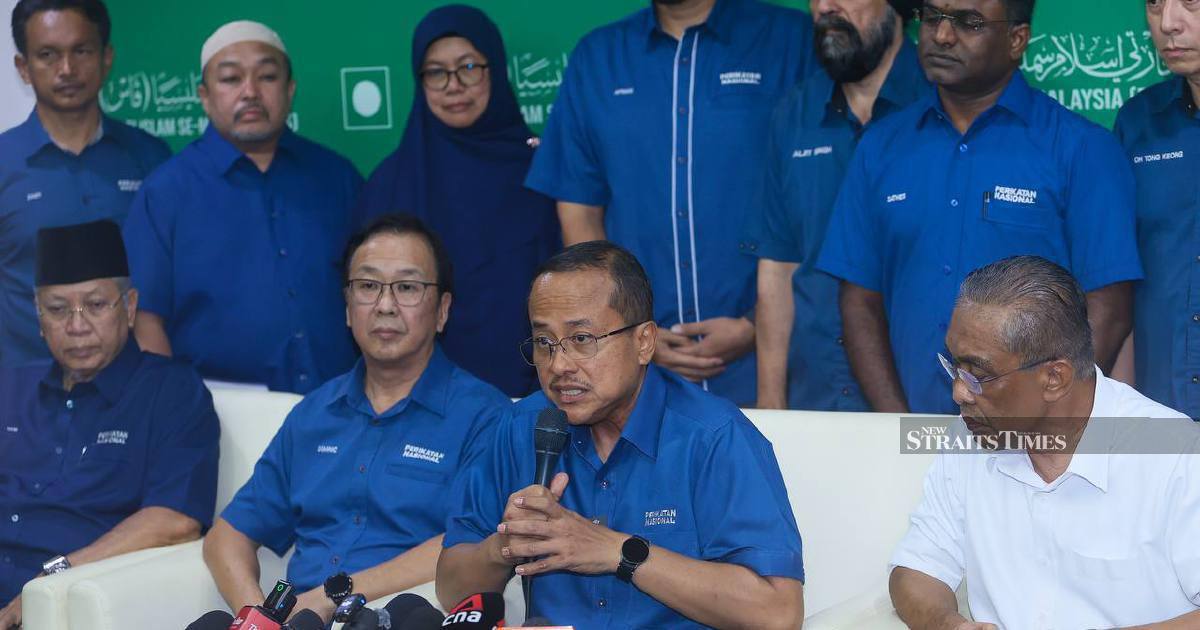
Perikatan Nasional (PN) has formally accepted two new political parties into its coalition following an emergency gathering of the Supreme Council, PN chairman Datuk Seri Dr Ahmad Samsuri Mokhtar announced this evening in Kuala Lumpur. The expansion of the coalition came after what sources described as an urgent meeting convened to address matters affecting the multi-party alliance.
The decision to bring in the two additional parties represents a significant move in PN's ongoing reorganisation and reflects the coalition's strategy to broaden its political base ahead of forthcoming electoral cycles. However, Samsuri notably did not disclose the identities of the two newly admitted parties, leaving observers and political analysts to speculate about which organisations have joined the fold. This opacity surrounding the admission process highlights the often fluid nature of Malaysian coalition politics, where party movements and membership changes can reshape the political landscape considerably within short timeframes.
What proved equally significant was what the Supreme Council did not address during tonight's session. Samsuri made clear that discussions regarding PN's vision statement and the coalition's logo design were conspicuously absent from the agenda. These omissions carry weight in Malaysian political circles, as both the Wawasan (vision statement) and a unified coalition symbol serve important functions in binding member parties to common objectives and projecting a coherent public image. The deferral of these matters suggests either tactical timing or potential disagreements among coalition partners that necessitated postponement.
The absence of agreement on the vision and logo is particularly noteworthy given PN's history of internal tensions over direction and ideology. When the coalition formed in September 2020, bringing together PAS, Perikatan Selangor, and Bersatu under the leadership of Tan Sri Muhyiddin Yassin, it faced considerable challenges in articulating a unified platform that could satisfy the distinct interests and ideological positions of its constituent members. The fact that nearly four years into the coalition's existence, fundamental symbolic elements remain unresolved underscores these underlying fault lines.
The emergency nature of tonight's meeting warrants examination in itself. Emergency Supreme Council sessions in Malaysian political coalitions typically signal that time-sensitive decisions require immediate attention, and that normal scheduled meeting cycles cannot accommodate the matter at hand. The urgency with which PN leadership convened this gathering suggests that the party admissions were deemed important enough to justify extraordinary procedures, yet insufficient consensus existed on related matters like the coalition's public vision and branding.
For Malaysian observers following coalition politics, the expansion of PN's membership base demonstrates an attempt to consolidate influence during a period of flux in national politics. The coalition has navigated significant challenges since its formation, including the departure of certain partners and efforts to position itself as a viable alternative to the federal government. By admitting new parties, PN seeks to demonstrate vitality and growing appeal, even as questions persist about whether the coalition can maintain cohesion over contentious policy matters.
The timing of this expansion also deserves scrutiny in the broader context of Malaysian electoral politics. States governed by PN-affiliated coalitions, particularly in Kedah, Terengganu, and other strongholds, represent laboratories for testing political strategies. The addition of new coalition members provides opportunities to deepen political penetration in specific constituencies and demographic groups, potentially strengthening PN's position in anticipation of future state elections or a general election.
Beyond the immediate news value of party admissions, the unresolved questions about Wawasan and logo carry implications for coalition unity and member party relationships. A shared vision statement and unified branding are more than cosmetic additions to a political alliance; they function as foundational documents that articulate common ground and provide reference points when member parties face difficult decisions or divergent interests. Without agreement on these elements, coalition partners may find it increasingly difficult to present a unified front to voters and the electorate.
The PN leadership's decision not to force resolution on these issues tonight could represent pragmatic recognition that pushing harder might generate conflict that could destabilise the coalition at this stage. Alternatively, it might reflect a calculation that these matters can be deferred while more pressing concerns related to party expansion and consolidation take precedence. Either way, the Supreme Council's selective agenda demonstrates how Malaysian political leaders often sequence decisions to manage coalition dynamics.
Moving forward, the success of PN's expansion strategy will depend significantly on whether these newly admitted parties bring valuable support bases and whether existing coalition members perceive them as assets rather than competitors for influence within the alliance structure. The coming weeks will reveal whether tonight's admission of two new parties represents the beginning of a stronger, more consolidated coalition or merely a temporary manoeuvre in Malaysia's perpetually shifting political landscape.

