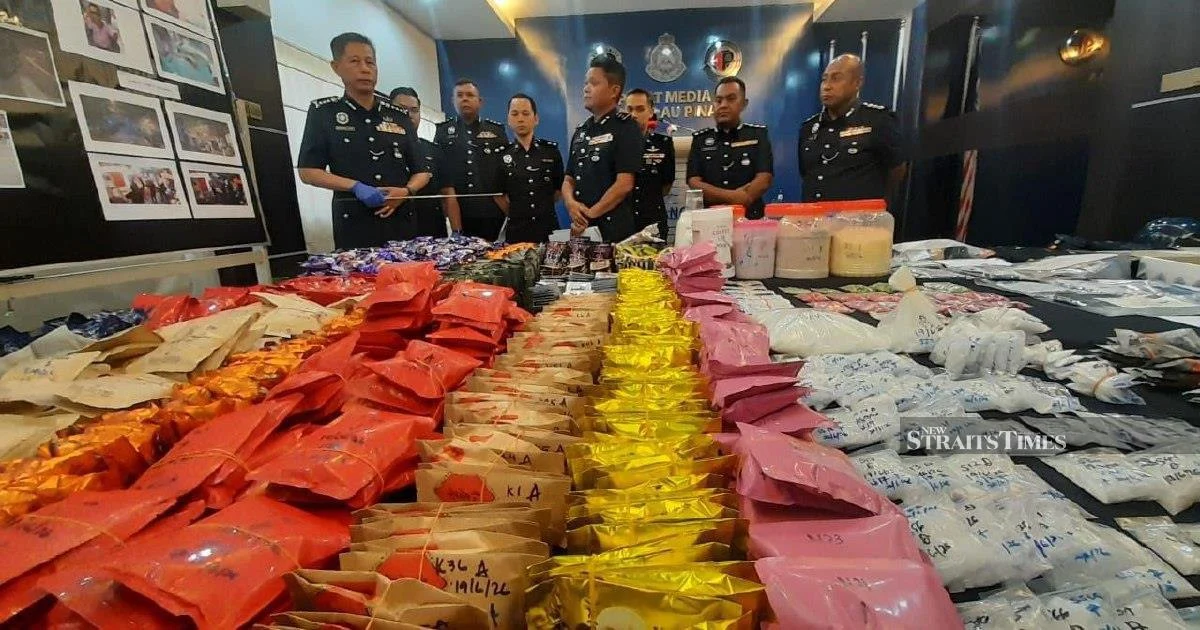
Police in Penang have arrested a couple following the discovery of an extensive drug manufacturing and distribution operation at a condominium unit in Butterworth. The enforcement action resulted in the seizure of narcotics valued at RM9.7 million, representing a significant blow to organised drug trafficking networks operating in the northern region.
The operation, conducted by Penang police with support from other enforcement agencies, targeted the residential unit after intelligence gathering revealed suspicious activities linked to large-scale drug handling. Investigators discovered evidence suggesting the premises had been systematically converted into a facility for processing and preparing drugs for distribution across wider markets. The sophistication of the setup indicates an organised network rather than small-scale dealing, prompting a coordinated response from multiple units within the police force.
The arrest of the couple represents a critical development in dismantling what appears to be a layered distribution mechanism. Authorities have indicated that preliminary investigations suggest both individuals played distinct roles within the operation, though details of their specific functions remain under investigation. The enforcement action underscores the police's increasingly successful intelligence-gathering capabilities in identifying drug manufacturing hubs, which tend to operate with greater secrecy than retail-level distribution points.
For Malaysian readers and regional observers, this bust carries implications beyond the immediate criminal investigation. Penang's geographic proximity to border regions and its status as a major commercial hub make it a natural flashpoint for transnational drug trafficking. The state has historically witnessed significant contraband flows from neighbouring jurisdictions, with organised syndicates exploiting port facilities, land routes, and urban anonymity to establish processing centres in residential areas. The Butterworth location—situated along key transport corridors—aligns with established patterns of criminal infrastructure placement.
The value of seized drugs at RM9.7 million reflects the scale at which modern trafficking networks operate within Malaysia. This seizure, while substantial, represents merely one node within broader distribution chains that extend into consumer markets across the peninsula and potentially into Singapore and Thailand. The recreational and addiction markets in these jurisdictions generate enormous demand, creating financial incentives that sustain elaborate supply networks despite periodic enforcement successes.
From a law enforcement perspective, the discovery of a processing facility rather than merely a storage point suggests investigators have targeted a higher-value segment of the criminal supply chain. Manufacturing operations require technical knowledge, chemical precursors, and consistent supplier relationships—elements that demand more organised coordination than simple warehousing. Dismantling such infrastructure carries multiplier effects throughout downstream distribution networks, potentially disrupting supply pipelines for weeks or months.
The residential condominium setting reveals how modern drug syndicates exploit legitimate urban infrastructure to operate semi-transparently within populated areas. Building management systems, multiple units, and transient populations in such properties create operational cover unavailable in standalone structures. This adaptation by criminal networks necessitates correspondingly evolved policing strategies, including intelligence sharing between residential security, building management, and law enforcement—a coordination challenge that remains inconsistently implemented across Malaysian property sectors.
The successful identification of this operation also demonstrates the utility of intelligence-led policing approaches that Penang police have increasingly emphasised. Rather than relying solely on community tips or chance discoveries, systematic information gathering and analysis enable authorities to preempt major operations before they achieve full distribution. This represents a shift from reactive to proactive enforcement, though resource constraints and competing priorities continue to limit comprehensive coverage of all suspected activities.
Beyond the immediate criminal consequences for the arrested couple, this case highlights broader concerns regarding drug precursor availability and financial infrastructure supporting trafficking operations. Manufacturing operations require both chemical inputs and substantial capital for storage, transportation, and personnel—vulnerabilities that financial intelligence units and chemical supply chain regulators should theoretically exploit. The presence of RM9.7 million in contraband at a single location also implies significant financial activity preceding and enabling this accumulation, raising questions about money laundering detection systems' effectiveness in identifying such concentrations.
The enforcement action carries preventive implications for the surrounding community and condominium residents who may have unknowingly shared residential space with a major criminal enterprise. Authorities will likely implement educational campaigns emphasising suspicious indicators—unusual deliveries, frequent visitors, chemical odours, or excessive electricity consumption—that might identify similar operations before they reach comparable scales.
Moving forward, this case will likely feature in Penang police's enforcement reporting as demonstrating sustained commitment to dismantling organised drug networks. However, sustainability of such successes depends on maintained resource allocation, continued intelligence capacity development, and inter-agency coordination that encompasses customs, maritime authorities, and financial crime investigators. The RM9.7 million seizure represents a temporary disruption rather than a terminal blow to trafficking networks operating throughout the region, which possess sufficient financial reserves and organisational resilience to recover from periodic major losses.

