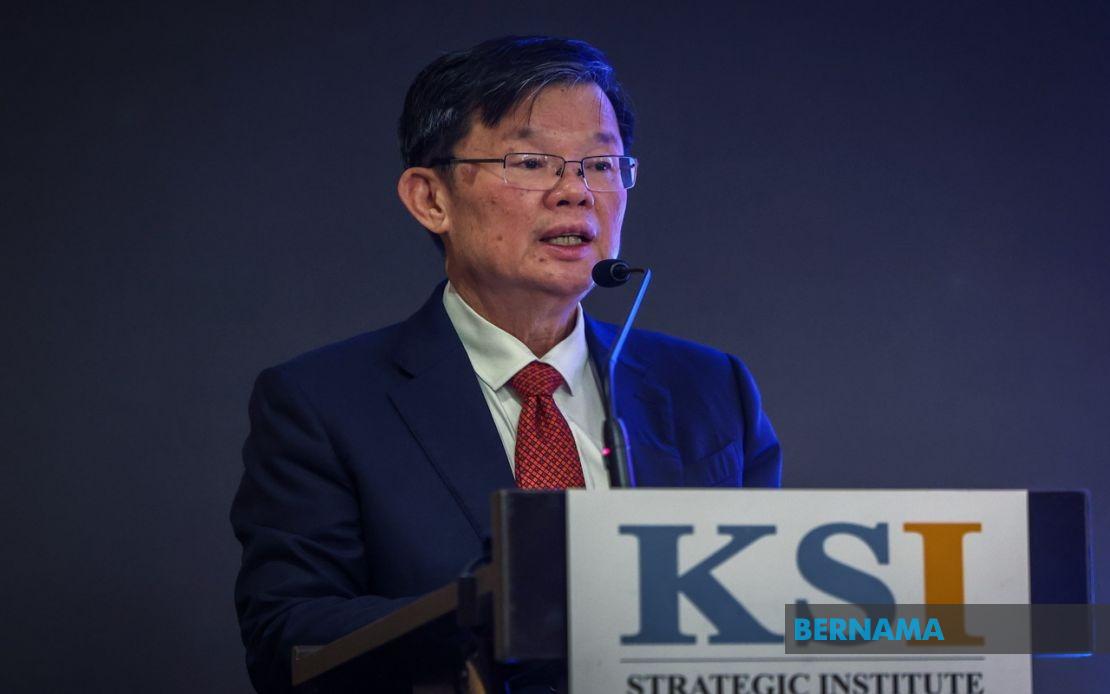
Penang's Pakatan Harapan coalition intends to field a greater number of women candidates when the state heads to the polls, though the party leadership acknowledges that sourcing an adequate pipeline of qualified contenders ready to enter the political arena presents an ongoing obstacle. Chow Kon Yeow, who serves as both PH chairman in Penang and the state's Chief Minister, shared this assessment while addressing reporters at the World Women Economic and Business Summit 2026 in George Town, underscoring that while ambition exists, practical constraints temper immediate expectations.
The coalition remains committed to Malaysia's long-standing aspiration of achieving 30 per cent representation of women across political and decision-making bodies, a target that has endured as policy direction since 2009 yet remains largely unmet across the country. At the national level, women currently constitute merely 13.5 per cent of Members of Parliament and occupy 12 per cent of state assembly seats, revealing a substantial gap between stated objectives and on-the-ground reality. This national picture underscores why Penang's efforts, though earnest, must contend with deeply embedded structural and cultural barriers that extend far beyond any single state's boundaries.
Chow's remarks highlight a paradox that has become increasingly evident in Malaysian political discourse: women have achieved notable progress and prominence in various professional spheres including education, commerce, engineering, and the civil service, yet their willingness to transition into competitive electoral politics remains comparatively muted. This disparity suggests that the impediments to women's political participation are not rooted solely in qualification or capability but rather in the particular demands and pressures that political candidacy entails. The Chief Minister acknowledged that the party's recruitment efforts had encountered genuine resistance during candidate selection processes, with prospective women contenders declining nomination despite otherwise demonstrating competence and suitability.
The nature of these pressures warrants closer examination. Political contestation in Malaysia frequently involves intense personal scrutiny, public controversy, and social media criticism that may disproportionately affect women candidates. Family considerations, workplace disruption, and reputational concerns loom larger for some women evaluating candidacy than for their male counterparts, reflecting broader gender norms and societal expectations. Furthermore, the absence of robust mentoring networks and institutional support structures means that women candidates often navigate the electoral process with fewer established connections and resources than their male competitors, compounding the challenges of mounting effective campaigns.
Chow proposed several concrete measures to address these systemic difficulties. He advocated that political parties should move beyond aspirational statements to institutionalise the 30 per cent target directly into their formal candidate selection frameworks, ensuring that gender parity becomes a structured requirement rather than an optional objective. Additionally, he recommended that parties guarantee proportional representation of women within decision-making committees that shape party policy and direction. Such structural reforms could help normalise women's participation at senior levels and demonstrate genuine organisational commitment beyond rhetorical endorsement.
The Penang Chief Minister also stressed the importance of enhancing access to mentoring and resource support systems tailored for emerging women leaders within party organisations. These mechanisms could help prospective candidates develop political acumen, build confidence, and establish networks necessary for electoral success. Without deliberate investment in such infrastructure, the talent pipeline for women candidates will likely remain constrained, regardless of individual women's professional accomplishments in non-political sectors. This points to a broader recognition that achieving gender parity in electoral politics requires active, sustained institutional intervention rather than passive reliance on market forces or individual initiative.
For Malaysian observers and policymakers, the Penang experience illuminates broader challenges confronting the nation's democratic development. The persistent underrepresentation of women in legislative bodies affects not only gender equity but also the substantive quality of governance and policy formation. Research consistently demonstrates that diverse legislative bodies produce more comprehensive policy discussions and decisions that better reflect entire populations' needs and perspectives. Malaysia's failure to reach the 30 per cent target for over a decade suggests that incremental approaches and voluntary commitments have proven insufficient to overcome entrenched patterns.
Regionally, Malaysia's performance appears middling compared to some Southeast Asian neighbours. Thailand, Indonesia, and Vietnam have achieved higher proportions of women parliamentarians in recent years, partly through mandatory quota systems. This benchmarking suggests that Malaysian political parties and the broader electoral system may benefit from examining how neighbouring democracies have implemented more decisive structural changes. The question increasingly becomes not whether targets should exist but rather what enforcement mechanisms and timelines might make them genuinely achievable.
The timing of Chow's remarks at the World Women Economic and Business Summit carries symbolic weight, signalling that women's economic empowerment remains intertwined with political representation. Business leaders and entrepreneurs who have succeeded professionally may prove particularly valuable candidates for political office, bringing practical management experience and community standing to legislative bodies. However, recruiting such individuals requires parties to actively cultivate these relationships and demonstrate that political candidacy offers compatible pathways for those already excelling in commercial spheres.
Moving forward, Penang's approach may serve as a test case for other Malaysian states and the federal level. If the state coalition can successfully expand its women candidate pool in the coming election cycle through targeted recruitment and mentoring initiatives, the model could offer replicable lessons. Conversely, if the party continues to struggle with candidate sourcing despite rhetorical commitment, it would underscore that genuine progress toward gender parity requires more profound institutional transformation than currently contemplated. The measure of success will ultimately rest not on aspirational statements but on the actual number of women candidates fielded and their electoral outcomes.