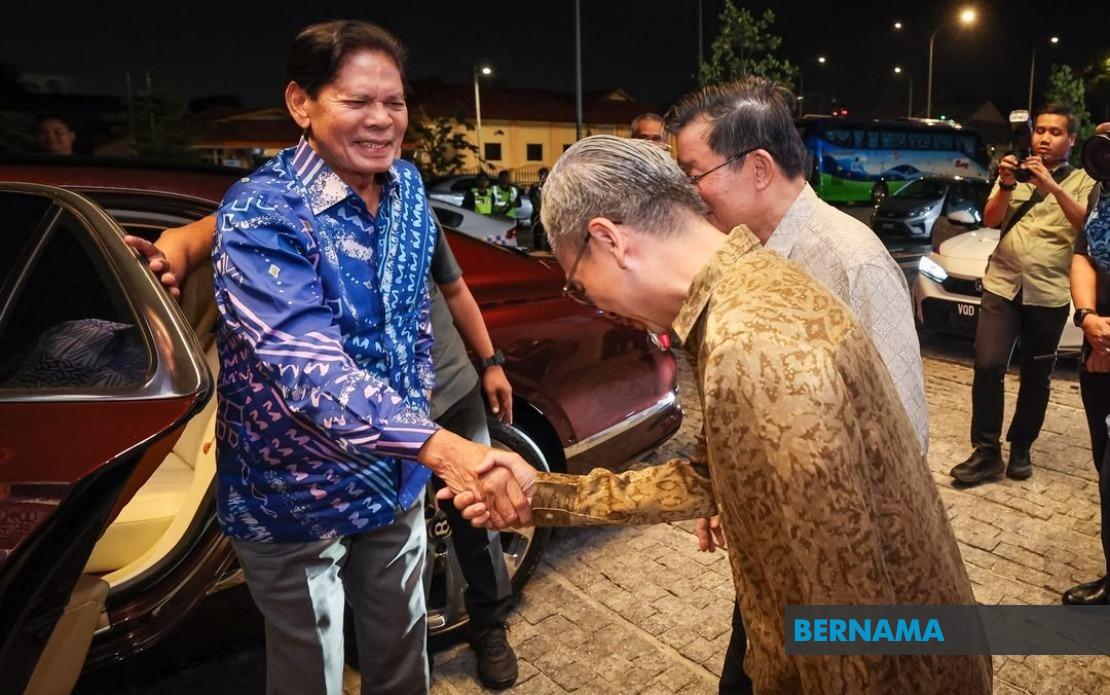
Penang Governor Tun Ramli Ngah Talib brought together media leaders and practitioners from across Malaysia and the broader ASEAN region at a ceremonial dinner in Butterworth, offering formal recognition of journalism's indispensable contribution to the nation's progress. The gathering, which preceded the main HAWANA 2026 programme, drew nearly 350 participants including editors, news directors, established newsroom veterans, and state dignitaries, creating an occasion that bridged professional networks across the region's media landscape.
The dinner reflected a broader strategic shift in how Malaysia's government acknowledges journalism's institutional importance. By positioning the event in advance of tomorrow's keynote ceremony, organisers underscored the ceremonial weight attached to journalists themselves—the people behind editorial decisions—rather than treating National Journalists' Day as a purely administrative observance. The festive atmosphere, combined with high-level official attendance, signalled that media practitioners occupy a meaningful place within Malaysia's governance and development narrative.
The guest roster demonstrated substantial political and bureaucratic commitment to the occasion. Penang Chief Minister Chow Kon Yeow attended alongside Communications Minister Datuk Fahmi Fadzil, while senior permanent secretariat figures and international delegates signalled official endorsement of journalism as a cross-border professional endeavour. The inclusion of Timor-Leste's Secretary of State for Social Communication, Expedito Loro Dias Ximenes, illustrated how HAWANA 2026 has evolved beyond a domestic recognition exercise into a platform for regional media cooperation and exchange.
Representatives from Malaysia's largest news organisations occupied prominent places at the event, spanning the full spectrum of the country's media ecosystem. Print journalism was represented through New Straits Times Group Editor Farrah Naz Karim and Sin Chew Daily Editor-in-Chief Chan Aun Kuang, whilst broadcast media participated through Astro Awani's leadership. This inclusive approach, embracing mainstream outlets across language communities and delivery platforms, reflected a deliberate effort to honour journalism as a unified profession despite commercial and editorial differences that ordinarily divide newsrooms.
The international contingent attending HAWANA 2026—comprising approximately 1,000 journalists according to organisers—extended beyond ceremonial representation into substantive professional engagement. Delegates from TATOLI (Timor-Leste's national news agency), Indonesia's ISWAMI chapter, and ANTARA's Penang bureau participated not merely as observers but as active contributors to discussions on regional media standards and practice. This transnational dimension carries particular significance for Malaysia, positioning the country as a focal point for professional journalism dialogue across Southeast Asia during a period when media credibility faces sustained pressure globally.
The conference theme, 'Media Integrity Strengthens Credibility', addresses a critical challenge for newsrooms across the region. In Malaysia specifically, where trust in media institutions has fluctuated amid partisan pressures and the rise of digital misinformation, explicitly centring integrity as the day's organising principle acknowledges that journalists themselves understand their legitimacy rests on demonstrable commitment to foundational professional standards. By honouring practitioners at scale, the government and communications ministry effectively validated this self-understanding within the profession.
The scale of participation—organisers anticipate approximately 1,000 journalists converging in Penang—suggests that HAWANA 2026 has matured into a significant regional event rather than a domestic observance. For Malaysian journalists, the presence of colleagues from across ASEAN creates opportunities for professional networking, discussion of shared challenges such as press freedom and news verification standards, and exposure to international best practices. For the government, hosting such a gathering demonstrates commitment to journalism as an institution worthy of investment and official recognition.
Prime Minister Datuk Seri Anwar Ibrahim's scheduled address at tomorrow's main ceremony at PICCA Convention Centre @ Butterworth Arena will provide the platform's most significant political statement. The prime minister's personal attendance lends weight to official messaging regarding the government's relationship with media institutions, coming at a moment when questions persist about press freedom and editorial independence in Malaysia. The timing of this address, and the themes likely to be emphasised, will substantially shape how journalists interpret government intentions toward the profession.
Beyond the professional symposium, the accompanying RIUH Pi HAWANA Carnival reflects an effort to embed journalism and media literacy within broader public engagement. Attracting approximately 30,000 visitors, the three-day carnival programme features creative industries showcase, interactive workshops enabling public participation in media-related activities, and live entertainment from local artists. This approach transforms HAWANA from an industry-focused day of observance into a wider cultural and educational event, potentially introducing journalism and creative content production to audiences beyond established news consumers.
The carnival's inclusion of over 24 local creative product brands and 20 food and beverage vendors, combined with 16 stage performances featuring established Malaysian artists such as Exists, Bunkface, and Masdo, signals an integration of journalism celebration within wider creative industries positioning. This framing acknowledges that journalism increasingly competes for audience attention alongside entertainment and cultural content, and that media professionals operate within a broader ecosystem of storytellers and content creators rather than in professional isolation.
For Malaysian readers and media practitioners specifically, HAWANA 2026 in Penang represents a milestone in institutional recognition at a juncture when journalism faces persistent economic pressure, digital disruption, and questions about social utility. The gathering of regional peers, official government participation, and public programming combine to reassert journalism's centrality to democratic governance and national development—a positioning that Malaysian newsrooms have worked to maintain as commercial models have fragmented and audience trust has become increasingly conditional.
The international dimension merits particular attention for Southeast Asian analysis. Malaysia's willingness to host and facilitate dialogue among regional journalists from multiple countries and language communities positions the country as a convenor within professional networks that transcend national boundaries. For ASEAN journalism as a whole, HAWANA 2026 demonstrates that transnational conversation about media standards, integrity, and professional practice remains viable even amid the nationalisation of news agendas and increasing polarisation of media markets across the region.
Ultimately, the elaborate ceremonial apparatus surrounding HAWANA 2026—the gubernatorial dinner, ministerial attendance, international delegation, and carnival programming—signals that Malaysia's government understands journalism as an institution requiring periodic affirmation and investment. Whether such recognition translates into substantive policy support for press freedom, economic sustainability of news organisations, or professional development remains a question the conference itself may address, but the willingness to convene journalists at scale represents at minimum an official acknowledgment that the profession deserves institutional respect.

