Penang Chinese Town Hall (PCTH) has concluded its 2025 financial year with total income reaching RM12.61mil against expenditure of RM12.55mil, securing a modest surplus of RM59,191 according to its latest annual report. The organisation's financial position reflects steady operational management despite the complexity of maintaining a significant community facility and managing diverse revenue streams in a competitive economic environment.
Donations have emerged as the lifeblood of PCTH's operations, comprising RM11.24mil of the total income—a striking 89% of all funds received during the year. This heavy reliance on philanthropic contributions underscores the organisation's role as a community institution dependent on the generosity of its members and supporters. Beyond donations, PCTH has diversified its income sources through practical facility management, collecting RM439,671 in rental and maintenance fees, RM361,245 from auditorium rental services, and RM222,498 from anniversary-related events and celebrations.
On the expenditure side, charitable disbursements dominated spending patterns, totalling RM11.12mil and representing 88.6% of annual outlays. Notably, this represents a significant decrease from RM12.35mil in the previous year, suggesting either more selective donation allocation or improved financial discipline in charitable giving. Meanwhile, the organisation's salary and allowance commitments rose to RM502,625 from RM452,761 in 2024, reflecting increased staffing costs or enhanced compensation for personnel managing expanded facilities and programmes.
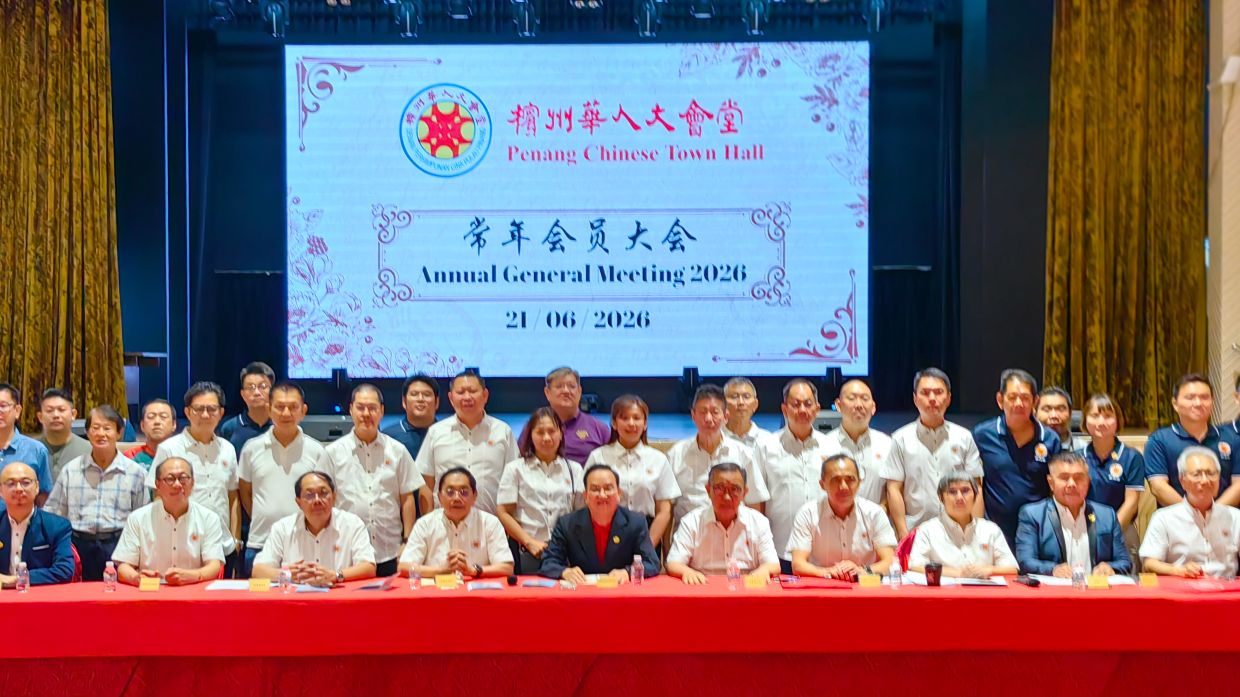
During the organisation's annual general meeting attended by approximately 200 members on June 21, Tan Sri Prof Tan Khoon Hai, PCTH's chairman, addressed broader matters of national significance beyond the financial statements. With Johor and Negri Sembilan scheduled to conduct state elections in 2025, Tan emphasised the fundamental importance of electoral participation and civic engagement. His remarks reflected a perspective that voting transcends mere local governance concerns, instead representing a decisive mechanism through which citizens shape the nation's trajectory across economic, social and political dimensions.
Tan advocated for rational assessment of competing parties' performance records and policy platforms, urging voters to prioritise candidates demonstrating genuine commitment to fostering national unity, stimulating sustainable economic development and safeguarding social cohesion. His intervention in electoral discourse positions PCTH not merely as a cultural facility but as an institution willing to engage with broader civic responsibilities and democratic processes affecting Malaysian society. The emphasis on informed choice and unity reflects concerns about polarisation and the quality of political decision-making at state and national levels.
A significant development announced during the meeting concerns the completion of extensive renovations at Ping Zhang Hall, PCTH's signature venue facility. The upgraded space now features modern amenities including enhanced spatial design, professional-grade sound systems, sophisticated lighting infrastructure and contemporary LED technology. These improvements position the venue as a competitive option for various commercial and community events, from corporate banquets and association celebrations to charity functions and milestone anniversary gatherings.
The renovation represents strategic capital investment aimed at maintaining PCTH's relevance in Penang's evolving entertainment and events landscape. By modernising physical infrastructure while preserving cultural significance, the organisation seeks to generate additional revenue streams through premium venue rental while continuing to serve its traditional community functions. This dual orientation—balancing commercial viability with cultural stewardship—reflects the practical challenges facing heritage institutions operating in contemporary urban environments.
Perhaps most intriguingly, Tan announced PCTH's ambitious participation in organising the 2026 China-Asean Artificial Intelligence Cooperation Forum, scheduled for November in Penang. This initiative positions the organisation at the intersection of technological advancement and regional economic cooperation, transcending its traditional cultural remit. The forum will convene artificial intelligence experts, corporate executives and industry specialists from across China and Asean member states to examine emerging AI technologies, their industrial deployment and mechanisms for cross-border collaboration.
Penang's designation as the Silicon Valley of the East carries substantial significance for understanding this strategic development. The state has established itself as Malaysia's primary hub for electrical and electronics manufacturing, attracting major semiconductor producers and technology firms seeking proximity to supply chains and skilled workforces across Southeast Asia. The nascent AI sector represents the next frontier for technological development, and Penang's existing industrial foundation provides natural advantages for expanding into artificial intelligence applications, research and manufacturing.
Tan characterised the upcoming forum as a high-level platform facilitating technological knowledge exchange and practical industrial cooperation across the region. By hosting such an event, PCTH signals its evolution beyond a purely cultural institution into a convener of economic and technological dialogue. The chairman specifically encouraged members possessing relevant expertise to participate actively, framing the forum as an opportunity to strengthen Penang's position within regional AI development networks and potentially unlock collaborations between Malaysian enterprises and regional technology leaders.
This expansion into technological forums represents a calculated repositioning for PCTH in an era where cultural organisations increasingly seek relevance through economic engagement. The China-Asean AI forum aligns with Malaysian policy priorities emphasising technological transformation and regional integration while leveraging Penang's established reputation as a manufacturing and technology centre. For observers tracking Southeast Asia's technology sector development, PCTH's involvement signals how cultural institutions are adapting to contemporary economic imperatives while maintaining institutional sustainability through diversified programming and partnerships.
The organisation's financial stability, demonstrated through consistent surplus generation and modest debt management, provides the foundation for such ambitious initiatives. However, sustained success will depend on PCTH's ability to balance its charitable mission with commercial revenue generation, maintain member engagement across generational cohorts, and navigate evolving regulatory environments governing cross-border technological cooperation. The RM59,191 surplus, while modest, reflects an organisation managing carefully between cultural preservation and institutional adaptation in an increasingly competitive and technologically dynamic regional landscape.

