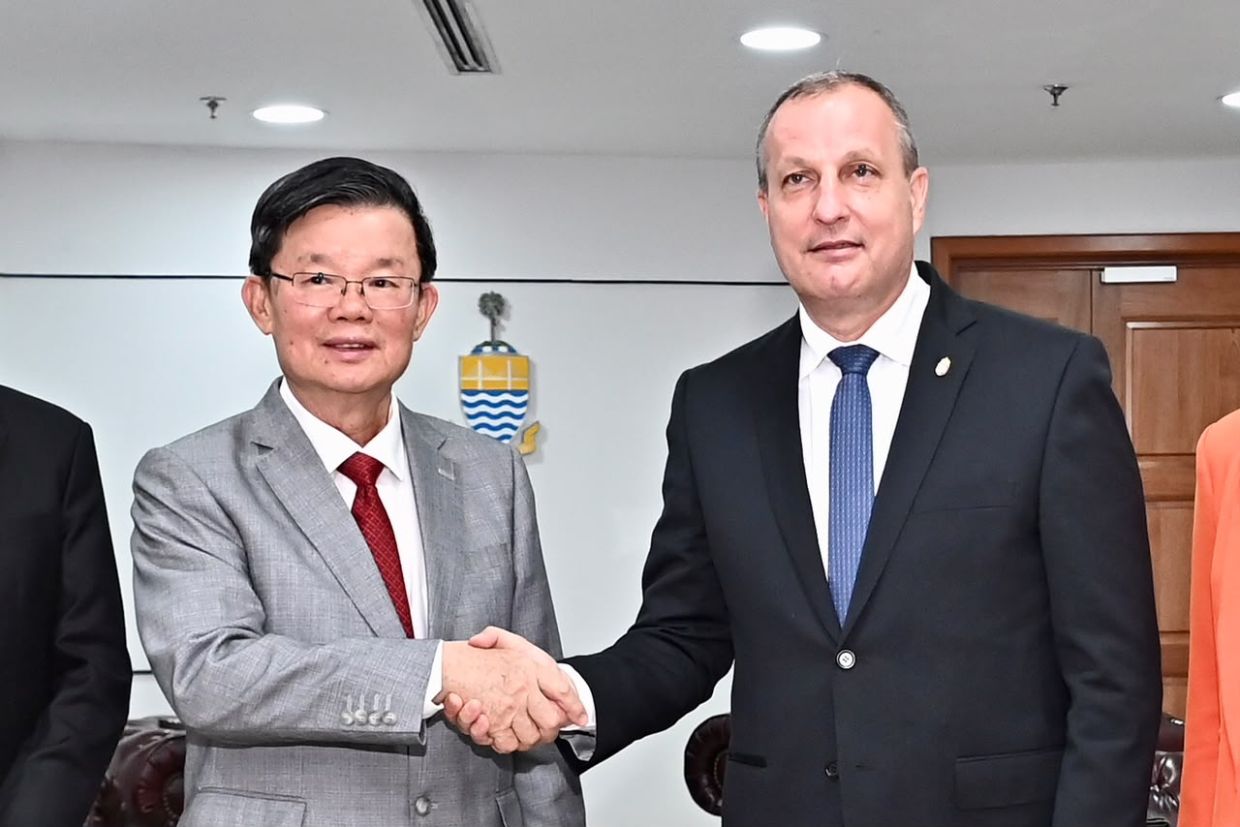
Penang is positioning itself for deeper engagement with Hungary across multiple strategic domains, ranging from tertiary education and research to environmental sustainability and cultural preservation. The initiative emerged from recent conversations between Penang's state leadership and Dr Sándor Sipos, Hungary's ambassador to Malaysia, who led a delegation to George Town to explore collaborative opportunities. The discussions signal an intentional broadening of Penang's international partnerships beyond traditional East Asian alignments, tapping into Central European expertise in areas where the state has prioritized development.
Chief Minister Chow Kon Yeow framed Hungary as a valuable strategic partner, citing the European nation's well-established capabilities in multiple domains relevant to Penang's long-term vision. He emphasized that Hungary's track record in research, technological advancement, and environmental stewardship positions it as a natural collaborator for a state increasingly focused on becoming a regional innovation hub and sustainability leader. The breadth of discussion topics—spanning heritage conservation, tertiary institutions, commerce, water resource management, renewable energy solutions, tourism, and cultural programming—suggests both sides identified convergences in their policy priorities and development strategies.
Education emerged as a cornerstone of the envisioned partnership. Hungary currently offers 40 fully funded scholarship awards annually to Malaysian students, representing a meaningful pathway for qualified candidates from across the country, including Penang. Ambassador Sipos underscored the Hungarian government's commitment to expanding participation from Penang specifically, recognizing both the state's demographic potential and its position as an educational hub within Malaysia. For Penang residents, these awards provide access to tertiary and postgraduate study in Central Europe without direct financial barriers, a particularly attractive proposition for talented students from middle-income backgrounds who might otherwise face affordability constraints.
The significance of this education dimension extends beyond individual scholarships. Chow characterized academic and talent mobility as essential infrastructure for building durable diplomatic relationships and enabling knowledge transfer between jurisdictions. By positioning education exchanges as foundational to state-to-state cooperation, Penang's leadership is adopting a longer-term view of international relations, one in which today's scholarship recipients become tomorrow's professional bridges between Malaysian and Hungarian institutions and enterprises. This approach aligns with regional trends toward developing human capital as a competitive advantage.
Water management and green technology represented another focal point of discussions, areas where Hungary brings relevant expertise to Penang's development challenges. Southeast Asia's rapid urbanization and industrial expansion have strained water resources and increased environmental pressures, making Central European approaches to water security and renewable energy particularly instructive for the region. Hungary's experience managing water systems in a densely populated region and its investments in sustainable technologies offer practical models that Penang could adapt to local contexts, potentially benefiting not only the state but also serving as a demonstration for other Malaysian states grappling with similar resource constraints.
The delegation's visits to state executive councillors Goh Choon Aik and Gooi Zi Sen introduced additional cooperation vectors. Discussions encompassed trade facilitation, investment opportunities, community programming, youth engagement, and athletic development. Gooi's proposal to involve the Penang State Sports Council in identifying sports disciplines suitable for bilateral exchange represents a creative approach to people-to-people connection, leveraging athletic competition and training programs as vehicles for cultural understanding and institutional twinning. Sports cooperation, often underestimated in bilateral agendas, can generate sustained engagement across age groups and social strata, complementing formal governmental and academic channels.
Heritage conservation emerged as a shared interest, reflecting both Penang's status as a UNESCO World Heritage Site and Hungary's own substantial cultural patrimony. Joint initiatives in conservation methodology, restoration techniques, and heritage tourism management could position Penang as a test ground for innovative approaches while simultaneously deepening the state's appeal to culturally-minded visitors. This dimension also signals recognition that heritage preservation in the modern context requires international cooperation, knowledge-sharing, and sometimes financial collaboration to succeed sustainably.
For Penang specifically, cultivating partnerships beyond the traditional Asia-Pacific sphere addresses a strategic imperative. As a state with limited land area but significant port and manufacturing infrastructure, Penang depends on continuous innovation and external investment to remain competitive. European partnerships, particularly with nations like Hungary that bridge Western and Central European perspectives, can diversify the state's technology sources, investment origins, and intellectual collaborations. This reduces over-reliance on any single market or technology ecosystem.
The partnership also carries implications for Malaysia's broader foreign policy objectives. Enhanced state-level ties with European nations complement federal efforts to strengthen ASEAN-Europe relations and create multiple channels for dialogue and cooperation. By enabling individual states like Penang to develop targeted international relationships, Malaysia strengthens its diplomatic resilience and expands its engagement options across multiple geographies and sectors. This polycentric approach to international relations has gained prominence in Southeast Asia as states recognize the limitations of centralized foreign policy frameworks.
The concrete outcomes of these discussions remain to be formalized, but the momentum appears genuine on both sides. Chow's expressed hope that conversations would translate into substantive collaborative projects within coming years suggests a transition from exploratory dialogue to implementation planning. For Malaysian readers, particularly those in Penang, the immediate takeaway involves expanded educational opportunities and potential technical collaborations that could influence the state's trajectory. For regional observers, the initiative exemplifies how Southeast Asian states are increasingly asserting agency in international engagement, moving beyond bilateral relationships between capitals to develop multi-layered partnerships tailored to local development priorities.

