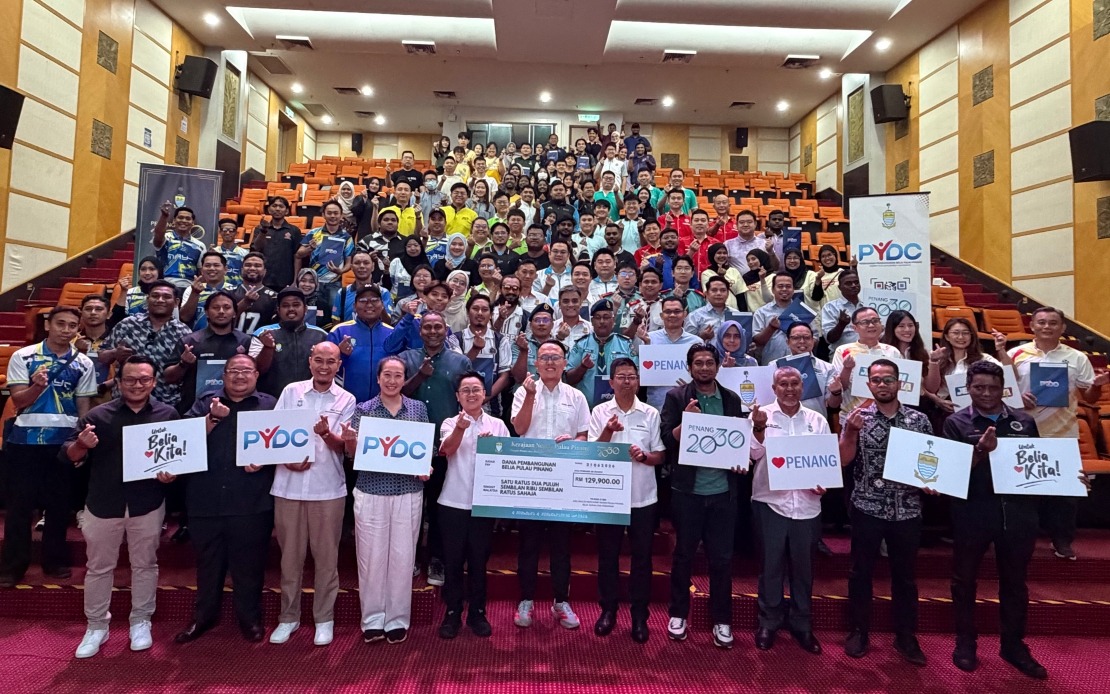
The Penang government has committed RM129,900 from its Youth Development Fund this financial year to support a comprehensive portfolio of 68 programmes being delivered by 48 youth associations operating throughout the state. The allocation represents a significant portion of the RM200,000 total youth development budget that was formally approved during a recent State Executive Council meeting, demonstrating the regional government's continued investment in developing the next generation of community leaders and skilled workers.
Daniel Gooi Zi Sen, chairman of Penang's Youth, Sports and Health Committee, framed the funding initiative not merely as financial disbursement but as a substantive endorsement of youth-led innovation and community engagement. Speaking to the broader strategic intent behind the allocation, Gooi emphasised that the fund represents institutional confidence in young people's capacity to drive meaningful social change through their own organisations and networks. The programmes receiving support span multiple developmental domains, including practical skills training, employment readiness initiatives, civic volunteering opportunities and structured leadership development activities.
The scale of participation is noteworthy from a grassroots perspective. The involvement of 48 separate youth-led organisations ensures that the funding reaches diverse communities and addresses varied demographic needs across Penang's urban and suburban districts. This multi-organisation approach contrasts with centralised programme delivery models and reflects contemporary best practices in youth development, which emphasise community-based ownership and local relevance in programme design.
For Malaysian youth policy observers, the Penang initiative illustrates how state governments are operationalising the national emphasis on youth empowerment and skills development. The explicit mention of marketability as a funding criterion suggests conscious alignment with Malaysia's broader economic transition towards a skills-based economy, where soft skills, technical competencies and entrepreneurial mindset have become increasingly valuable in the labour market. Youth unemployment and underemployment remain persistent policy concerns across Southeast Asia, making such targeted interventions particularly timely.
Gooi's articulation of accountability standards is equally significant. His reminder that recipient organisations must demonstrate integrity, transparency and efficient fund management establishes clear governance expectations. This emphasis on rigorous stewardship acknowledges that public funding creates legitimate obligations for measurable outcomes and responsible resource use. The statement implies that previous disbursements may have generated lessons regarding implementation challenges, or that the committee seeks to strengthen institutional capacity among youth associations.
The distinction Gooi drew between activity completion and genuine impact represents an important philosophical shift in youth development thinking. Rather than counting programme sessions or participant attendance numbers as success metrics, the committee is signalling that funded initiatives will be evaluated on their capacity to produce lasting behavioural changes, skill acquisition and community contributions among participants. This outcomes-focused framework demands more sophisticated monitoring and evaluation systems from implementing organisations.
The volunteerism component of the funding portfolio warrants particular attention for Malaysian social analysts. Youth volunteerism strengthens civil society capacity and fosters civic engagement from an early age, contributing to social cohesion and community resilience. In an era when digitalisation sometimes displaces face-to-face community participation, explicit funding for volunteerism programmes represents a deliberate counterbalance to isolating trends.
For associations receiving funding, the opportunity carries both promise and responsibility. Many youth organisations in Malaysia operate with minimal administrative infrastructure and rely heavily on volunteer labour. Access to substantial grants can enable expansion of activities and formalisation of operations, though it also requires developing grant management expertise and compliance capabilities. Organisations that successfully navigate these requirements often emerge as more professionally structured entities capable of pursuing larger funding opportunities and wider partnerships.
The regional context adds further dimensions to this development initiative. Penang's status as Malaysia's second-most economically developed state positions it as a policy innovator and model for other regions. Youth development programmes launched in Penang frequently attract attention from neighbouring states and federal policymakers, making the effectiveness of this particular fund initiative potentially consequential for national youth policy evolution.
The timing of the allocation, announced in June, likely aligns with Malaysian academic and financial cycles, enabling organisations to plan and deploy programmes during the second half of the financial year. This temporal positioning suggests administrative coordination between the youth committee and implementing organisations, potentially indicating established institutional relationships and proven delivery track records among the 48 funded associations.
Looking forward, the sustainability of such funding commitments remains a pertinent question for Malaysian youth development practitioners. While the current RM129,900 allocation represents meaningful support, long-term youth development outcomes depend on sustained investment across multiple budget cycles. Organisations developing new programmes must inevitably consider how they will maintain activities if future funding becomes constrained, necessitating early planning around revenue diversification and operational sustainability.
The Penang Youth Development Fund ultimately reflects a government committed to channelling resources directly to community organisations rather than restricting support to state-administered programmes. This trust-based model empowers young people and their associations while creating accountability mechanisms that ensure responsible stewardship. As Malaysia continues navigating post-pandemic economic and social challenges, such deliberate investments in youth agency, skills and community participation remain essential foundations for equitable and resilient development.

