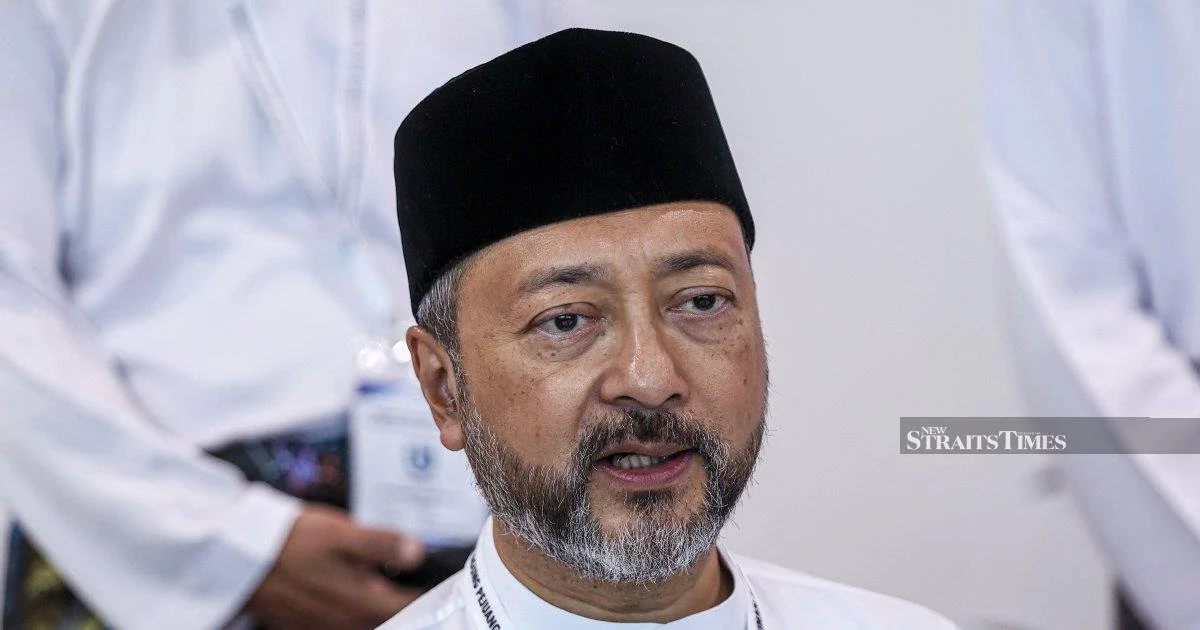
Parti Pejuang Tanah Air's formal incorporation into Perikatan Nasional signals a significant realignment within Malaysia's opposition landscape, according to the party's president Datuk Seri Mukhriz Mahathir. The move, which took place in Kuala Lumpur, is being framed not merely as a merger of two political entities but as part of a larger strategic initiative to consolidate disparate political forces capable of responding to the country's accumulating challenges.
Mukhriz's characterisation of Pejuang's entry as the "beginning" of a broader effort carries weight in the context of Malaysia's fragmented political environment. The opposition landscape has long been marked by competing interests and ideological differences that have hampered coordinated action on policy matters. By positioning Pejuang's move within a larger framework of political unity, the party leadership appears to be laying groundwork for additional coalitions or partnerships that could reshape the opposition's capacity to function as a cohesive force in Parliament.
The timing of this development reflects growing recognition among opposition leaders that Malaysia's persistent challenges—ranging from economic sustainability to institutional reform—require sustained political pressure and unified policy alternatives. Pejuang, which was established to champion Malay-Muslim interests while maintaining multiethnic governance principles, has struggled to establish itself as a significant electoral force since its inception. Integration into Perikatan Nasional, which comprises PAS, Bersatu, and several smaller components, offers the party both institutional stability and access to a larger grassroots network.
For Malaysian voters, particularly in constituencies where Pejuang had contested previous elections with limited success, this consolidation could streamline the opposition's presentation of candidates and policy platforms. Rather than fragmenting the vote across multiple opposition parties, a more unified structure theoretically allows greater focus on competitive seats and coherent messaging on national priorities. This has immediate implications for the 2025 state elections and preparations for the next general election cycle.
Perikatan Nasional's expansion with Pejuang also signals evolution within the coalition's own strategic thinking. Established initially as a vehicle for Bersatu under Muhyiddin Yassin, the coalition has undergone significant transformation in recent years, particularly following the merger discussions that preceded Bersatu's decision to remain within the alliance structure. The absorption of another centre-right, Malay-focused party suggests the coalition is attempting to position itself as the primary alternative government within the broader opposition.
Muslim-majority Southeast Asian nations frequently experience political reorganisation driven by both ideological alignment and pragmatic electoral calculation. Malaysia's experience in this regard demonstrates how coalition politics responds to voter sentiment and institutional pressures. The consolidation of Malay-Muslim-oriented parties into fewer, larger structures has historical precedent and reflects recognition that political influence increasingly derives from organisational scale and electoral efficiency rather than ideological purity.
Mukhriz's emphasis on addressing "growing national challenges" points to a substantive agenda beyond electoral arithmetic. Economic pressures, service delivery deficiencies, and concerns about institutional independence have become common talking points across the opposition spectrum. A unified political structure allows more coordinated scrutiny of government policies and potentially more cohesive alternative proposals. For constituencies experiencing infrastructure gaps or economic difficulties, opposition consolidation could facilitate more sustained advocacy for local concerns.
The integration also carries implications for Perikatan Nasional's relationships with other opposition stakeholders, most notably the Democratic Action Party and Amanah within the broader opposition ecosystem. While this move does not immediately alter formal alliance structures in Parliament, it signals realignment within opposition power dynamics. Future coalition negotiations—whether at state or federal levels—will need to account for a nominally stronger Perikatan Nasional backed by Pejuang's membership base and historical networks.
For Pejuang members and supporters, particularly those who joined the party expecting it to function as an independent political force, this transition represents a substantial shift in strategic orientation. The party effectively trades autonomy for electoral viability and institutional resources. This bargain may prove strategically sound given Pejuang's limited electoral penetration, but it also raises questions about the party's long-term identity within a larger coalition structure.
From a governance perspective, Malaysia's political consolidation trends merit attention from both domestic observers and regional analysts. Coalition management has proven historically challenging in Malaysia, with alliances fragmenting due to personality conflicts, resource distribution disputes, and ideological friction. Pejuang's entry into Perikatan Nasional represents a test of whether opposition forces can maintain structural coherence through election cycles while negotiating the complex interests of member parties.
The broader implications extend to Malaysia's legislative functioning and accountability mechanisms. A more organised opposition presence translates into more systematic scrutiny of government initiatives, potentially raising the quality of parliamentary debate and forcing greater ministerial accountability. Conversely, more unified opposition structures sometimes reduce the political space for independent legislative voices and cross-party technical cooperation.
Mukhriz's framing of this political development as addressing national challenges reflects broader recognition that Malaysian voters increasingly expect parties to demonstrate competence and vision beyond electoral competition. The consolidation of Pejuang into Perikatan Nasional will ultimately be judged not by the mechanics of the merger but by whether the enlarged coalition can translate its increased political weight into tangible policy alternatives and improved governance advocacy that resonates with diverse Malaysian communities.
Looking forward, political observers will monitor whether this consolidation inspires similar reorganisation among other opposition elements or whether it triggers defensive repositioning. Malaysia's political evolution continues to centre on finding stable coalitional structures capable of both mobilising voter support and delivering substantive governance alternatives.

