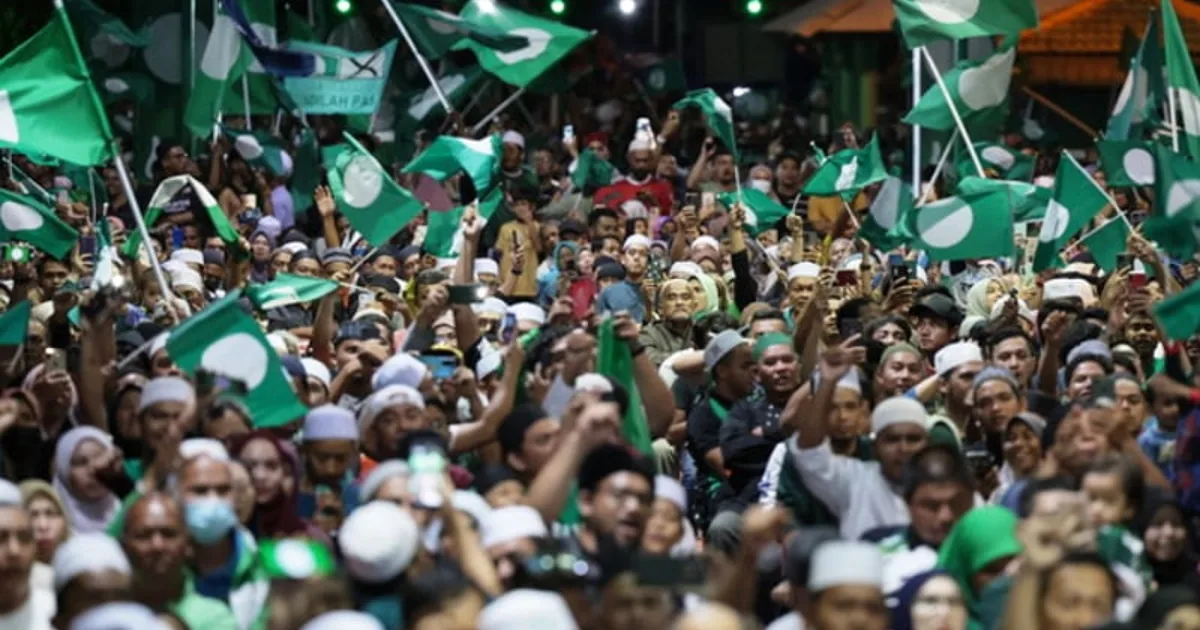
The Islamic party PAS has made the strategic decision to withdraw its election machinery from constituencies where its Perikatan Nasional coalition partner Bersatu is fielding candidates, according to sources familiar with the party's electoral positioning. This reorganisation of resources reflects the complex alliance dynamics within PN as the coalition seeks to maximise its electoral competitiveness by avoiding internal competition in key battlegrounds.
Under this new arrangement, PAS has committed to redirecting its organisational support and campaign personnel toward constituencies where the party itself is contesting, as well as seats where other component parties within the Perikatan Nasional coalition are competing. The restructuring signals an attempt to create clearer divisions of labour within the coalition, allowing each member party to concentrate its finite resources on designated electoral zones rather than fragmenting efforts across multiple contested seats.
This decision carries particular significance for understanding how Malaysia's multi-party coalitions manage the perennial tension between unity and internal competition. The Perikatan Nasional alliance, which includes PAS, Bersatu, and other parties, has grappled with constituency allocation disputes that frequently determine not only electoral outcomes but also the long-term balance of power within the coalition structure. By pulling back from Bersatu-held constituencies, PAS appears willing to sacrifice potential gains in those areas to strengthen the overall PN performance in regions where it holds organisational dominance.
For Bersatu, the move effectively hands over campaign territory without internal party competition, potentially allowing the party to mobilise resources more efficiently in constituencies where it faces challenges from rivals outside the coalition. Bersatu has faced significant electoral headwinds since the party emerged from internal UMNO divisions and later joined PN, making this arrangement strategically valuable as the party attempts to maintain parliamentary representation and demonstrate viability as an independent political force.
The reallocation underscores the importance of organisational machinery in Malaysian electoral contests. Beyond candidate selection and manifestos, parties rely heavily on grassroots networks, volunteer coordination, and local mobilisation capacity to translate support into votes. By concentrating these resources, PAS effectively acknowledges that where its ground organisation is strongest, deployment should be maximised, while areas of comparative weakness should be left to coalition partners whose local networks are more robust.
Such arrangements are not unprecedented within Malaysian coalition politics, though they remain subject to change and internal negotiation. Previous elections have witnessed similar understandings between coalition partners, though these agreements often prove fragile when local party leaders or ambitious candidates push for their own candidacies regardless of coalition strategy. The formal nature of this PAS decision suggests an attempt to establish clearer parameters, though enforcement will ultimately depend on party discipline and commitment from divisional leadership.
For Malaysian voters in constituencies affected by this arrangement, the practical effect may be a shift in campaign intensity and the types of messages they encounter during election periods. Constituencies where PAS withdraws support may see reduced campaign activity from the party, while seats where PAS maintains focus could experience heightened mobilisation. This variation in campaign intensity across different regions can influence voter engagement and awareness, particularly in areas where swing voters rely heavily on direct campaign contact for information.
The move also reflects broader coalition mathematics within Perikatan Nasional. With three major political blocs now competing in Malaysian elections—PN, Barisan Nasional, and the opposition Pakatan Harapan—each coalition must optimise its overall seat count rather than maximising individual party gains. PAS's strategic withdrawal demonstrates recognition that a coalition victory benefiting Bersatu strengthens PN's overall position and preserves the alliance for future political cooperation, even if it means forgoing direct competition.
For Southeast Asian observers, this arrangement illustrates enduring patterns in how multiparty democratic systems manage coalition behaviour. The incentive structures that drive parties toward cooperation while maintaining internal competition present challenges that Malaysian coalitions navigate through formal and informal agreements. How successfully PAS maintains discipline in implementing this decision will provide insights into PN's cohesion and sustainability as Malaysia's political landscape continues to shift.
The electoral implications extend beyond immediate seat counts to questions of parliamentary stability and coalition government formation. A coordinated PN strategy that prevents internal competition in key constituencies could strengthen the coalition's overall parliamentary representation, translating into greater leverage in post-election government formation and policy-making. Conversely, breakdown of such coordination could fragment PN's representation and weaken its negotiating position relative to other blocs.
Looking ahead, this PAS decision will likely become a precedent for how other PN component parties structure their own constituency strategies. If the arrangement produces visible electoral benefits, pressure may mount for similar coordinated withdrawals from other party partnerships. Alternatively, if local party units rebel or the strategy produces disappointing results, subsequent coalitions may resort to different approaches to managing internal competition and resource allocation.

