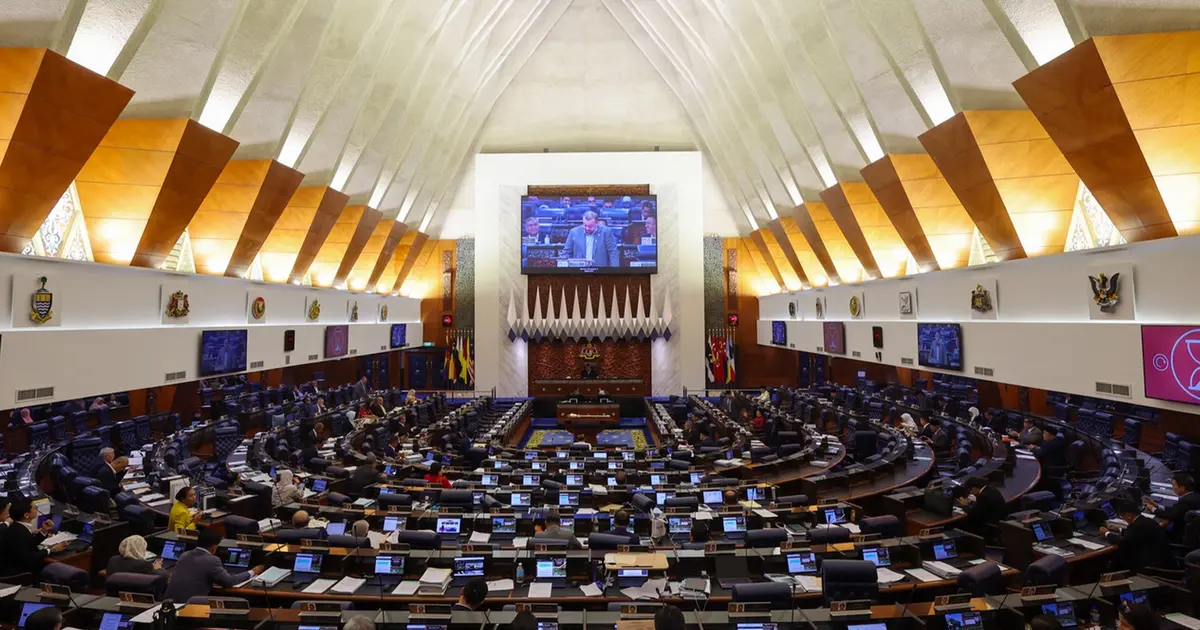
Parliament is set to revisit a contentious constitutional amendment that would limit prime ministerial tenure to a single 10-year term, marking a renewed push on executive governance reform in Malaysia. The bill returns to the Dewan Rakyat starting Monday alongside three other significant pieces of legislation, but faces the familiar hurdle of securing the supermajority backing needed to alter the Federal Constitution.
The tenure-limiting proposal constitutes a structural intervention in how Malaysia's highest office operates, representing a formal attempt to institutionalise constraints on executive power through constitutional entrenchment rather than mere convention or political pressure. For a nation where prime ministerial transitions have occasionally proven acrimonious or prolonged, codifying term boundaries into constitutional law would fundamentally reshape succession dynamics and potentially reduce incentives for leaders to entrench themselves through consolidation of power or constitutional workarounds.
During its previous parliamentary outing, the bill failed to muster the two-thirds majority required to amend the Federal Constitution—a threshold designed precisely to prevent swift alterations of Malaysia's foundational legal framework. This supermajority requirement reflects the framers' intent to ensure broad consensus before changing core constitutional provisions, though it also means that minority blocs can effectively veto constitutional changes if government support lacks sufficient breadth. The failure then signals that support remains fragmented, whether among opposition parties or within the ruling coalition itself.
The 10-year tenure cap itself merits contextual examination. While not unprecedented internationally—numerous democracies employ presidential or parliamentary term limits—the specific timeframe reflects Malaysia's existing political reality where two consecutive five-year electoral cycles create a neat symmetry with constitutional terms. A leader serving two full five-year mandates would exhaust this limit, whereas a prime minister assuming office mid-term could theoretically serve longer in absolute chronological time, creating technical ambiguities that legislative scrutiny will likely expose.
The return of this bill during Monday's sitting suggests government determination to advance the measure despite previous setbacks, implying either that additional parliamentary support has been secured or that the government intends to test support anew in hopes of gaining the required two-thirds backing. For Malaysian observers, the legislative arithmetic becomes crucial—the government must account not merely for its own coalition members but also for opposition support or abstentions, since voting blocs sufficiently large can either block or facilitate passage.
Constitutional amendments carry symbolic weight extending beyond their immediate technical content. A successful tenure-limit amendment would signal broader commitment to institutionalising governance constraints, potentially creating momentum for further reforms addressing institutional checks and balances. Conversely, another failure might indicate that constitutional renovation remains politically difficult in Malaysia's current parliamentary composition, or that constituencies harbour genuine disagreement about whether executive tenure should be constitutionally capped rather than managed through electoral and political accountability mechanisms.
The regional dimension warrants consideration too. Malaysian constitutional developments attract scrutiny across Southeast Asia, where neighbouring democracies grapple with similar questions about term limits, executive power, and institutional design. A Malaysian precedent in successfully constitutionalising prime ministerial tenure caps could influence discussions elsewhere in the region, while continued failure suggests that such reforms face structural obstacles even in relatively established parliamentary systems.
The three companion bills under discussion Monday remain unnamed in available reporting, yet their consideration alongside the tenure-limit measure suggests a broader parliamentary agenda potentially touching on democratic institutions, governance, or constitutional modernisation. Understanding what these complementary measures address would clarify whether Monday's sitting constitutes a comprehensive institutional reform effort or more modest legislative routine.
For Malaysian citizens, the practical implications of a successful tenure cap remain somewhat abstract—few sitting politicians face imminent term-limit expiration, and the measure would shape succession dynamics primarily for future administrations. Nevertheless, the principle undergirding the bill—that no individual should exercise executive power indefinitely, and that constitutional mechanisms should enforce such constraints—touches fundamental questions about accountability, democratic renewal, and the balance between leadership continuity and power concentration.
The coming parliamentary sitting therefore represents a crucial juncture in Malaysia's ongoing constitutional conversation. Whether lawmakers can achieve the supermajority necessary to formally cap prime ministerial tenure will signal both the government's legislative capacity and the broader political appetite for entrenchment-focused institutional reform. The outcome will reverberate beyond Monday's parliamentary debates, shaping how Malaysian democracy manages executive power for years ahead.

