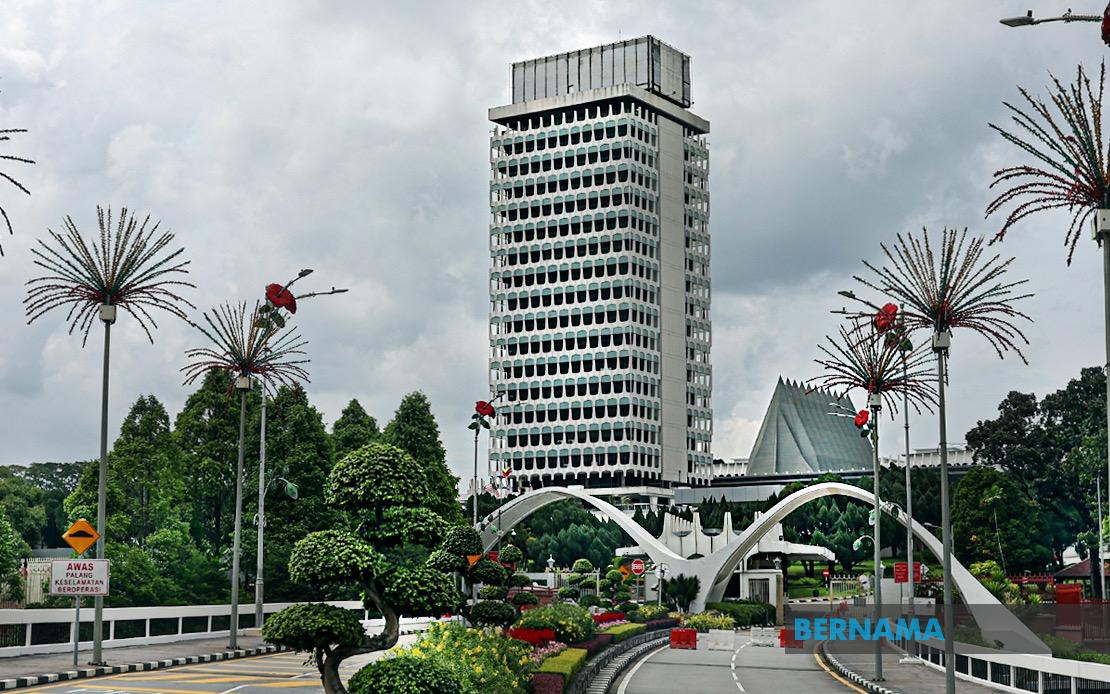
Malaysia's Parliament is turning its attention to three critical governance issues affecting citizens' daily lives as lawmakers gather for a sitting that will run through mid-July. The Dewan Rakyat agenda reveals pressing concerns spanning water security, consumer protection through fair competition, and the regulatory framework governing digital platforms—three domains where government capacity and policy coordination remain under parliamentary scrutiny.
The question of Johor's water sufficiency represents perhaps the most immediate challenge facing the nation. Suhaizan Kaiat, the member for Pulai representing the Pakatan Harapan coalition, will press the Energy Transition and Water Transformation Minister on concrete proposals to expand the state's water resource infrastructure. Johor's growing population and industrial base have placed mounting pressure on existing supply systems, making long-term planning essential. The parliamentarian has specifically requested details on proposed dam construction, the expansion of water treatment facilities, and the government's plans to integrate recycled water into the supply chain—a technology increasingly adopted across Southeast Asia as nations grapple with water stress.
This line of questioning reflects broader concerns about Malaysia's water security in the face of rapid urbanisation and climate variability. While Selangor has dominated recent headlines regarding water woes, Johor's situation deserves equal attention given its role as both an economic engine and a water supplier to neighbouring states. The minister's response will likely outline investment timelines, budgetary allocations, and coordination mechanisms with Johor state authorities—details that carry implications for businesses, residents, and agricultural stakeholders throughout the southern region.
Equally significant is Datuk Seri Ismail Abd. Muttalib's intervention on behalf of the Perikatan Nasional party in Maran. His questions target the Malaysia Competition Commission's effectiveness in policing the housing market, a sector notorious for opacity and alleged anti-competitive conduct. The minister responsible for Domestic Trade and Cost of Living will face demands to clarify how MyCC monitors housing developers' pricing strategies and promotional packages, and how thoroughly it investigates suspected price-fixing or market coordination among suppliers.
The housing market represents one of Southeast Asia's most contentious battlegrounds between affordability aspirations and developer profitability. Malaysia has experienced recurrent scandals involving collusive pricing, unsold inventory, and speculative practices that inflate costs beyond the reach of middle-income families. MyCC's role in this arena remains under-resourced and often invisible to the public, yet its investigative capacity directly affects whether competition rules translate into genuine consumer benefit. The parliamentary questioning provides a rare opportunity to hold the competition authority accountable for concrete results rather than abstract enforcement activities.
The third parliamentary inquiry addresses an emerging flashpoint in digital governance. Syahredzan Johan, representing Bangi for Pakatan Harapan, will interrogate the Communications Ministry on its plans to mandate age verification for social media account registration. This question carries particular resonance in Malaysia and the broader region, where child safety online, data privacy, and state surveillance concerns intersect uneasily. The parliamentarian has specifically requested clarity on how the ministry will prevent service providers from collecting excessive personal data and ensure timely deletion once verification is complete.
Age verification represents a global policy frontier, with jurisdictions ranging from the European Union to Australia implementing or proposing such requirements. Malaysia's approach will set regional precedent and establish principles that either protect children from age-inappropriate content while safeguarding privacy, or inadvertently create backdoors for mass data harvesting. The question suggests parliamentary awareness that technical implementation matters profoundly—a service provider with unfettered access to personal data attributes poses risks regardless of the stated purpose.
These three topics collectively indicate Parliament's engagement with governance challenges that transcend traditional party lines. Water security affects all Malaysians regardless of political affiliation. Housing affordability concerns both ruling coalitions' supporters. Digital platform regulation touches every household with internet access. The questions scheduled for this sitting therefore merit attention not merely as parliamentary procedure but as indicators of which governance gaps remain unaddressed despite years of government action.
The 16-day session running through July 16 provides an extended window for such scrutiny. Unlike shorter parliamentary sessions, this longer sitting permits more detailed questioning, cross-examination, and follow-up interrogation. Opposition and government-aligned backbenchers alike can press ministers on implementation details, budget adequacy, and timeline realism. The extended format also allows Parliament to examine whether previous ministerial commitments have been honoured and where promises have slipped.
For Malaysian readers and Southeast Asian observers, these parliamentary exchanges offer windows into how federal government institutions handle contemporary challenges. Water infrastructure, competition enforcement, and digital regulation will define regional competitiveness and citizen welfare throughout this decade. How Parliament holds ministers accountable on these fronts shapes whether government responses remain aspirational or translate into tangible outcomes that affect investment flows, business practices, and household welfare across the nation.

