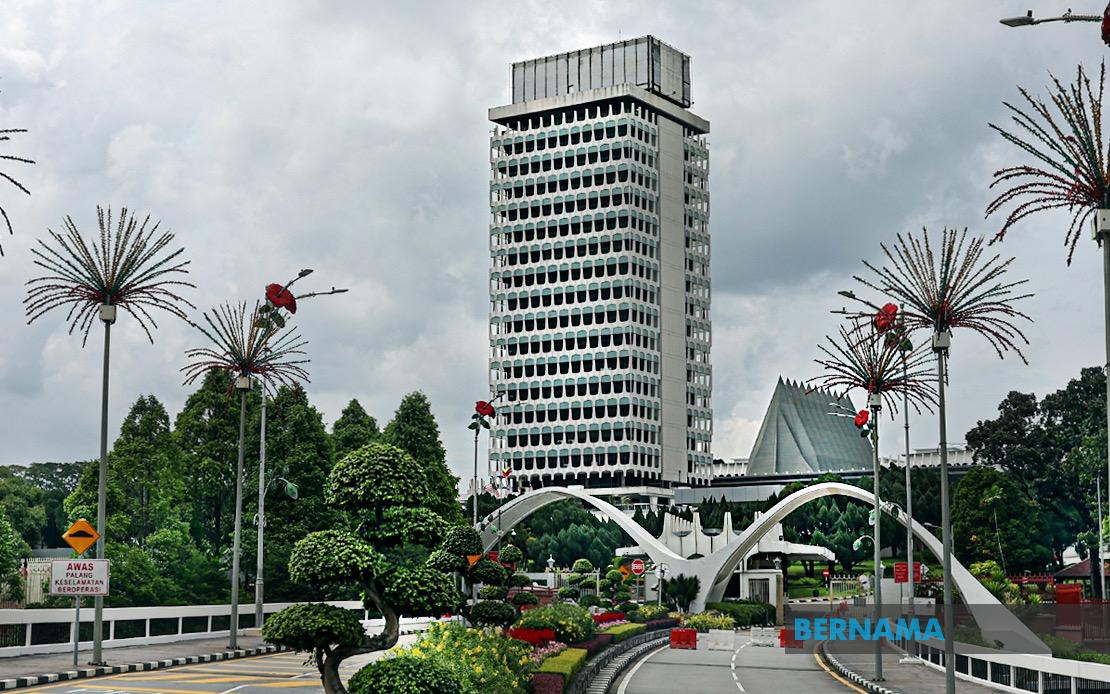
Parliament returns to the chamber today with lawmakers preparing to grill ministers on renewable energy adoption, geopolitical strategy in Southeast Asia, and the country's faltering economic performance in the face of cascading global headwinds. The 16-day sitting, which opened on Monday, will see detailed questioning on the Corporate Renewable Energy Supply Scheme (CRESS) and its uptake among Malaysian industries, alongside broader concerns about how the nation is weathering the combined shock of the energy transition and worldwide economic uncertainty. These parliamentary interventions signal mounting legislative pressure on the government to demonstrate tangible progress across multiple policy fronts simultaneously.
The energy transition agenda looms large in today's parliamentary schedule, with Ampang MP Rodziah Ismail directing the Minister of Energy Transition and Water Transformation to provide concrete figures on CRESS participation and the results of a critical System Access Charge rate review. Her questioning reflects widespread industry anxiety about the trajectory costs of Malaysia's shift toward renewable power generation. The System Access Charge assessment is particularly consequential for data centre operators, a sector the government has positioned as a cornerstone of economic diversification and high-value employment creation. Rising transmission charges could undermine Malaysia's competitive positioning against regional rivals like Singapore and Indonesia, which are aggressively courting international cloud computing and artificial intelligence infrastructure investment. The implications extend beyond individual company margins; they touch on whether Malaysia can credibly position itself as Southeast Asia's preferred data centre hub while managing the fiscal pressures of energy system modernisation.
Parallel questioning on Malaysia's data centre aspirations will be pursued by Gombak MP Datuk Seri Amirudin Shari, who will press the Digital Minister on whether state-level fibre infrastructure projects—notably Selangor's Dark Fiber Network—are being coordinated to safeguard national data sovereignty and security. The alignment between state and federal technology initiatives remains patchy across Malaysia, creating risks that essential digital infrastructure development proceeds without adequate national oversight. Amirudin's focus on data sovereignty ahead of the government's stated goal of becoming an artificial intelligence-ready economy by 2030 reflects concern that rapid technology adoption could inadvertently compromise sensitive information assets or create vulnerabilities to foreign cyber threats.
Economic resilience emerges as a second major parliamentary concern. Bachok MP Mohd Syahir Che Sulaiman will interrogate the National Economic Action Council's response to cascading job losses and business contraction triggered by the energy crisis and global economic volatility. This line of questioning suggests Parliament is unconvinced that current mitigation measures are sufficient or delivering measurable results. The rising tide of business failures and unemployment represents a tangible threat to consumer spending and domestic economic momentum at a time when Malaysia lacks the buffers of sustained manufacturing export growth or commodity revenue booms. Government officials will need to articulate concrete success metrics and timelines, or face intensifying criticism that crisis management has been reactive rather than strategic.
Fuel subsidy policy enters the parliamentary crosshairs through a question from Simpang Renggam MP Datuk Seri Hasni Mohammad, who will challenge the Finance Minister on the logic behind standardising diesel and petrol subsidies at 200 litres per person monthly via MyKad verification. The timing of this question reflects broader public scepticism about whether such entitlements genuinely serve lower-income households or whether the administrative complexity and potential abuse warrant policy revision. For Malaysian drivers and transport operators, subsidy design profoundly affects their ability to manage fuel costs; parliamentary scrutiny of this detail signals that backbench members remain alive to ground-level economic grievances often overlooked in macro-policy discussions.
Malaysia's foreign policy stance toward Myanmar and the effectiveness of the Five-Point Consensus framework will attract intense questioning from Selayang MP William Leong Jee Keen. The 5PC, agreed following Myanmar's 2021 military coup, has become a touchstone for ASEAN's approach to that country's political crisis. Yet progress on the ground has been glacial, and Malaysian domestic constituencies—including civil society advocates and some parliamentarians—question whether the consensus strategy is yielding any meaningful returns. Leong's question aims to extract clarity on whether Malaysia's foreign ministry has adjusted policy formulation in light of the coup's persistence and deteriorating humanitarian conditions. For Malaysia, this line of questioning carries particular weight given its historical interest in Myanmar stability and its responsibility as an ASEAN member to shape collective diplomatic responses.
Sabah and Sarawak representation in Parliament will be raised by Warisan's Kota Belud MP Isnaraissah Munirah Majilis, who will press the Prime Minister on progress implementing the Malaysia Agreement 1963 and efforts to increase parliamentary seat allocation for the two East Malaysian states to 35 per cent of total seats nationwide. This remains a long-standing grievance within Sabah and Sarawak political circles, representing a fundamental question of constitutional federalism and regional equity. The question's appearance on the parliamentary order paper indicates continued momentum among eastern lawmakers to hold the federal government accountable for constitutional pledges made more than six decades ago. Implementation timelines and concrete milestones would likely satisfy sceptical east Malaysian constituencies far more than vague assurances.
Curriculum adequacy and religious education coordination will feature in a question from Bagan Serai MP Datuk Idris Ahmad, who will ask the Prime Minister to assess whether the Islamic Education curriculum effectively supports student development and how federal and state Islamic Religious Councils synchronise their oversight. This question touches on a sensitive and important area of policy where inconsistencies between states and federal direction can create pedagogical and administrative confusion. Parents, educators, and religious scholars have raised concerns about curriculum relevance and standardisation; parliamentary scrutiny of this domain creates space for those voices to influence policy recalibration.
Public health financing will enter debate when the Public Accounts Committee presents findings on escalating private hospital charges and health insurance premiums. This briefing carries particular relevance for Malaysian households grappling with the rising cost of medical care at a time when disposable incomes are under pressure from inflation and economic slowdown. The PAC's examination of how the ministries of Finance and Health, along with Bank Negara Malaysia, are managing these cost trajectories may yield recommendations to curb further premium increases or bring greater transparency to hospital pricing structures. For millions of Malaysians dependent on private healthcare, these findings and subsequent parliamentary discussion could directly influence the affordability and accessibility of essential medical services.
The parliamentary sitting extends until July 16, providing sustained opportunity for legislative scrutiny across these multiple interconnected policy domains. The concentration of questions on renewable energy, economic crisis management, data sovereignty, Myanmar diplomacy, and East Malaysian constitutional rights suggests Parliament is wrestling with the full spectrum of pressures confronting Malaysia's leadership. Responses from ministers will reveal both the government's diagnostic understanding of these challenges and the coherence or fragmentation of its policy responses. For Malaysian citizens and regional observers, these parliamentary exchanges offer a window into whether the government possesses both clarity of strategic direction and capacity to execute effectively amid turbulent circumstances.

