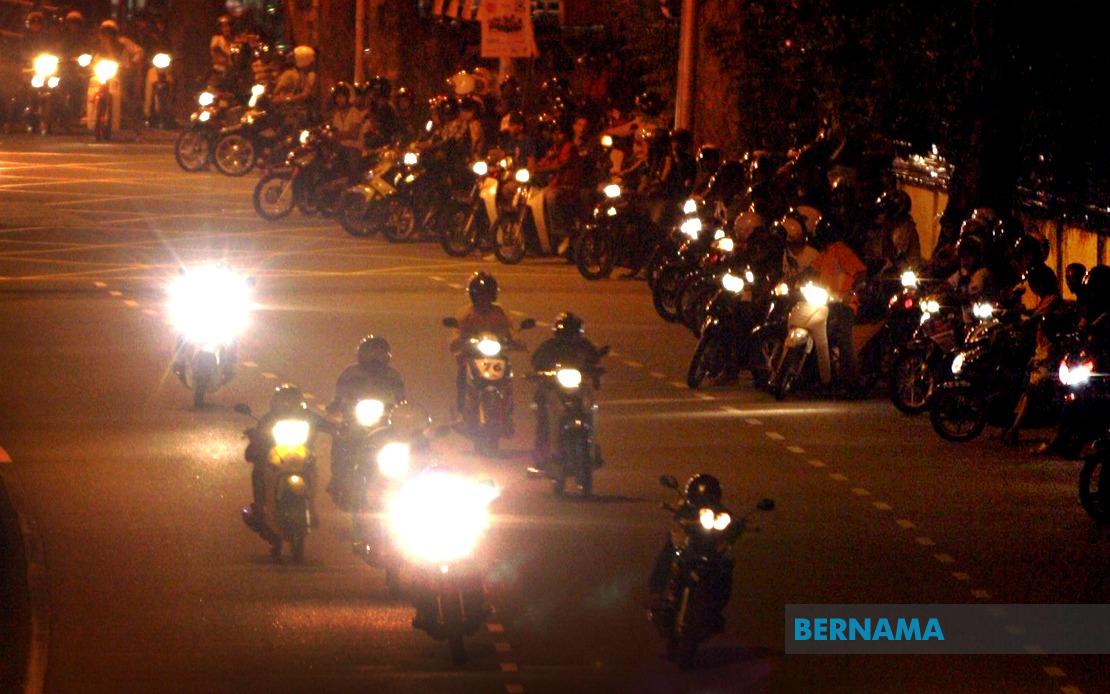
Lawmakers across the Malaysian Parliament's political spectrum converged on a unified front against illegal street racing during this week's debate on the Road Transport (Amendment) Act 2026, proposing a comprehensive arsenal of penalties and preventative measures designed to dismantle the underground racing culture that has claimed lives and caused widespread public safety concerns.
The parliamentary session revealed deepening frustration with existing enforcement mechanisms, with multiple MPs arguing that current penalties have proven insufficient to deter offenders or protect communities. Rather than relying solely on financial fines and custodial sentences, the emerging legislative approach emphasises permanent removal of driving privileges, suggesting a fundamental shift toward treating illegal racing as a disqualifying offence that warrants lifetime driving bans for convicted offenders. Datuk Willie Mongin from GPS-Puncak Borneo articulated this philosophy most starkly, proposing a minimum fine of RM300,000 alongside five-year imprisonment and complete driving licence revocation, framing such severity as essential to demonstrating governmental resolve.
Beyond traditional punitive measures, several MPs advocated for rehabilitative interventions targeting offenders' behavioural and social dynamics. Khairil Nizam Khirudin from PN-Jerantut proposed a specialised rehabilitation programme incorporating disciplinary training and mandatory community service, recognising that incarceration alone may fail to address underlying attitudes that drive participation in street racing. This approach acknowledges that deterrence functions most effectively when combined with genuine opportunities for offenders to reform and reintegrate into society, particularly for younger participants whose life trajectories remain malleable.
The parliamentary discourse also extended accountability upstream to family units, with legislators suggesting that parents of offenders bear responsibility for their children's dangerous behaviour. This familial accountability mechanism reflects broader Malaysian social values emphasising parental duty whilst also confronting a practical reality: younger racers operating within family homes may be susceptible to parental oversight and intervention. Whether such proposals prove enforceable remains unclear, but they signal parliamentary intent to activate guardians as partners in prevention strategies.
Workshop accountability emerged as another crucial focus, with MPs emphasising the need to target motorcycle modification specialists who enable illegal racing by enhancing vehicle performance. Khairil Nizam proposed that the Ministry of Transport collaborate with the Ministry of Domestic Trade and Cost of Living to invoke Section 66 of the Road Transport Act 1987, potentially establishing new regulatory frameworks to penalise workshops engaged in illegal modifications. This represents a recognition that supply-side interventions—targeting those who facilitate racing rather than solely punishing racers themselves—may prove more effective in disrupting the entire ecosystem supporting the phenomenon.
Shaharizukirnain Abd Kadir introduced arguably the most aggressive proposal: mandatory destruction of excessively modified motorcycles seized during enforcement operations. Such confiscation and destruction would eliminate the physical assets enabling illegal racing, imposing irreversible consequences that extend beyond personal sanctions to target the vehicles themselves. This approach carries both practical and symbolic weight, signalling that the state will permanently remove tools of illegal activity rather than permitting their eventual recovery.
A pivotal moment in the debate emerged when Wan Razali Wan Nor referenced the tragic Simpang Renggam incident of June 1 in Johor, where luxury vehicles engaged in street racing killed multiple people. This incident shattered conventional narratives portraying illegal racing as primarily a motorcycle phenomenon involving lower-income participants. The Simpang Renggam tragedy demonstrated that high-powered cars—often driven by affluent individuals—pose equivalent or potentially greater dangers due to their velocity and mass. Consequently, Wan Razali urged that Section 42A provisions encompass all vehicle types, not merely motorcycles, ensuring legislative parity across socioeconomic strata of offenders.
The parliamentary focus on inclusive legislation addressing both motorcycles and cars reflects evolving public health understanding of illegal racing as a cross-demographic problem requiring comprehensive rather than narrow regulatory responses. Luxury car racing incidents may garner particular media attention due to social prominence of perpetrators, yet motorcyclist-dominated street racing causes sustained injury and death, particularly affecting lower-income communities. Effective legislation must therefore address both phenomena without inadvertently creating enforcement hierarchies.
Parallel to illegal racing concerns, MPs pursued substantive amendments regarding driving under the influence of alcohol and drugs, proposing compensation mechanisms for victims' medical expenses and welfare needs. Zahari Kechik from Jeli and Datuk Seri Dr Ismail Abd Muttalib from PN-Maran emphasised that current frameworks inadequately compensate victims for injuries sustained through impaired drivers' negligence, leaving accident survivors and families bearing disproportionate financial burdens. Their proposals suggest establishing statutory compensation schemes ensuring that intoxicated offenders bear full financial responsibility for induced harms, aligning criminal accountability with victim restitution.
The breadth of proposals emerging from twenty-four government and opposition MPs indicates that illegal racing has transcended partisan political division to become a genuine public safety concern commanding cross-party legislative attention. Such consensus, whilst encouraging, raises implementation questions regarding enforcement capacity, judicial consistency, and practical deterrent effectiveness. Malaysian enforcement agencies would require substantial resource enhancement to monitor workshop modifications, intercept racing activities, and process cases through judicial systems already managing significant caseloads.
Moreover, the legislative proposals' effectiveness ultimately depends upon public perception and cultural attitudes toward street racing. In communities where racing carries social cachet or represents rebellion against perceived systemic inequality, statutory penalties alone—however severe—may prove insufficient without parallel efforts addressing underlying motivations. Educational campaigns, youth engagement programmes, and legal outlets for automotive enthusiasm might complement legislative reforms by redirecting energies toward lawful pursuits.
As the Dewan Rakyat continues deliberations, the Road Transport Amendment Act 2026 represents an opportunity to establish genuinely deterrent frameworks whilst simultaneously addressing victim support inadequacies and upstream facilitation mechanisms. The legislative moment reflects Malaysian society's growing intolerance for street racing's lethal consequences, though translating parliamentary consensus into effective enforcement and genuine behavioural change remains an formidable practical challenge requiring sustained governmental commitment extending well beyond statutory revision.

