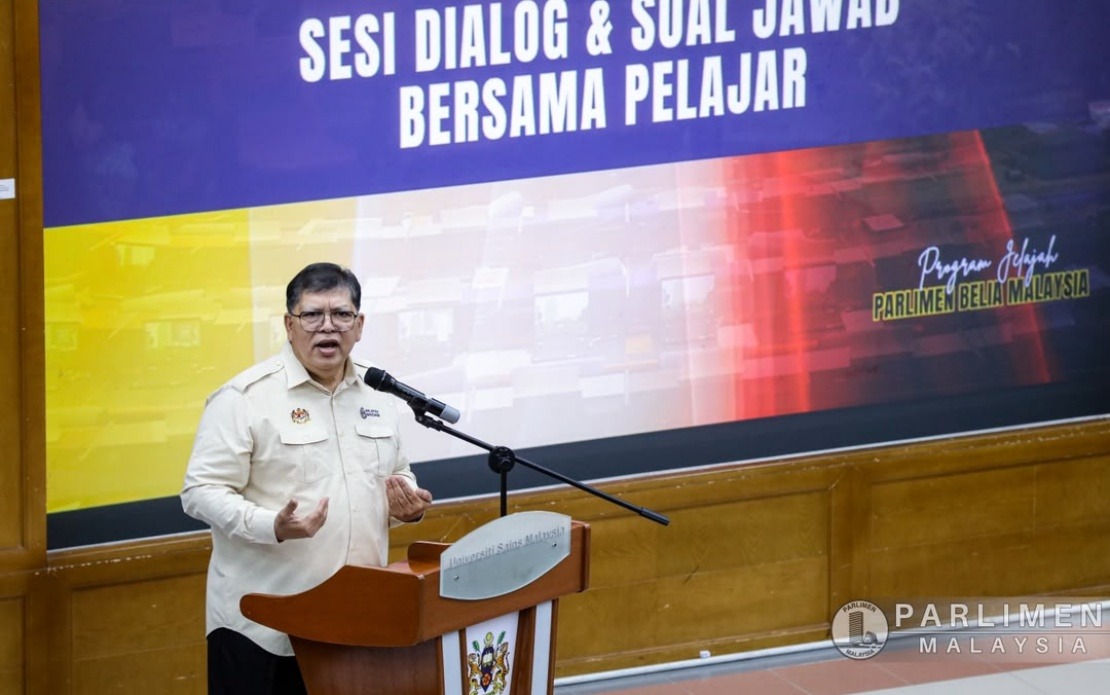
The Dewan Rakyat must function as both a respected institution and a living classroom in democratic practice, according to Speaker Tan Sri Johari Abdul, who has issued a pointed reminder to sitting Members of Parliament ahead of the Malaysian Youth Parliament's inaugural session scheduled for September 11. His comments underscore growing awareness among Malaysia's parliamentary leadership that legislative conduct carries pedagogical weight, influencing how younger generations perceive and ultimately participate in democratic institutions.
Johari framed Parliament not as a mere debating chamber reserved for elected representatives, but rather as the nation's pre-eminent legislative body that inherently serves as a touchstone for public expectations and a formative reference point for generations yet to enter electoral politics. This distinction proves significant for how institutions justify their procedures and operational culture. In a media landscape where parliamentary proceedings are broadcast live and dissected across social platforms, the Speaker recognised that dignified conduct can no longer be confined to tradition or internal protocol—it has become a demonstrable standard available for public scrutiny and emulation.
The Speaker's exhortation carries particular force given that participants in the Malaysian Youth Parliament will observe, first-hand and through media coverage, exactly how sitting MPs conduct themselves during legislative sessions. Young leaders participating in the Youth Parliament require exemplars of integrity-driven governance, he argued, not merely abstract lessons on parliamentary procedure. The visibility afforded by modern technology means that every gesture, interjection, and procedural move within the chamber broadcasts a message about how power operates and how disputes between competing visions are—or ought to be—resolved.
Johari explicitly called for debate within the Dewan Rakyat to embody three qualities: factual rigour, courtesy, and a solution-oriented focus. These criteria represent a deliberate counter-proposal to legislative styles characterised by personal attacks, unsubstantiated claims, or rhetoric designed primarily for audience applause rather than problem-solving. His framing suggests that parliament's educational function extends beyond civics lessons to modelling the intellectual habits and interpersonal norms essential for democratic governance.
The Malaysian Youth Parliament itself operates on an ambitious scale. The initiative mirrors the architecture of the national legislature, encompassing 222 seats that correspond to parliamentary constituencies across Malaysia. However, the youth version structures representation through organisations registered with Parliament Malaysia rather than through formal political parties. This design permits young people to participate in legislative simulation without becoming formally enrolled in partisan structures—a potentially significant distinction in a country where electoral politics can become acrimonious and where youth engagement with formal party machinery remains variable.
More than ten non-partisan youth organisations have already established parliamentary groupings within the PBMy framework, demonstrating broad engagement across different demographic and interest-based constituencies. These formations explicitly disclaim connection to actual party politics, allowing young people to develop legislative experience and debate skills in a forum insulated from national partisan divisions. Parliament Malaysia is currently undertaking nationwide outreach to register approximately 300,000 eligible youths aged 18 to 30 before the Youth Parliament Election scheduled for August.
The logistical calendar for the September inaugural session reflects careful planning. Nomination day falls on July 8, with official candidates announced on July 11. A 27-day campaign period runs from July 12 through August 7 nationwide, followed by online voting conducted through the e-PBMy system. The voting window opens at 10 am on August 8 and closes at 10 am on August 9, with all balloting occurring digitally. This timeline compresses significantly compared to general elections, yet replicates essential democratic procedures including candidate nomination, public campaign periods, and secret ballot voting.
Once established, the Malaysian Youth Parliament will convene three times annually, with each sitting lasting two days. Members will serve two-year terms, creating a predictable cycle for legislative work and continuity across sessions. This structure allows sufficient time for substantive deliberation without creating a permanent government of youth that might isolate younger representatives from the broader engagement with employment, education, or community obligations that characterise most young people's lives.
The institutional history of the Malaysian Youth Parliament demonstrates evolving commitment to youth political engagement. The initiative launched in 2015 under the Ministry of Youth and Sports (KBS), operating for eight years before the government transferred full management and implementation responsibility to Parliament Malaysia in October 2023. This administrative shift carries significance: relocating the youth parliament from a sectoral ministry to the legislative branch itself suggests elevated institutional status and potentially greater alignment with actual parliamentary procedures and standards.
For Malaysia and the broader Southeast Asian context, youth political engagement carries strategic importance. Younger demographics constitute substantial proportions of most regional populations, yet youth voter turnout and youth party membership often lag significantly behind older cohorts. Creating structured opportunities for legislative participation and debate allows young people to develop civic competencies and political efficacy—the belief that engagement in political institutions can produce meaningful outcomes—before they reach voting age or assume permanent political roles.
The transfer of the Malaysian Youth Parliament to Parliament Malaysia's direct administration implies that the institution's credibility depends increasingly on the conduct and example of sitting MPs themselves. If the Dewan Rakyat successfully models the dignified, factual, solution-oriented debate that Johari advocates, the youth parliament initiative may strengthen democratic culture across generations. Conversely, if parliamentary conduct remains contentious or factually loose, the pedagogical potential of youth observation diminishes considerably. Speaker Johari's recent statements appear designed to sharpen accountability on this point, making legislative conduct an explicit consideration in lawmakers' daily responsibilities.

