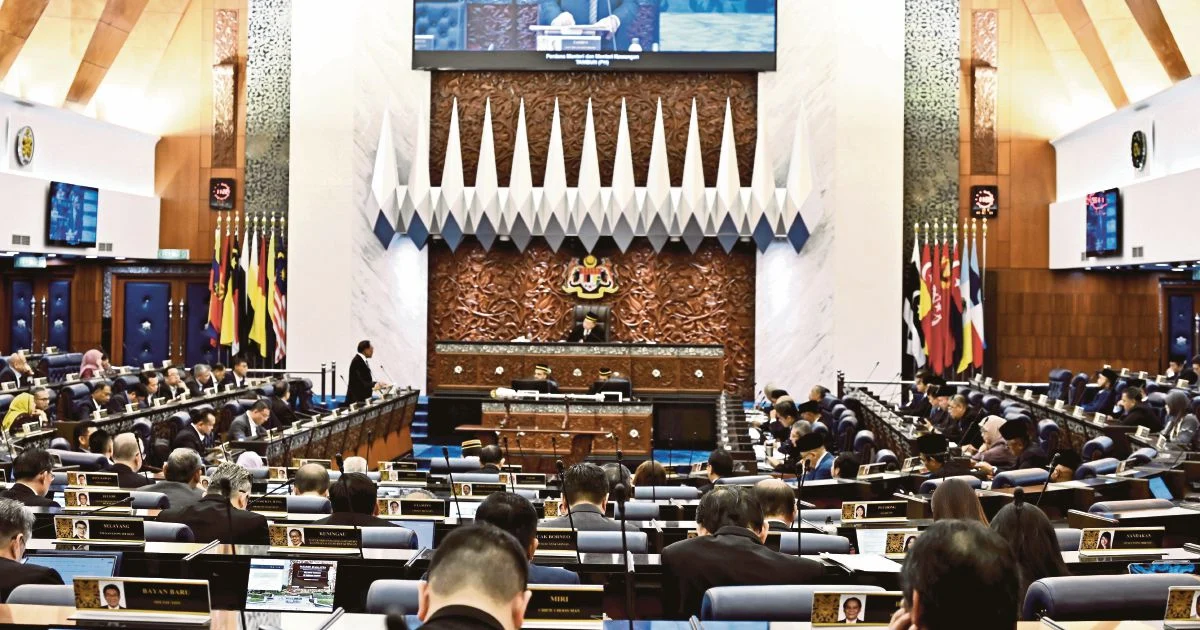
Parliament descended into acrimonious debate within minutes of the Dewan Rakyat convening today, as government and opposition lawmakers engaged in a pointed confrontation that laid bare underlying tensions simmering within the country's political establishment. The altercation, triggered by a procedural disagreement concerning the opposition leader's standing, quickly escalated into a broader dispute that consumed parliamentary proceedings and highlighted the fractious nature of current Malaysian politics.
The flashpoint emerged from what initially appeared to be a routine administrative matter, but the response it provoked from both sides of the chamber suggested deeper friction beneath the surface. The rapid deterioration from standard parliamentary procedure to open hostility underscored how sensitive certain constitutional and procedural questions have become in the current political environment, where coalition dynamics remain delicate and inter-party relationships continue to shift unpredictably.
Takiyuddin's involvement in the dispute placed him at the centre of a broader conversation about the health of Malaysia's parliamentary democracy and the relationship between the ruling coalition parties. His participation in what unfolded as a pointed exchange reflected the growing complexity of managing disparate factions within both government and opposition groupings, a challenge that has become increasingly apparent over successive parliamentary sessions.
The government member who engaged directly with Takiyuddin brought the perspective of the ruling coalition into the confrontation, creating a forum for airing grievances that extended beyond the immediate procedural question. This willingness to escalate the dispute in the chamber suggested that frustrations accumulated over previous incidents had reached a threshold where restraint gave way to direct confrontation, a pattern that observers have noted with increasing frequency in recent parliamentary sitting.
The reference to what Takiyuddin characterized as bullying behaviour directed toward Bersatu introduced a dimension that moved the debate beyond parliamentary procedure into the realm of coalition management and party relationships. This allegation brought into public view conflicts that typically remain confined to private political negotiations, suggesting that backroom arrangements have broken down or that political actors have calculated that public pressure might serve their interests better than quiet resolution.
The tensions referenced in this exchange reflect broader difficulties within the ruling coalition, where Bersatu's position has become increasingly contested. The party's relationship with PAS, which occupies a dominant position within the current government structure, has been marked by competing interests and divergent policy priorities. These fault lines periodically erupt into the public sphere, and the parliamentary incident appeared to be one such moment where previously contained friction spilled into open debate.
For Malaysian political observers, such parliamentary flare-ups serve as barometers of underlying instability within the coalition framework. The government's ability to maintain discipline and present a unified front has long been considered crucial to its legitimacy and effectiveness in parliament. When that unity fractures visibly in the chamber, it raises questions about the government's capacity to govern and the durability of the arrangements that sustain it.
The opposition's tactical deployment of such incidents requires careful consideration as well. By highlighting alleged bullying of coalition partners, opposition lawmakers attempt to drive wedges between government parties and erode public confidence in the administration. The fact that such efforts resonate suggests that voters harbour concerns about how power is being wielded within the ruling coalition and whether smaller coalition partners receive fair treatment.
This particular exchange also reflects the broader challenge facing Malaysia's parliament in the modern era. Legislative bodies worldwide struggle to balance the demands of robust debate with the maintenance of decorum and institutional respect. The Dewan Rakyat, serving a nation navigating complex political transitions and constitutional questions, faces particular pressure to maintain its standing as a serious deliberative body while accommodating the legitimate expression of political disagreement.
The timing of the eruption, occurring so soon after the sitting commenced, indicates that the irritants driving this conflict had been building pressure and awaited only a suitable trigger for release. Parliamentary procedure, which typically constrains emotional expression through formality and rules of engagement, proved insufficient to contain the intensity of feeling on display. This suggests that the underlying political tensions are substantial and unlikely to resolve themselves through normal legislative channels.
Looking ahead, incidents of this nature may become more frequent unless political leaders across party lines work to restore some degree of civility and restraint to parliamentary proceedings. The challenge for government leadership lies in managing coalition tensions while maintaining public confidence, while opposition parties must balance their role as critics with responsibility toward parliamentary institutions. How Malaysian politics navigates these competing demands will significantly influence the trajectory of governance in coming months.

