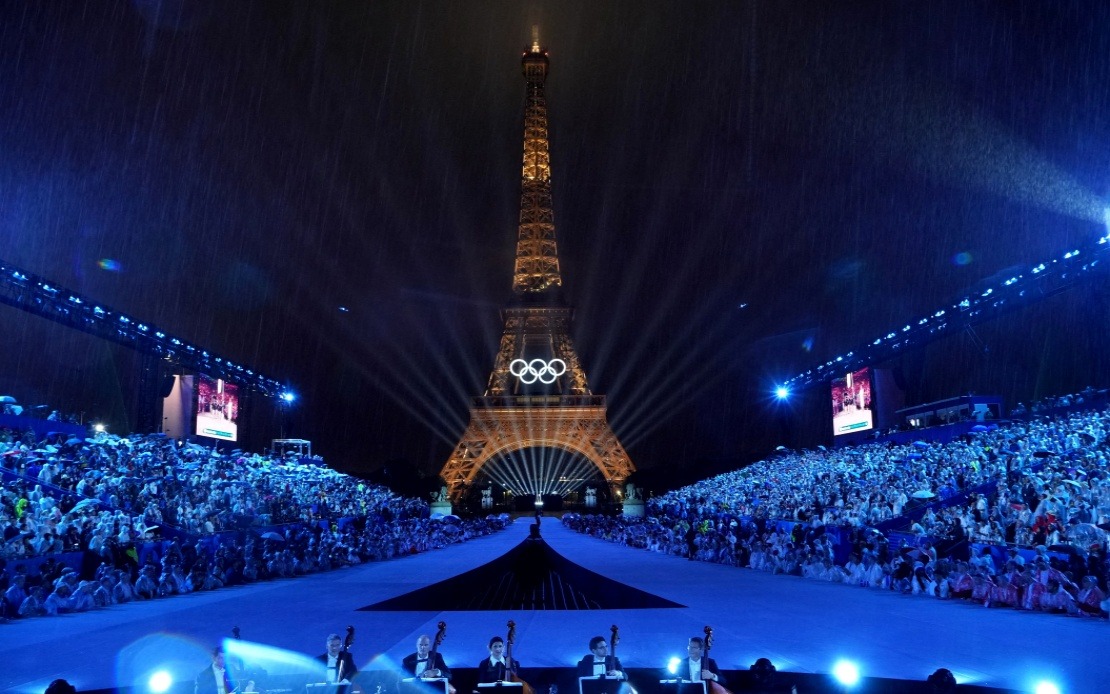
Paris's most visited attractions have taken the unprecedented step of shutting their doors ahead of schedule this week, with authorities citing the welfare of guests and employees as the paramount concern during an increasingly dangerous climatic event. The Eiffel Tower, one of the world's most iconic monuments, closed at 4.00 pm on Tuesday rather than its standard operating hours, with final admission restricted to 12.15 pm. This exceptional measure reflects the severity of conditions that have engulfed much of continental Europe and prompted difficult operational decisions across the French capital's cultural institutions.
The operating authority behind the tower, Societe d'Exploitation de la tour Eiffel (Sete), emphasized that adapting to the extreme atmospheric conditions represented a necessary prioritization of human safety over commercial operations. Visitors who had reserved time slots beginning at 11.30 am for stairway access and 12.00 pm for lift access were automatically refunded, eliminating the need for individual compensation claims or administrative processing. This blanket policy demonstrates how extensively the organization had to recalibrate its standard procedures to respond to weather conditions that pushed beyond normal operational parameters.
The Louvre Museum, which attracts millions of international visitors annually and serves as a cornerstone of French cultural tourism, implemented similar precautions by announcing an accelerated closure schedule beginning June 24. Instead of remaining open until 6.00 pm, Europe's largest art museum will close four hours earlier at 4.00 pm, maintaining this adjusted schedule through June 27. The coordinated response from Paris's major attractions underscores how comprehensively the heatwave has disrupted normal business operations across the tourism sector, which carries enormous economic significance for the French capital.
Meteo-France, the national meteorological authority, confirmed that the heatwave would persist at dangerous intensity through at least Thursday, with no immediate relief anticipated. The French capital experienced temperatures of 36 degrees Celsius by 4.00 pm on Tuesday, and forecasters predicted a further climb to approximately 38 degrees Celsius on Wednesday. These readings, while extreme by typical French standards, represent the kind of atmospheric heat that poses genuine health risks, particularly for vulnerable populations including the elderly, young children, and those with pre-existing medical conditions.
The geographical scope of the crisis extended far beyond Paris, with Meteo-France placing 54 departments across mainland France under its highest alert classification—the red alert level—on Tuesday alone. Additionally, 35 departments were positioned under the orange alert tier, indicating that roughly two-thirds of the country faced exceptionally dangerous heat conditions. Such widespread activation of emergency alerts demonstrates that authorities regarded this event as a serious public health threat rather than a temporary inconvenience, justifying extraordinary interventions in normal civic life.
For Malaysian and Southeast Asian readers, the French heatwave serves as a sobering reminder of climate volatility that increasingly affects even developed nations with sophisticated infrastructure and resources. While tropical climates typically experience consistent heat, the distinction lies in the sudden, intense, and prolonged nature of extreme heat events that exceed what local populations, buildings, and social systems have evolved to manage. The disruption to Paris's tourism infrastructure—an industry generating billions in annual revenue—illustrates how climate stress can create economic cascades beyond the immediate health impacts.
The decision to close major attractions early reflects evolving risk management practices in the tourism and cultural sectors. Previously, institutions might have remained open, accepting increased medical incidents or staff illness as operational costs. Contemporary emergency protocols increasingly recognize that proactive closure prevents harm rather than merely responding to it. For Southeast Asian tourism destinations, which already operate in inherently warm climates, this European precedent may inform future policies regarding operational safety thresholds during extreme weather events, particularly as climate patterns become less predictable.
The automatic refund policy implemented by the Eiffel Tower represents a practical approach to managing customer relations during crisis situations. Rather than forcing visitors to navigate cancellation procedures or creating administrative bottlenecks, the automatic approach reduces friction and demonstrates institutional goodwill. This approach may become increasingly relevant for Southeast Asian hospitality and tourism operators who face their own seasonal extreme weather challenges during monsoon periods or occasional heat waves.
The convergence of closures among Paris's most prestigious institutions signals how systematically the heatwave penetrated daily life across all economic sectors. When both major cultural attractions and presumably hospitality, transportation, and retail establishments must simultaneously adjust operations, the event transcends meteorological curiosity and becomes a significant societal disruption. For regional observers, this underscores that extreme weather events, regardless of geography, create cascading operational challenges that require coordinated institutional responses rather than isolated management at individual organizational levels.

