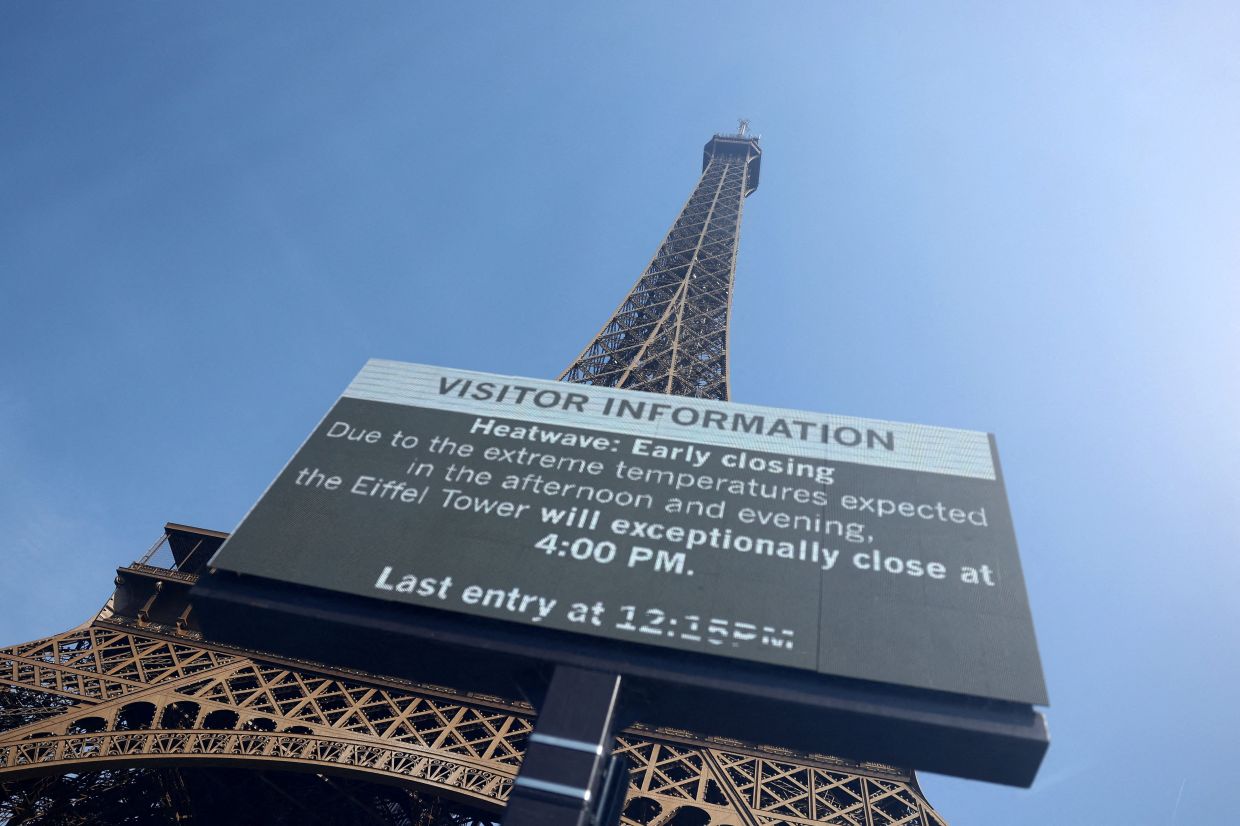
An intense heatwave gripping France this week has proven so severe that Paris authorities have forced the early closure of some of Europe's most celebrated attractions, fundamentally disrupting the experience for thousands of international visitors who had saved and planned for months to visit the city. The Eiffel Tower and the Louvre Museum both shut down earlier than scheduled, leaving tourists sweltering in oppressive heat with severely limited access to the landmarks that define a Parisian holiday. On June 23, France recorded its hottest day since temperature records began in 1947, transforming what should have been the highlight of many vacations into a lesson in climate resilience and adaptive travel planning.
The human impact of this extreme weather becomes starkly apparent through the stories of disappointed visitors. Maite Blazques, a 35-year-old nurse from Madrid, had spent considerable time and money preparing for a special journey with her six-year-old son. The record-breaking temperatures forced her to completely restructure their entire itinerary, eliminating guided tours through the historic Marais district, eliminating river cruises along the Seine, and cancelling their planned ascent to the top of the 324-metre tower. For families like hers, the financial and emotional investment in such a trip represents significant sacrifice, yet climate extremes now threaten to render those plans obsolete. Tamara Dancer, an American tourist, saw her scheduled guided tour cancelled on Tuesday afternoon, a development she described as genuinely hurtful to her overall vacation experience.
The Eiffel Tower's unprecedented early closure represents the scale of the crisis. Operators announced that the iconic latticed-steel monument would "exceptionally close" at 4pm on June 23, with strong indications that abbreviated opening hours would likely continue throughout the heatwave. During peak summer season, the tower normally remains open well past midnight to accommodate the roughly seven million international visitors who climb its heights annually. This closure ripples through the tourism economy and exposes how even the world's most resilient infrastructure struggles when confronted with extreme climate events that exceed historical precedent.
Parisian streets themselves became inhospitable during the peak heat hours, forcing tourists to abandon the traditional mode of city exploration—walking. John Beeler, a 45-year-old American engineer, captured the grim reality of navigating the city during such conditions, describing how visitors suffocate both on the pavements radiating heat and within the crowded underground metro system, with rental accommodations offering little respite. The solution for many became repositioning to air-conditioned hotel rooms rather than attempting to experience the city's outdoor character. Drake Winners, a 66-year-old retiree from London, articulated a deeper truth about Parisian tourism: the city's essential magic derives from its walkable neighbourhoods and street-level culture, experiences rendered nearly impossible when temperatures soar to dangerous levels.
Those who persisted gravitated toward the Louvre Museum, the world's most-visited museum attracting approximately nine million annual visitors. Indoor cultural attractions offered refuge from the oppressive exterior heat while allowing visitors to salvage something meaningful from their journeys. However, even this prestigious institution faces challenges adapting to contemporary climate extremes. Museum management acknowledged that the vast palace, constructed across centuries by successive French monarchs and presidents, remained "not sufficiently adapted to climate change." This candid admission reveals how historical structures designed for different environmental conditions now struggle under unprecedented thermal stress. The museum has simultaneously grappled with multiple operational challenges throughout the past year, including a brazen US$100 million jewellery heist, structural water damage, and various maintenance complications that have further strained its capacity.
The heatwave's impact extends well beyond Paris's central attractions. Over half of mainland France remained under the national weather service's highest alert level, prompting closure warnings and early shutdowns across the country's tourism infrastructure. Mont Saint-Michel, the spectacular island fortress in Normandy and France's most-visited attraction outside the capital region, issued an explicit warning to prospective visitors to "put off your visit during the red alert." Such directives represent an extraordinary development in European tourism, where climate conditions have become severe enough to warrant turning away paying customers.
For Malaysian and Southeast Asian travellers, this phenomenon carries particular significance and relevance. As tropical residents accustomed to managing heat, Malaysian tourists may feel somewhat prepared for Paris's conditions, yet the specific nature of European summer heat—combining high temperatures with heavy urban infrastructure and often inadequate air conditioning in historical buildings—creates a fundamentally different challenge than tropical humidity. The incident also underscores how climate change increasingly affects global tourism patterns, potentially reshaping when and how people plan international trips. Destinations historically viewed as reliable year-round attractions may require seasonal recalibration, with summer visits to temperate zones becoming riskier propositions.
This situation reflects broader anxieties about how tourism adapts to climate realities. The closure of iconic landmarks isn't merely an inconvenience but a symptom of systemic vulnerability in the global tourism infrastructure. Major cities and heritage sites must now consider substantial capital investments in climate resilience—enhanced cooling systems for museums, modified operating schedules, and potentially even architectural modifications to centuries-old structures. Such adaptations carry enormous financial and philosophical implications, forcing societies to choose between preserving historical authenticity and ensuring visitor safety and satisfaction.
The experience also highlights emerging disparities in tourism accessibility. Wealthy visitors can readily migrate to air-conditioned hotels, reschedule visits, or extend trips to accommodate disruptions. Budget-conscious travellers, particularly those managing tight vacation windows and limited finances, face more constrained options. This dynamic may gradually reshape who can afford to travel internationally, with climate volatility becoming an additional economic barrier layered atop standard travel costs. As climate extremes become more frequent rather than exceptional, the tourism industry faces fundamental questions about sustainability, equity, and the future viability of destination-centric vacation models.

