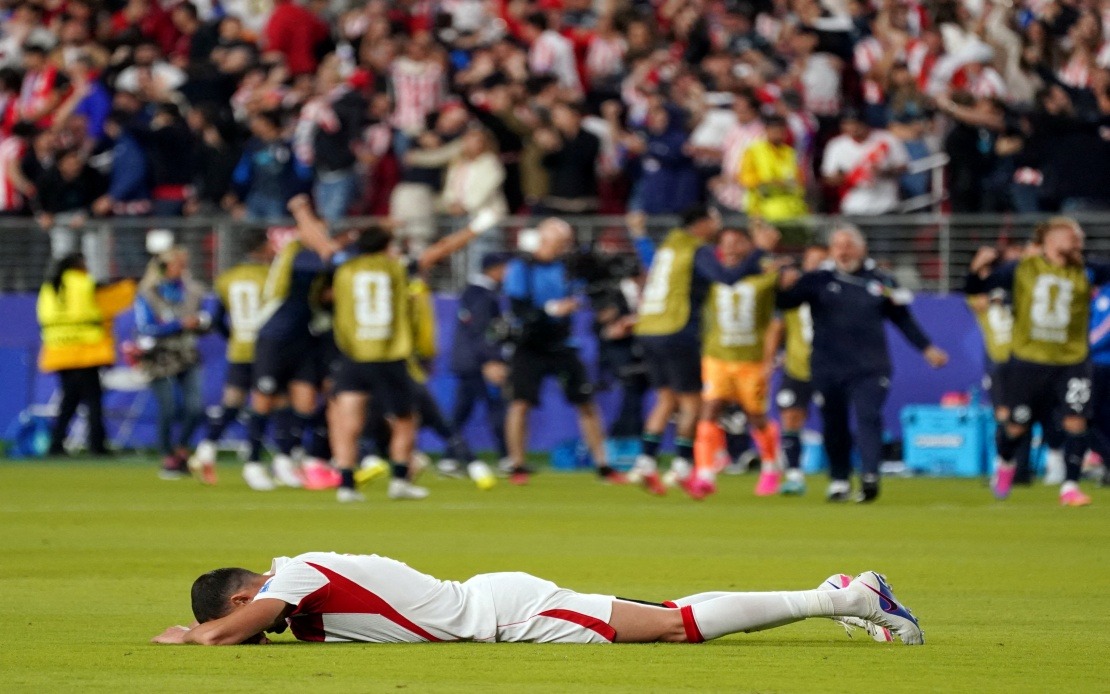
Paraguay's clinical opening-minute strike proved the difference in a tightly contested Group D encounter against Türkiye at the San Francisco Bay Area Stadium during the 2026 FIFA World Cup, delivering a significant blow to the Turkish side's tournament ambitions. Matias Galarza's stunning long-range finish just 64 seconds after kickoff handed the South American team the fastest goal recorded throughout the competition thus far, establishing an early psychological advantage that would ultimately determine the match's outcome.
Despite the setback of conceding so early, Türkiye demonstrated resilience and tactical discipline by swiftly regaining compositional control. The Turkish outfit proceeded to dominate proceedings through much of the encounter, orchestrating wave after wave of attacking movements as they pressed relentlessly for an equaliser. Their approach became increasingly systematic as they sought to overwhelm their opponents through sustained pressure and superior territorial control.
The first half's dynamics took a dramatic turn during the closing stages when Paraguay's Miguel Almiron was adjudged to have breached the updated FIFA regulations governing player conduct. An apparent verbal exchange with Türkiye's Mert Muldur, during which Almiron covered his mouth while speaking, prompted referee intervention resulting in immediate dismissal. The incident underscored how football's rulebook has evolved to address perceived unsporting behaviour, with governing bodies implementing stricter enforcement mechanisms to maintain decorum.
The second-half proceedings became a masterclass in sustained dominance by one team failing to translate control into tangible reward. Türkiye maintained relentless attacking momentum, accumulating an extraordinary statistical profile that ordinarily would suggest inevitable goal-scoring opportunities. Over 27 attempts on target, approximately 80 per cent possession retention, and more than 600 completed passes represented an overwhelming superiority in the technical metrics that typically correlate with match outcomes.
Paraguay's defensive resilience, bolstered by their numerical advantage following the red card dismissal, proved exceptionally resolute under sustained pressure. The South American side's compact shape and organised rearguard action systematically repelled Turkish advances, with goalkeeper heroics and last-ditch defending repeatedly thwarting what appeared to be clear scoring opportunities. Their pragmatic approach — prioritising structural stability over attacking adventure — proved entirely vindicated by the final whistle.
The result carries profound ramifications for Group D's configuration heading into subsequent fixtures. Paraguay's victory propelled them into third position within the group standings, dramatically enhancing their prospects of qualifying for the knockout stages. Conversely, Türkiye's defeat relegated them to the basement, severely jeopardising any realistic pathway toward advancing beyond the group phase given the tight nature of tournament progression criteria.
The United States' continued unbeaten record ensures they retain control of their own destiny in Group D. Their leadership position reflects the competitive equilibrium established during the group's opening matches, with the American outfit demonstrating sufficient quality and consistency to position themselves favourably for progression. The US remains well-placed to secure qualification should they maintain their current trajectory through remaining fixtures.
From a Southeast Asian perspective, this encounter illustrates the unpredictable nature of World Cup football and how early momentum frequently impacts entire tournament trajectories. Paraguay's success in imposing their will from the opening moments demonstrates how psychological advantage, combined with tactical discipline, can prove decisive against ostensibly superior opposition. Regional nations competing in future tournaments will draw relevant lessons from such encounters regarding the importance of clinical finishing and defensive organisation.
Türkiye's apparent inability to convert possession dominance into match-winning goals reflects a recurring challenge affecting contemporary football — the difficulty in breaking down organised defensive structures when opponents are prepared to absorb pressure patiently. Their situation mirrors scenarios commonly encountered in knockout tournament football, where drawing matches frequently occurs before penalty resolution determines progression. The Turkish performance will undoubtedly prompt tactical reconsideration heading into their remaining group assignments.

